What Really Drives the Wage Gap Between Men and Women
If you’ve ever pondered why, in numerous work environments, men still tend to gain more than ladies — indeed in 2026 — you’re not alone. The wage crevice is one of those subjects that pops up in discussions approximately decency, careers, and the future of work. You might hear numbers like “women gain 80 cents for each dollar men make,” but what lies behind those figures? What are the genuine strengths driving this hole? And why does it matter?
Let’s unload it in basic, ordinary dialect — with genuine illustrations that make sense to us here in India and around the world.
A Basic Clarification: It’s Not Fair One Thing
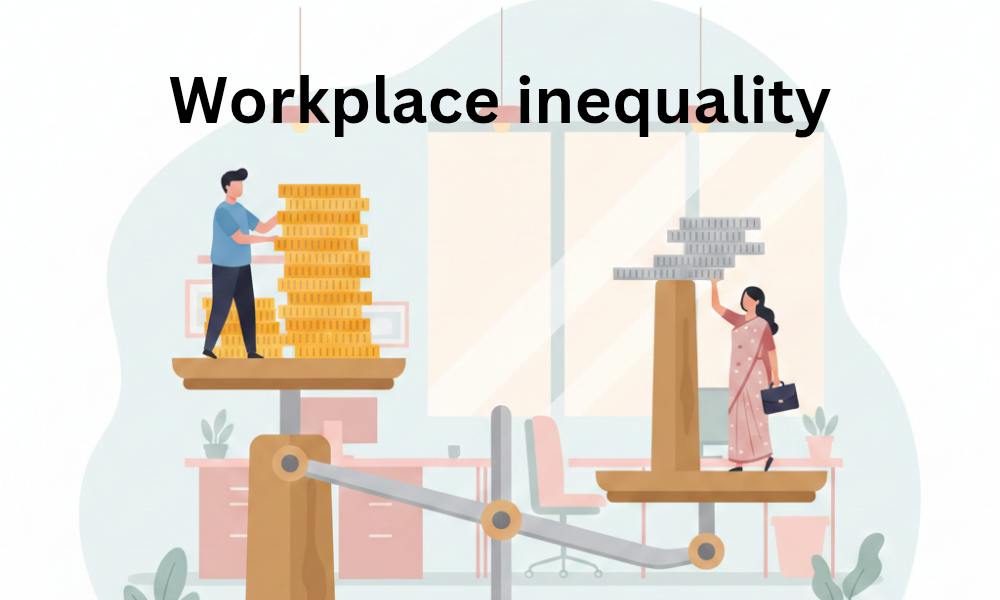
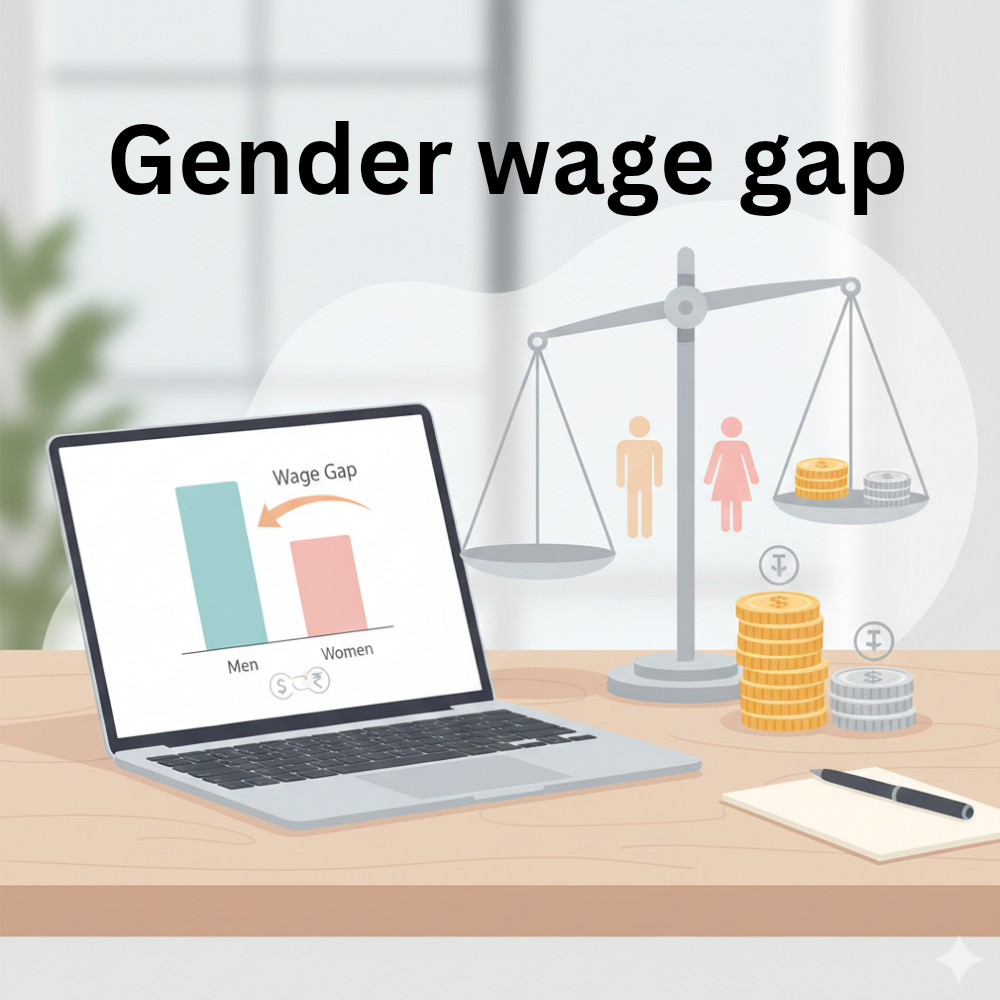
At its center, the sex wage crevice is the distinction in profit between men and ladies. It’s a wide degree — and it’s affected by a blend of social, financial, and social components. The precarious portion is that not all of these are self-evident, and numerous work together in ways that keep the crevice lively.
Instead of a single cause, there’s a web of reasons why the crevice continues. Let’s go through the most imperative ones — in plain, real-world language.
- The Parenthood Impact (A Huge One)
One of the most grounded drivers of the wage crevice is what financial specialists call the “motherhood penalty.” Basically, when ladies end up moms, they regularly see a plunge in earnings.
Here’s what happens in numerous families:
They might turn down advancements or exchanges that request long hours.
A recent inquiry about — counting a ponder highlighted in Mint/The Financial specialist — appears that once the impacts of parenthood are evacuated, the profit hole between men and ladies shrivels colossally. In circumstances where ladies know early in life they won’t have children (due to restorative reasons), their profit over time closely coordinates those of men.
This tells us something vital: it’s not women’s aptitudes or desire that as a rule hold them back — it’s the basic desire that ladies will be the essential caregivers.
Example:
Imagine two colleagues who connect a company at the same time. One gets to be a mother in her late 20s and takes two long maternity breaks. The other remains continuous in his career. Over time, indeed if both are similarly talented, the one with breaks might miss out on ventures, advancements, and compensation climbs — basically since time away.
- Word related Isolation — Work Choices Matter
Another huge reason for wage contrasts is the kind of employment men and ladies tend to take.
Women are over-represented in caregiving, instruction, and benefit employments — parts that customarily pay less. Men, on the other hand, are more common in designing, tech, fund, and administrative parts — which more often than not come with higher pay.
This design is called word related isolation. It’s somewhat impacted by
- Social desires (“boys do science, young ladies do arts”)
- Early instruction choices
- Family weights or viable needs (like adaptable hours)
Bullet Focuses: Why this matters
- Fields ruled by ladies regularly have lower normal pay.
- Women in blended working environments may be clustered in junior roles.
- Men are over-represented in high-growth, high-pay businesses.
Example:
In numerous Indian building or IT companies, you still see less ladies in senior specialized or extended authority parts. Whereas more ladies are joining the workforce presently than ever some time recently, numerous still conclude up in human assets, educating, or authoritative parts — regions that customarily pay lower than tech leadership.
- Advancement and Administration Gaps
Even when ladies and men begin in the same work, there’s a distinction in how their careers progress.
Women regularly confront boundaries — unmistakable and imperceptible — on the way up the step. This has a title: vertical isolation or the glass ceiling. It implies that less ladies make it into senior parts, and those who do frequently get there more gradually.
Why?
Bias in advancements (indeed unintentional)
Lack of mentorship or sponsorship
Leaders esteeming long hours over results
Example:
A lady who takes shorter lunch breaks to oversee domestic obligations might still be passed over for administration parts if a boss values confront time — the sum of time went through unmistakably at work — over genuine yield. This is particularly important in work environments that haven’t embraced adaptable or results-focused cultures.
- Adaptable Work and Part-Time Jobs
Women frequently seek employment that fits around caregiving duties. That’s reasonable — raising children, caring for elderly guardians, and overseeing family units requires time.
But here’s the capture: part-time and adaptable occupations regularly pay less and offer less benefits than full-time parts.
There’s nothing off-base with adaptability per se — but when such parts become the default for ladies, it influences lifetime earnings.
Example:
In India, numerous ladies incline toward government division occupations for steadiness and work-life adjustment. These employments may pay well, but the pay rise direction in private division authority — particularly in tech or fund — can be more extreme. So ladies selecting out of long, requesting careers (regularly due to social or family weights) conclude up winning less in total over decades.
- Social Desires and Social Norms
Here’s where things get profoundly human.
In numerous social orders — counting parts of India — ladies are still seen as essential caregivers. These parts, in spite of the fact that they are significant, aren’t regularly paid. Ladies do hours of unpaid family work each day — from cooking to caring for children and elders.
This unpaid work isn’t checked in GDP or pay measurements, but it shapes careers and choices.
Some ladies don’t take up requesting occupations because of family duties.
Some don’t move for way better opportunities.
Men, in different ways, are frequently anticipated to organize career growth.
Globally, ponders appear that ladies spend far more time on unpaid household work than men — and this impacts profit, work soundness, and career development.
- Separation (Plain and Subtle)
Even in work environments with formal balance approaches, predisposition can crawl in. It might appear up as:
Lower beginning pay for women
Fewer openings to arrange salaries
Managers accepting ladies will organize family over work
Sometimes inclinations are oblivious — a chief might think a man is more “assertive” and advance him quicker indeed when execution is equal.
While this figure is complex and difficult to degree specifically, financial analysts note that a parcel of the wage crevice remains unexplained indeed after bookkeeping for work sort, hours worked, and involvement — which proposes that inclination plays a part.
Conclusion
Wrapping Up: What Can Change?
Understanding the wage hole isn’t fair and scholarly work out. It influences genuine individuals, genuine families, and genuine financial growth.
Here are viable thoughts that can help:
Companies can offer straightforward pay scales and clear advancement paths.
Governments and managers can give reasonable childcare and amplified parental leave. Men and ladies can share caregiving duties more equally.
Girls and boys ought to be energized similarly into all areas — STEM, expressions, administration, and entrepreneurship.