Surat-Born Black Horse Fetches ₹4.50 Crore at Elite Auction, Showcasing India’s Growing Premium Horse Market
In a remarkable moment for India’s equestrian world, a black horse born and raised in Surat has been sold for an astonishing ₹4.50 crore at a prestigious auction, drawing nationwide attention. The high-value sale not only highlights the exceptional quality of the horse but also underlines the rising prominence of India’s premium horse breeding and auction ecosystem. The event became a talking point among breeders, buyers, and enthusiasts, marking a significant milestone for Surat and Gujarat in the field of elite horse trading.
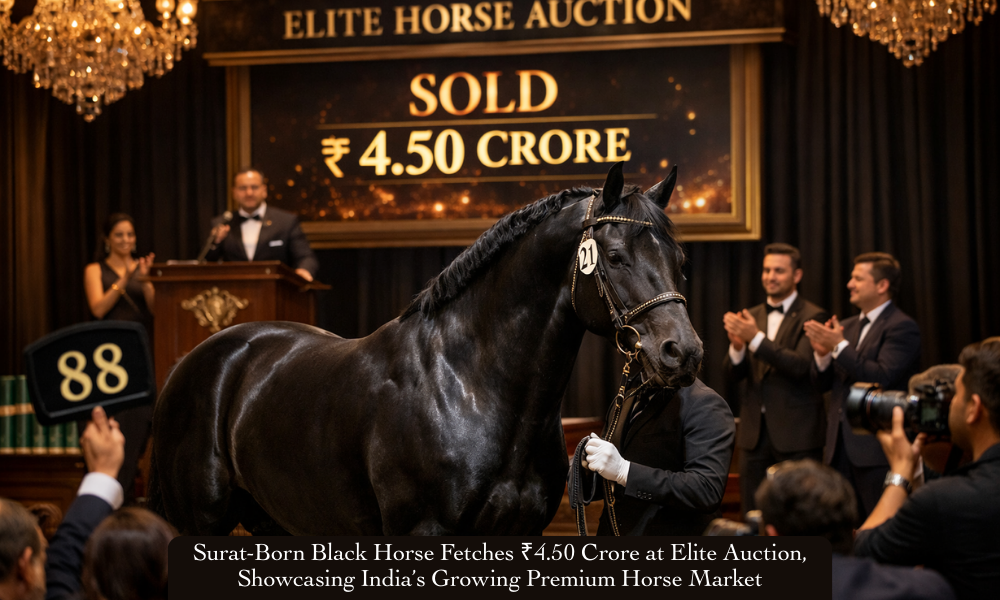
The auction took place during a grand horse show organized in Surat, which saw participation from renowned breeders, professional trainers, and affluent buyers from different parts of the country. The black horse, known for its striking appearance, strong build, and disciplined temperament, instantly stood out among the many horses presented at the event. Its flawless physique, smooth gait, and commanding presence made it the star attraction of the show.
According to sources associated with the event, the horse belongs to an exceptionally respected bloodline. Bred with careful planning and scientific methods, the horse represents years of dedicated effort by its owners and trainers. The animal’s lineage, combined with professional grooming and training, played a crucial role in determining its premium value. Experts present at the auction emphasized that such horses are not merely animals but a blend of genetics, discipline, and long-term investment.
What makes this sale even more noteworthy is that the buyer is a member of a prominent family with strong connections in public life. The purchase reflects the growing interest of influential individuals in high-quality horses, not just as symbols of prestige but also as assets with cultural and sporting significance. In India, horses have long held a special place in tradition, ceremonies, and royal heritage, and this transaction reinforces that legacy in a modern context.
The horse show where the auction was held was a large-scale event, attracting horses from various states across India. Participants reportedly traveled distances of 800 to 900 kilometers to showcase their finest animals. Breeds known for strength, endurance, elegance, and intelligence were displayed, turning the event into a vibrant platform for competition and commerce. Such shows have become vital for connecting breeders with serious buyers and for promoting quality standards within the industry.
Surat, already well known as a hub for textiles, diamonds, and entrepreneurship, is now gaining recognition in the field of horse breeding. The success of this auction reflects the city’s expanding footprint into niche and premium markets. Local breeders have increasingly adopted modern breeding techniques, veterinary care, and structured training programs to produce horses that can compete at a national level.
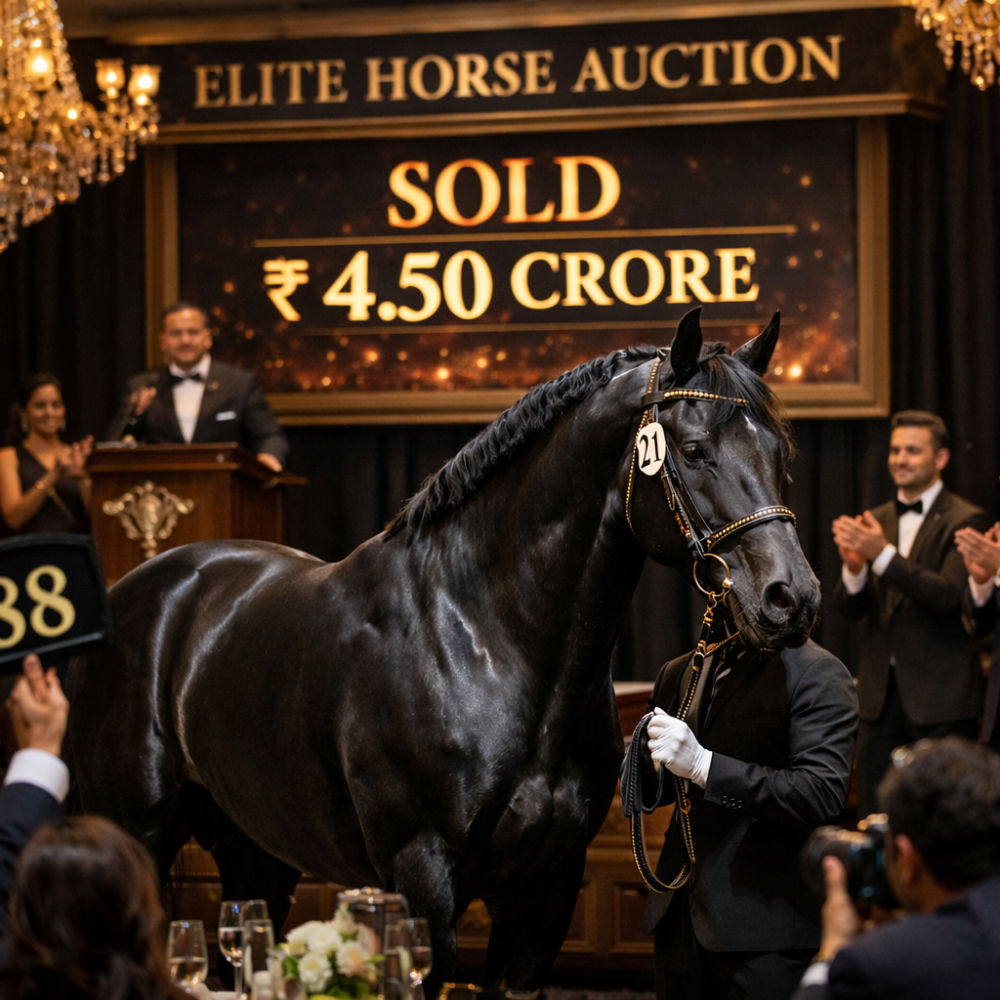
Experts note that the price of ₹4.50 crore is not just a reflection of the horse’s beauty but also its potential. High-value horses are often purchased for multiple purposes, including breeding, ceremonial events, elite sports, and exclusive ownership. A horse of this caliber can significantly influence breeding programs, as its offspring may inherit its desirable traits, further enhancing its long-term value.
The growing popularity of horse auctions in India is also linked to better organization and increased transparency. Structured auctions, professional evaluations, and certified documentation have made buyers more confident. This has encouraged serious investments, transforming what was once considered a traditional hobby into a sophisticated business segment.
Another key factor contributing to the rising prices of elite horses is the cultural revival of equestrian traditions. Horses are increasingly featured in weddings, festivals, and cultural events, where premium breeds are preferred. This demand has fueled competition among buyers, pushing prices higher for animals that meet top-tier standards.
Veterinary professionals and trainers associated with the Surat event emphasized the importance of animal welfare and ethical breeding. They highlighted that premium pricing is justified only when horses are raised in healthy environments, given proper nutrition, and trained without cruelty. The black horse sold at the auction reportedly received meticulous care from birth, ensuring both physical strength and mental calmness.
The sale has inspired many breeders in Gujarat and beyond, motivating them to focus on quality rather than quantity. Industry insiders believe that such high-profile transactions will encourage investment in training infrastructure, breeding farms, and professional expertise. Over time, this could position India as a stronger player in the global equestrian market.
For Surat, the moment is a matter of pride. A horse born on its soil achieving national recognition and record valuation reflects the city’s ability to nurture excellence beyond its traditional industries. It also opens doors for young entrepreneurs and animal lovers who wish to explore opportunities in horse breeding and management.
Conclusion
In conclusion, the ₹4.50 crore sale of the Surat-born black horse is more than just a headline-grabbing auction result. It symbolizes the evolution of India’s horse market, the blending of tradition with modern business practices, and the growing appreciation for quality breeding. As awareness and professionalism continue to increase, such landmark events may become more frequent, redefining the future of the equestrian industry in India.