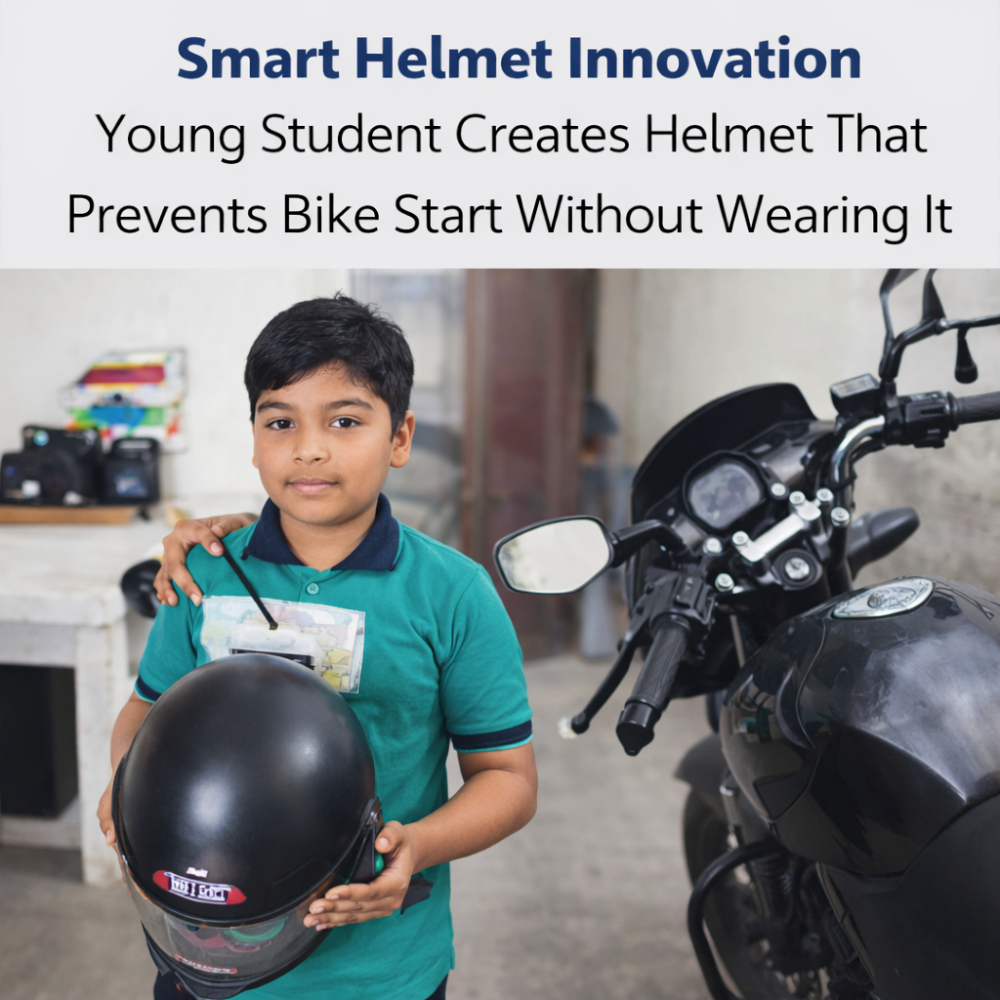
Smart Helmet Innovation : Young Student Creates Helmet That Prevents Bike Start Without Wearing It.
Road safety has become a growing concern across the world, especially in countries where two-wheelers are a primary mode of transport. Every year, thousands of lives are lost due to road accidents, many of which could have been prevented by simply wearing a helmet. Despite strict rules and awareness campaigns, many riders still ignore basic safety precautions. In the midst of this challenge, a young student has come forward with an innovative solutions smart helmet that ensures a bike does not start unless the rider is wearing it. This remarkable invention highlights how creativity and awareness at a young age can lead to life-saving innovations.
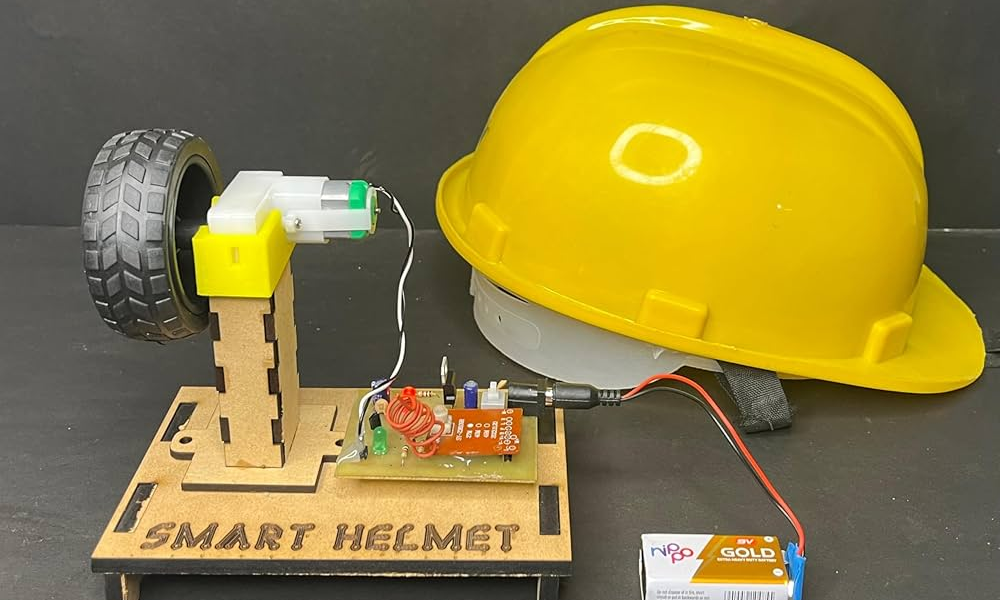
The Idea Behind the Innovation
The concept of the smart helmet is simple yet powerful. The young student identified a common issue: people often own helmets but choose not to wear them while riding. Instead of relying solely on rules and penalties, the student thought of integrating technology to enforce safety automatically.
The idea was to connect the helmet with the bike’s ignition system using sensors and wireless communication. This way, the bike will only start when the helmet is properly worn. If the rider tries to start the vehicle without wearing the helmet, the ignition system remains locked. This approach ensures compliance without requiring constant monitoring by authorities.
How the Smart Helmet Works
The smart helmet uses a combination of sensors and wireless technology to function effectively. The system includes:
- Helmet Sensor: A sensor inside the helmet detects whether it is being worn. This could be a pressure sensor or a strap-based switch.
- Wireless Module: The helmet communicates with the bike using wireless technology such as Bluetooth or radio frequency.
- Ignition Control System: Installed in the bike, this system receives signals from the helmet.
- Engine Lock Mechanism: If the helmet is not worn, the system prevents the bike from starting.
When the rider wears the helmet and fastens it properly, the sensor sends a signal to the bike’s ignition system, allowing the engine to start. If the helmet is removed or not worn correctly, the system blocks the ignition.
Importance of the Innovation
This smart helmet is not just a school project; it has the potential to save countless lives. The importance of this invention can be understood through the following points:
- Encourages Safety Habits: Riders are forced to wear helmets, promoting responsible behaviour.
- Reduces Fatal Injuries: Helmets significantly reduce the risk of head injuries during accidents.
- Supports Law Enforcement: Automated compliance reduces the burden on traffic police.
- Raises Awareness: Such innovations inspire others to think about safety and technology.
A Young Mind with a Big Impact
What makes this innovation truly special is the age of its creator. The student, studying in a primary school, has demonstrated exceptional creativity and problem-solving skills. While many people overlook safety rules, this young innovator chose to address the issue with a practical solution.
This achievement proves that innovation is not limited by age or resources. With curiosity, observation, and determination, even a young student can create something impactful. It also reflects the importance of encouraging students to think beyond textbooks and apply their knowledge to real-world problems.
Role of Schools and Teachers
Behind every young innovator is a supportive environment. Schools and teachers play a crucial role in nurturing creativity and innovation among students. By encouraging project-based learning and hands-on experiments, they help students develop critical thinking skills.
In this case, the student’s school provided the platform and guidance needed to transform an idea into reality. Such initiatives can motivate more students to explore science and technology and contribute to society.
Future Possibilities and Improvements
While the current version of the smart helmet is highly effective, there is always room for improvement. Future developments could include:
- GPS Tracking: To locate riders in case of accidents.
- Emergency Alerts: Automatic alerts to family members or emergency services.
- Speed Monitoring: Alerts if the rider exceeds safe speed limits.
- Mobile App Integration: Real-time data and notifications for users.
With further research and support, this innovation can be developed into a commercially viable product that can be used widely.
Challenges in Implementation
Despite its benefits, implementing the smart helmet system on a large scale may face some challenges:
- Cost: Adding technology may increase the price of helmets and bikes.
- Maintenance: Electronic components require proper maintenance.
- User Adaptation: Some users may resist adopting new technology.
- Compatibility: Integrating the system with different bike models may require customization.
However, with technological advancements and mass production, these challenges can be addressed effectively.
Government and Industry Support
For innovations like the smart helmet to reach the masses, support from the government and private sector is essential. Authorities can promote such technologies by offering incentives or subsidies or making them mandatory in the future.
Automobile companies can also collaborate with innovators to integrate these systems directly into vehicles. This will ensure better quality, reliability, and wider adoption.
Social Impact
The smart helmet has the potential to create a significant social impact. It can:
- Save lives by preventing serious injuries.
- Promote a culture of safety among young riders.
- Reduce healthcare costs associated with accidents.
- Encourage innovation among students.
Such inventions remind society that even small ideas can lead to big changes.
Conclusion
The “Smart Helmet Innovation” by a young student is a shining example of how creativity and technology can come together to solve real-world problems. By ensuring that a bike does not start unless the helmet is worn, this invention directly addresses one of the major causes of road fatalities.
This story is not just about an innovative device; it is about the power of young minds, the importance of safety, and the potential of education to inspire change. With the right support and development, this smart helmet could become a standard safety feature in the future, making roads safer for everyone.
Ultimately, this innovation sends a strong message: safety should never be optional, and sometimes, the best solutions come from the youngest thinkers.