
Record Coal Production in India: Second Year Above 1 Billion Tons
India has once again crossed a historic milestone in its energy sector by achieving over one billion tons of coal production for the second consecutive year. This accomplishment reflects the country’s growing energy demand, policy focus on self-reliance, and improvements in mining efficiency. It also reinforces coal’s continued importance in India’s energy mix, even as the country accelerates its transition toward renewable energy sources.

A Historic Achievement
The milestone was officially confirmed by the Ministry of Coal, which highlighted that India crossed the one billion ton mark before the end of the financial year. This is the second year in a row that the country has achieved this feat, signaling consistency in production and a strong upward trajectory.
Coal production in India has seen significant growth over the past decade, driven by policy reforms, improved infrastructure, and enhanced operational efficiency. The achievement is not just symbolic but also strategic, as it ensures energy availability for a rapidly growing economy.
Role of Key Players
A major contributor to this milestone is Coal India Limited, the world’s largest coal-producing company. Along with other public and private sector players, Coal India has played a critical role in ramping up production through modernization, mechanization, and expansion of mining operations.
Other contributors include captive and commercial mines, which have increasingly participated in coal production following policy reforms aimed at opening up the sector. These reforms have encouraged competition, boosted investment, and improved productivity.
Meeting Rising Energy Demand
India is one of the fastest-growing major economies in the world, and with that growth comes an ever-increasing demand for energy. Coal remains the backbone of electricity generation in India, accounting for a significant share of power production.
Thermal power plants, which rely heavily on coal, supply the majority of electricity across the country. Achieving one billion tons of coal production ensures that these plants have an adequate fuel supply, especially during peak demand periods such as the summer months when electricity consumption surges.
The availability of sufficient coal stocks also helps prevent power shortages and reduces dependence on imports, which can be costly and subject to global market fluctuations.
Boost to Energy Security
One of the key implications of this achievement is enhanced energy security. By increasing domestic production, India reduces its reliance on imported coal, thereby insulating itself from international price volatility and supply disruptions.
Global energy markets have been highly uncertain in recent years due to geopolitical tensions and supply chain disruptions. In this context, achieving consistent high levels of domestic coal production provides a buffer against external shocks.
The government’s emphasis on self-reliance, often referred to as “Atmanirbhar Bharat,” is clearly reflected in this milestone. By strengthening domestic capabilities, India aims to ensure a stable and reliable energy supply for its industries and households.
Economic Impact
The coal sector plays a vital role in India’s economy. It generates employment for millions of people, both directly and indirectly, and supports several industries such as steel, cement, and power generation.
Higher coal production translates into increased economic activity, improved logistics, and greater revenue for both central and state governments. It also reduces the import bill, thereby positively impacting the country’s trade balance.
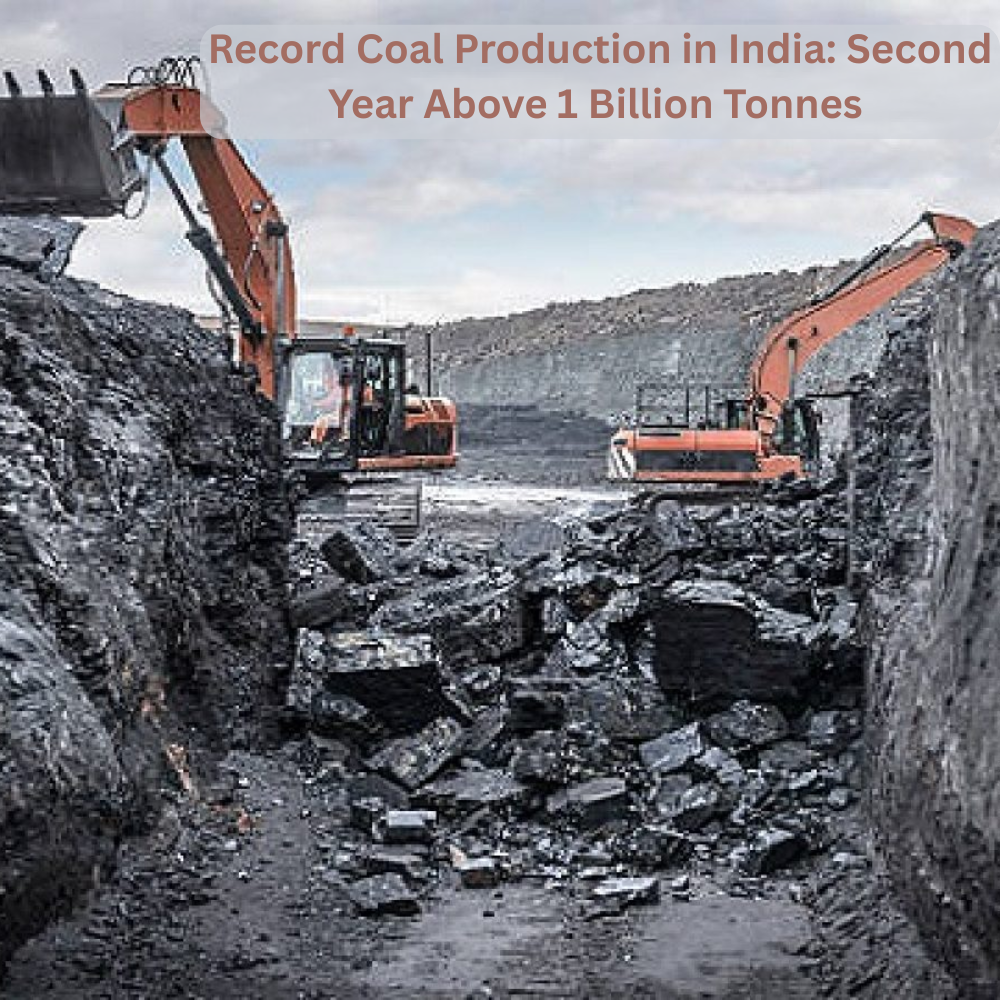
India has achieved a significant milestone with record coal production crossing 1 billion tonnes for the second consecutive year. This achievement highlights the country’s growing energy demand and strong performance of the mining sector. Increased production supports power generation, industrial growth, and energy security across the nation. Government initiatives, improved infrastructure, and efficient mining practices have played a key role in reaching this target.
The milestone also reflects efforts to reduce coal imports and strengthen self-reliance. Overall, this progress marks a crucial step toward sustaining economic development and meeting the country’s rising energy needs.
Infrastructure development, including railways and road networks, has been crucial in transporting coal efficiently from mines to power plants and industrial hubs. Continued investment in these areas will further enhance the sector’s performance.
Transition to Renewable Energy
Despite the continued importance of coal, India is making significant strides in renewable energy. The country has set ambitious targets for expanding solar and wind power capacity, aiming to reduce dependence on fossil fuels over time.
However, the transition to renewables is gradual and requires substantial investment, infrastructure, and technological advancements. Until renewable energy can fully meet the country’s needs, coal will continue to play a crucial role in ensuring energy stability.
The challenge lies in managing this transition effectively while maintaining economic growth and meeting energy demands.
Government Initiatives and Reforms
The government has introduced several initiatives to boost coal production and improve efficiency. These include:
- Opening up coal mining to private players
- Streamlining environmental clearances
- Investing in modern mining technologies
- Enhancing logistics and transportation infrastructure
These reforms have not only increased production but also improved transparency and competitiveness in the sector.
The Road Ahead
Achieving one billion tonnes of coal production for the second consecutive year is a testament to India’s growing capabilities in the energy sector. However, the journey ahead involves balancing multiple priorities—ensuring energy security, supporting economic growth, and addressing environmental concerns.
India’s future energy strategy will likely involve a mix of coal and renewable energy, with a gradual shift toward cleaner sources. Innovations in technology, policy support, and global cooperation will play a crucial role in shaping this transition.
Conclusion
India’s achievement of crossing one billion tonnes of coal production for the second year in a row is a significant milestone that underscores the country’s energy resilience and economic strength. It highlights the importance of coal in meeting current energy demands while also emphasizing the need for sustainable practices and a transition toward cleaner energy sources.
As India continues to grow, its energy needs will evolve, requiring a balanced approach that leverages both traditional and renewable resources. This milestone is not just a reflection of past success but also a stepping stone toward a more secure and sustainable energy future.