No More Open Surgery: Civil Hospital Launches New Colonic Polyp Treatment Facility
In a significant step toward improving public healthcare services, Civil Hospital has launched a new facility that enables the treatment of colonic polyps without the need for open surgery. This advancement marks a major breakthrough in medical technology, offering patients a safer, faster, and less invasive alternative. The initiative is expected to benefit hundreds of patients who previously had to undergo complex surgical procedures for conditions that can now be managed with modern techniques.
What Are Colonic Polyps?
Colonic polyps are small growths that form on the inner lining of the colon or large intestine. While many polyps are harmless, some can develop into colorectal cancer if not detected and treated early. Traditionally, larger or complicated polyps required open surgery, which involved longer hospital stays, higher risks, and extended recovery periods.
With advancements in medical science, new minimally invasive procedures now allow doctors to remove or treat these polyps without making large surgical incisions.
Introduction of the New Facility
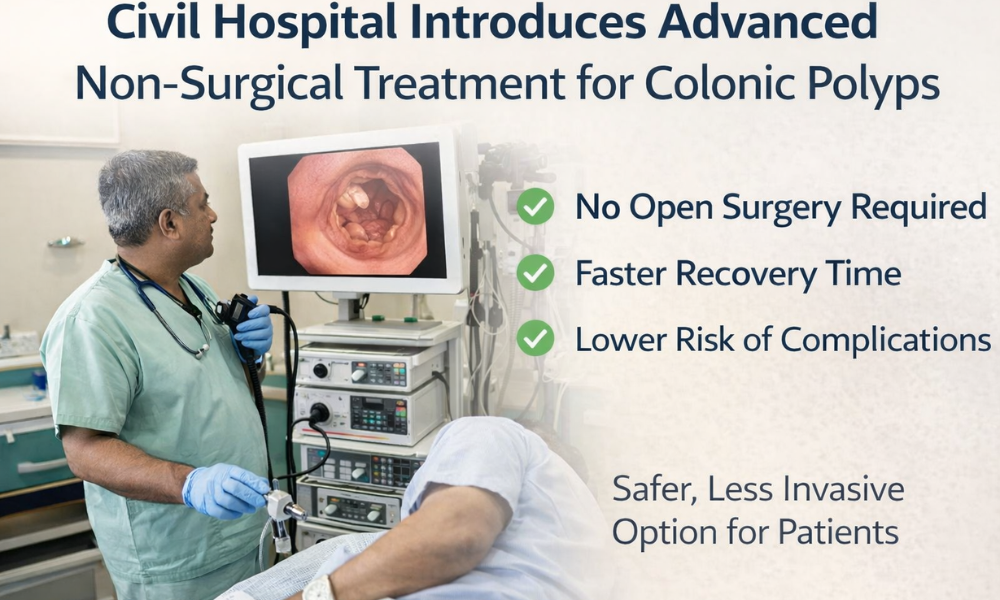
Civil Hospital’s newly introduced facility focuses on advanced endoscopic techniques, allowing doctors to detect and remove colonic polyps using specialized instruments. This method eliminates the need for open surgery in most cases, making the treatment process significantly more comfortable for patients.
The facility is equipped with state-of-the-art technology and operated by trained medical professionals who specialize in gastrointestinal procedures. This ensures accurate diagnosis, effective treatment, and minimal complications.
Key Benefits of Non-Surgical Treatment
The introduction of non-surgical treatment for colonic polyps brings several advantages:
- Minimally Invasive Procedure: No large incisions are required, reducing pain and discomfort
- Faster Recovery: Patients can return to normal activities much sooner
- Lower Risk: Reduced chances of infection and complications
- Shorter Hospital Stay: Many procedures can be completed on the same day
- Cost-Effective: Less expensive compared to traditional surgery
These benefits make the new facility a game-changer for patients and healthcare providers alike.
Improved Patient Care and Accessibility
One of the most important aspects of this initiative is improved accessibility to advanced healthcare. Civil Hospital, being a government institution, provides affordable treatment options, making it easier for patients from all economic backgrounds to benefit from modern medical advancements.
The new facility is expected to reduce the burden on surgical departments and improve overall patient management. Early detection and treatment will also play a crucial role in preventing serious complications such as colorectal cancer.
Role of Medical Experts and Staff
The successful implementation of this facility depends heavily on the expertise of doctors, technicians, and support staff. Specialized training has been provided to ensure that all procedures are carried out with precision and care.
Doctors are also focusing on raising awareness among patients about the importance of regular screenings and early diagnosis. Increased awareness can lead to timely treatment and better health outcomes.
Technological Advancement in Healthcare
The launch of this facility highlights the growing role of technology in modern healthcare. Endoscopic procedures and minimally invasive techniques are becoming the preferred choice for treating various medical conditions.
Such advancements not only improve patient outcomes but also enhance the efficiency of healthcare systems. Civil Hospital’s initiative sets an example for other institutions to adopt similar technologies and improve their services.
Challenges and Future Scope
While the new facility is a major step forward, there are still challenges to address. These include increasing awareness among the public, ensuring proper training for medical staff, and maintaining the quality of equipment.
However, the future looks promising. With continued investment and support, such facilities can be expanded to other hospitals, benefiting a larger population. Research and innovation in this field are also expected to bring even more advanced treatment options in the coming years.
Here’s an additional 300 words you can append to your article:
Awareness and Preventive Measures
Along with introducing advanced treatment facilities, Civil Hospital is also emphasizing the importance of awareness and preventive healthcare. Medical experts are encouraging individuals, especially those above the age of 40 or with a family history of colorectal diseases, to undergo regular screenings. Early detection of colonic polyps can significantly reduce the risk of them developing into cancerous growths.
Public health campaigns, seminars, and awareness drives are expected to be conducted to educate people about symptoms such as persistent abdominal pain, changes in bowel habits, or unexplained weight loss. By identifying these warning signs early, patients can seek timely medical attention and benefit from the newly introduced non-surgical treatments.
Patient Experience and Satisfaction
The shift toward minimally invasive procedures has greatly improved patient experience and satisfaction. Patients undergoing non-surgical treatment often report less anxiety compared to traditional surgery, as the procedures are quicker and less physically demanding. The reduced recovery time also means patients can return to their daily routines and professional commitments without significant disruption.
Families of patients also benefit, as shorter hospital stays reduce emotional and financial stress. This holistic improvement in patient care highlights the positive impact of integrating advanced technology into public healthcare systems.
Strengthening Public Healthcare Infrastructure
The addition of this facility is part of a broader effort to strengthen public healthcare infrastructure. By incorporating modern equipment and techniques, Civil Hospital is bridging the gap between private and government healthcare services. This ensures that high-quality treatment is not limited to private institutions but is accessible to the general public as well.
Such initiatives demonstrate the government’s commitment to upgrading healthcare services and improving patient outcomes. As more facilities adopt similar innovations, the overall standard of healthcare in the region is expected to rise, benefiting society at large.
Conclusion
The introduction of non-surgical treatment for colonic polyps at Civil Hospital marks a significant milestone in the healthcare sector. By eliminating the need for open surgery, the hospital has made treatment safer, quicker, and more accessible for patients.
This initiative not only improves patient care but also reflects the growing emphasis on modern, technology-driven healthcare solutions. As more patients benefit from this facility, it is expected to play a crucial role in early detection and prevention of serious diseases, ultimately contributing to a healthier society.