




Meghraja Chhadi Utsav 2026 in Bharuch – Sacred Tradition of Making Indra Dev Idol from Narmada Soil
Meghraja Chhadi Utsav 2026 in Bharuch is a distinctive religious and cultural celebration deeply connected with the monsoon, devotion, and the sacred Narmada River. The festival reflects a long-standing tradition in which devotees worship Meghraj, a revered form associated with Indra Dev, the Hindu deity traditionally connected with rain. One of the most special aspects of this celebration is the preparation of the Meghraj idol using sacred soil from the Narmada River.
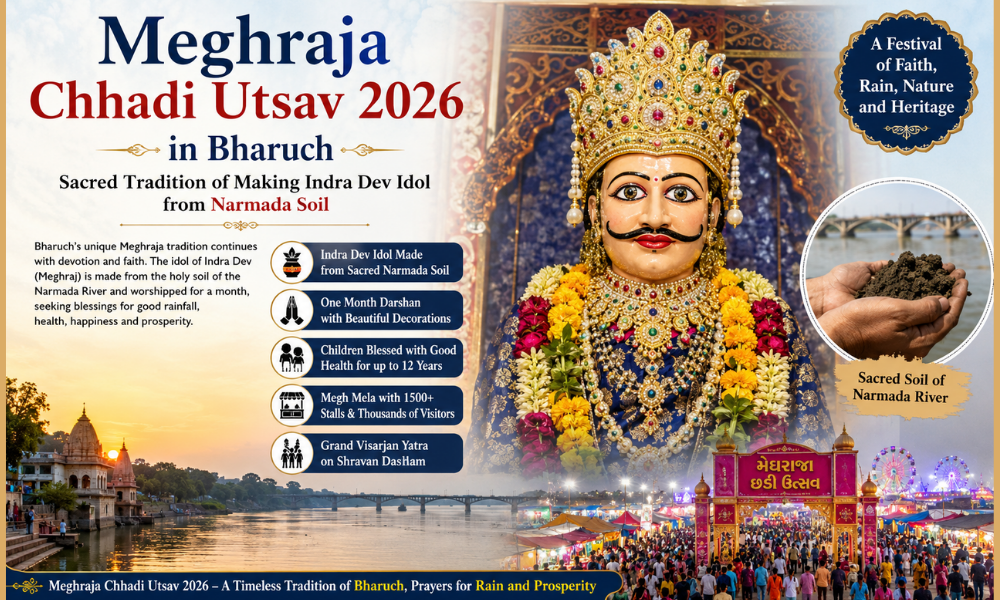
According to the information highlighted in the newspaper article, Bharuch holds a unique place in Gujarat for its traditional Megh Utsav. The festival brings together religious faith, local customs, community participation, and a vibrant atmosphere that attracts devotees from Bharuch and surrounding areas.
A Unique Tradition of Bharuch
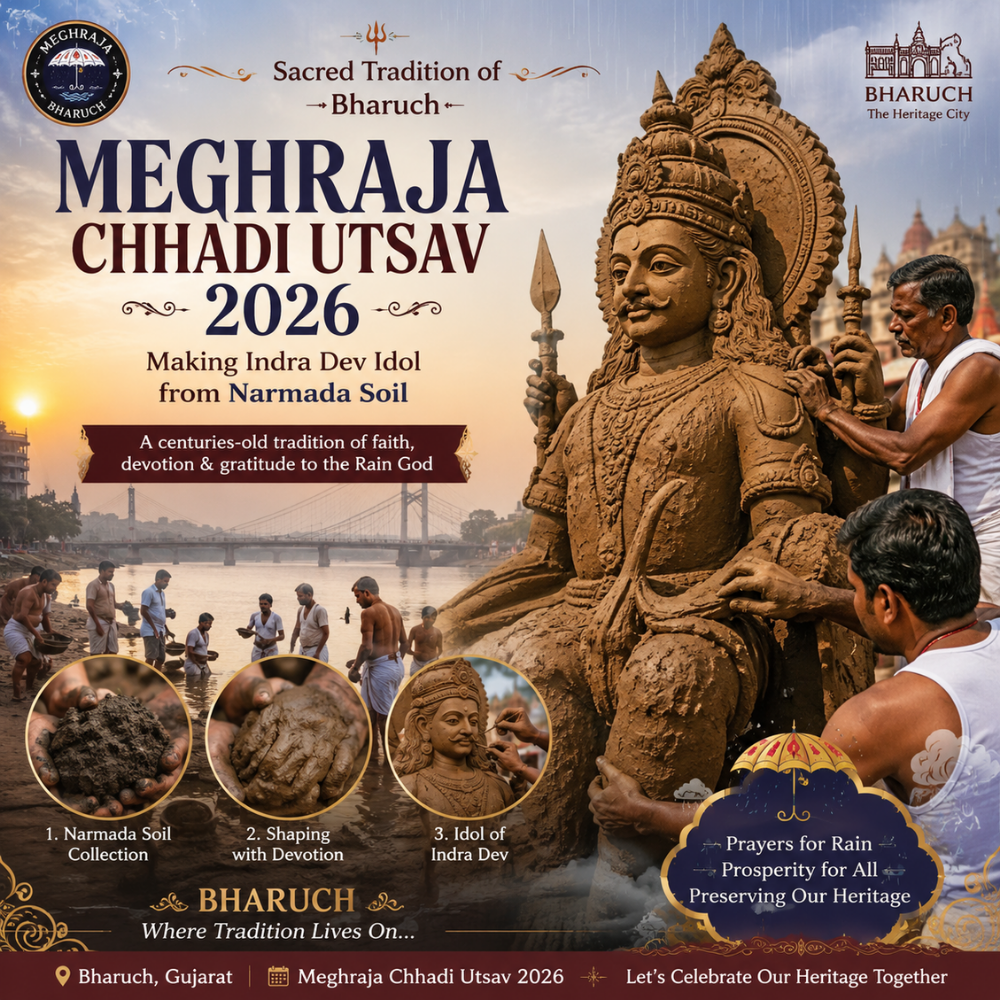
The Meghraja tradition in Bharuch has been followed for generations. The newspaper report describes how devotees prepare and establish Meghraj in accordance with traditional customs. The idol is created from the holy soil of the Narmada River, giving the celebration a strong connection with the natural and spiritual identity of Bharuch.
For local devotees, the Narmada is not simply a river. It holds immense religious importance and is regarded as sacred. Using its soil for creating the idol adds a meaningful dimension to the festival. The soil is carefully shaped into the idol of Meghraj, which is then beautifully decorated before being presented for devotees’ darshan.
The tradition represents a connection between nature, rainfall, agriculture, and faith. Since rain is essential for farming and everyday life, devotees traditionally pray to Meghraj for good rainfall and prosperity.
Meghraj Idol Remains for Devotees’ Darshan
One of the important features of the festival is that the Meghraj idol remains available for devotees for an extended period. During this time, people visit the installation site to seek blessings and offer prayers.
The newspaper article notes that devotees are able to have darshan of Meghraj for about a month. During the festival period, the idol is given different appearances with attractive clothing, ornaments, decorations, and other forms of traditional adornment.
This daily decoration becomes an important part of the celebration. Devotees eagerly visit to see the different forms and decorations of Meghraj. The changing appearance also creates a festive environment around the place of worship.
Deep Faith Behind the Meghraj Tradition
The festival is not limited to rituals and decorations. It carries several beliefs that have been passed down through generations.
A section of the newspaper report discusses the belief associated with children and Meghraj. According to the traditional belief mentioned in the report, children who remain connected with Meghraj for up to 12 years are blessed with good health and are believed to remain protected from illnesses.
Because of such beliefs, families participate in the festival with great devotion. Parents bring their children to seek Meghraj’s blessings, while the younger generation becomes familiar with the cultural traditions of the community.
Such practices demonstrate how religious festivals can also help preserve local customs. Stories, rituals, prayers, and community traditions are passed from grandparents and parents to children, keeping the cultural identity of Bharuch alive.
Megh Mela Attracts Thousands of Visitors
The Megh Mela is another major attraction associated with the celebration. According to the newspaper article, more than 1,500 stalls are set up during the fair, creating a lively environment for visitors.
The mela becomes a meeting point for religion, entertainment, shopping, and community interaction. People visit not only to seek blessings but also to enjoy the festive atmosphere with their families.
The large number of stalls and visitors highlights the importance of Meghraja Utsav in the local social and economic life of Bharuch. Small traders and vendors also receive an opportunity to participate in the festival and serve the large number of people arriving during the celebration.
With thousands of visitors gathering around the festival area, the atmosphere becomes particularly vibrant. Religious activities take place alongside the traditional fair, making Megh Utsav an experience that appeals to people of different generations.
Community Participation Makes the Festival Special
The celebration is strongly supported by the local community. Traditional groups and devotees participate in the establishment, worship, decoration, and various activities associated with Meghraj.
The preparation of the idol itself is an important example of community involvement. From collecting the sacred Narmada soil to shaping and decorating the idol, the process reflects the devotion of the people who have maintained this tradition for generations.
The festival therefore becomes more than an individual religious activity. It develops into a collective celebration in which families, devotees, traders, artists, and local communities come together.
Shravan Dasham and the Immersion Procession
The conclusion of the festival is marked by the Meghraj Visarjan Yatra on Shravan Dasham. This is one of the most emotional and important moments of the celebration.
According to the newspaper report, devotees bid farewell to Meghraj through a grand procession. The idol is taken through the city amid religious devotion and community participation. After the procession, the idol is immersed as part of the traditional concluding ceremony.
The immersion marks the end of the festival while also symbolizing the return of the sacred idol to nature. Since the idol itself is prepared using soil connected with the Narmada, the final ceremony further strengthens the festival’s relationship with the river and the natural environment.
A Celebration of Faith, Nature and Heritage
Meghraja Chhadi Utsav 2026 in Bharuch represents much more than a seasonal religious celebration. It brings together faith in Meghraj, reverence for the Narmada River, prayers for rainfall, traditional craftsmanship, community participation, and the festive spirit of Bharuch.
The unique practice of preparing the Indra Dev or Meghraj idol from sacred Narmada soil gives the festival a distinctive identity. The month-long darshan, changing decorations, children’s participation, bustling Megh Mela, and grand Shravan Dasham immersion procession all contribute to its cultural significance.
Conclusion
As Bharuch prepares to celebrate Meghraja Chhadi Utsav 2026, this age-old tradition continues to remind people of the deep relationship between water, nature, agriculture, spirituality, and community life. The festival preserves an important part of Bharuch’s cultural heritage while bringing generations together in devotion and celebration.