India’s New Deepfake Takedown Rule: Why Big Tech Is Shaking Up
Envision looking over through Instagram, YouTube or X and abruptly seeing a deepfake of somebody celebrated — or more regrettable, somebody you know. It’s frightening, it’s befuddling, and to be perfectly honest, it’s getting to be way too common in 2026. That’s precisely why the Indian government fair presented a radical modern run the show around AI-generated substance — and it set off a huge wrangle about with worldwide tech companies.
This modern run of the show isn’t fair, a little change to ancient controls. It significantly abbreviates the time social stages have to expel destructive deepfake posts — particularly ones that can harm people’s protection, nobility or security. That’s why Enormous Tech companies are abruptly scrambling to figure out how to comply. And why millions of regular clients in India ought to know what it implies for our online lives.
What’s Changed: The Two-Hour (and Three-Hour) Takedown Rule
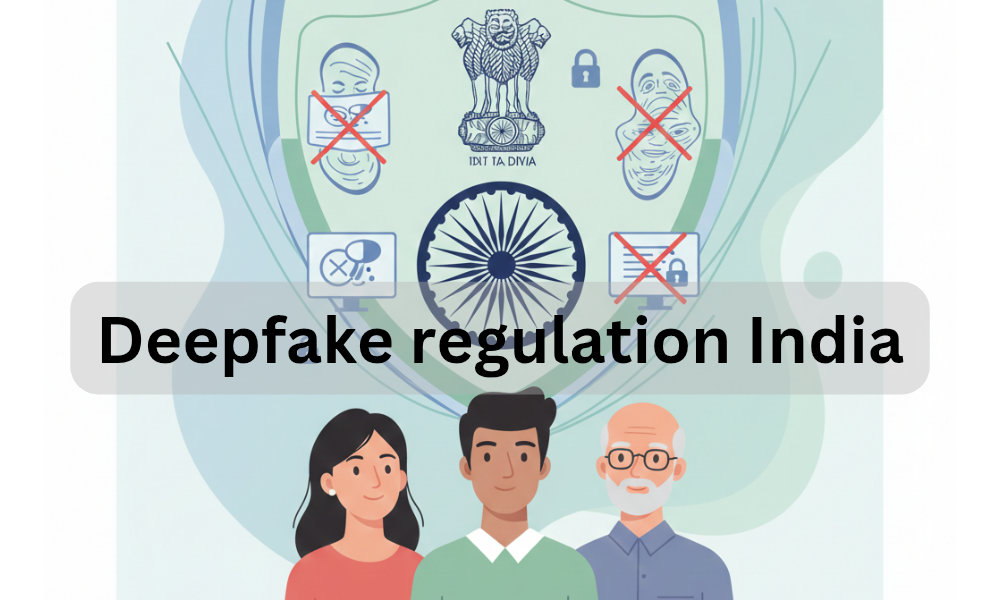
The feature grabber is this: Beneath the revised IT Rules, social media stages presently must take down certain sorts of hurtful deepfake substance inside two hours of a complaint — or inside three hours if it’s illegal substance hailed by specialists. Some time recently, companies had as much as 24 to 36 hours.
To break it down simply:
👤 Deepfakes with non-consensual or insinuate substance: Must be expelled inside 2 hours of notification.
🛑 Other illegal substance (abhor, extortion, duplicity, illicit fabric): Must be expelled inside 3 hours.
These are exceptionally tight timelines compared to numerous nations — counting the U.S. and EU — and that’s where much of the pushback is coming from.
🤖 Why India Did This — And What It Implies for You
At its heart, the government says the computerized world is advancing quickly — particularly with AI devices that can deliver practical deepfakes in minutes. The stress is that a hurtful substance can spread broadly some time recently and it’s taken down, doing genuine harm. So the thought behind the abbreviated due dates is rapid expulsion — limit the window where awful on-screen characters appreciate perceivability and virality.
But what does this truly mean?
🌐 For Ordinary Users
You may see more substances named as “AI-generated” on feeds.
Harmful deepfakes that abuse protection or nobility might get pulled down exceptionally rapidly, giving casualties recourse.
Platforms might appear notices or brief squares more frequently until they confirm content.
👨💻 For Substance Creators
Creators who utilize AI — like those making avatars, voice clones or generative visuals — might confront more tightly labeling rules and additional verification.
Some inventive designs might be influenced if stages fail on the side of caution.
Platforms may choose to moderate posting speeds or include manual survey banners for certain AI posts.
Basically, the web might feel a bit more cautious or controlled than before.
📊 Why Huge Tech Is in a Furore
You might be considering: “Okay, sounds sensible — shouldn’t we evacuate hurtful deepfakes quickly?” But here’s where things get messy.
Global tech companies — the ones running stages like Instagram, YouTube, X, Facebook, LinkedIn, Wire — are raising genuine concerns about these due dates. Why? A few reasons:
- ⏱ Improbable Timelines
Even with favor mechanization, most stages still require a few human oversight — particularly for subjective choices like whether something is genuinely hurtful or fair parody. Doing this legitimately inside two to three hours is an amazing challenge, particularly around the clock over India’s dozen time zones and languages.
- 💼 Fetched and Compliance Burden
Smaller stages may discover it nearly incomprehensible to comply. They might need huge compliance groups and mechanized apparatuses. And indeed huge players would have to pour cash into the framework and human commentators fair for India.
- 🧠 Chance of Over-Censorship
With such tight windows, stages might blunder on the secure side — expelling posts some time recently completely checking if they’re really hurtful. Envision authentic parody, memes, or political commentary taken down fair since a bot hailed them. Pundits say this seems to chill solid discourse online.
- 🧾 Lawful Obligation and Safe-Harbour
If stages come up short to meet these rules, they might lose legitimate securities (counting safe-harbour) that ordinarily shield them from obligation over client substance. That’s a huge bargain legitimately and financially.
Put essentially: the run the show is sharp and well-intended, but the commonsense compliance migraine is genuine — and that’s why tech mammoths aren’t thrilled.
🤝 Government’s Side: Why They’re Pushing Ahead
Officials from the Service of Gadgets and IT (MeitY) contend two things:
- Speed things: With the way viral posts can spread, holding up 36 hours fair isn’t viable anymore.
- Stages can do it: Most tech firms as of now have computerized filtering and AI location apparatuses. So the government accepts they can rotate quickly.
India’s corrected rules too made a few concessions — like evacuating unbending watermark prerequisites, which Huge Tech had protested to. Instep, substance fair needs unmistakable labelling.
So the government’s official position is: “We’ve attempted to adjust requirements with practicality.” But pundits say the timelines still thrust the envelope as well far.
🧠Viable Illustrations: What This Might See Like Online
Let’s make this real.
📌 Illustration 1: A Deepfake of a Open Figure
Suppose somebody posts a fake video of a lawmaker carrying on gravely some time recently. Inside two hours of somebody detailing it, stages must survey and drag it — or chance fines or penalties.
Good: destructive substance gets restricted reach.
Risk: if it was a genuine film erroneously hailed, it might get wrongly removed.
📌 Illustration 2: AI Meme with a Well known Actor
Someone makes a clever deepfake meme with a celeb. It might not be destructive. But if a bot banners it as manufactured and possibly risky, the stage has to act quick. This seems to be a moderate spread or indeed expel it.
Good: anticipates beguiling deepfakes.
Risk: inventive expression might get stifled.
📌 Case 3: Little App Startup Struggles
But running around-the-clock compliance and audit groups fair to meet two-hour takedown windows might be as well expensive, constraining them to exit India or scale back features.
Good: more secure web space.
Risk: less competition and innovation.
⚖️ So Is It As well Tight, Or Fair Right?
There isn’t one clear answer.
On one hand, quick expulsion may secure casualties quicker and restrain the spread of hurtful engineered media. On the other, it might thrust stages to incline on computerization and caution, driving to over-moderation or misfortune of inventive space online.
Conclusion
✍️ Conclusion: A Enormous Step — But Not Without Developing Pains
India’s unused two-hour deepfake takedown run of the show is a strong administrative move, one that puts client security and hurt anticipation at the bleeding edge. But it moreover tosses an extreme challenge at tech companies — a challenge that’s driving them to reexamine how they work in one of the world’s biggest and fastest-growing advanced markets.
For regular clients, this seems cruel, more secure browsing free from destructive deepfakes. For makers, it implies clearer names and a bit more grinding. For Enormous Tech, it implies compliance recalibration — quickly.
At the conclusion of the day, the web in India is advancing quickly, and controls are attempting to keep pace. But finding the right adjustment between free expression, security and operational reality — that’s the genuine discussion we ought to be having.