



India’s First Hydrogen Powered Train Unveiled on Jind-Sonipat Route
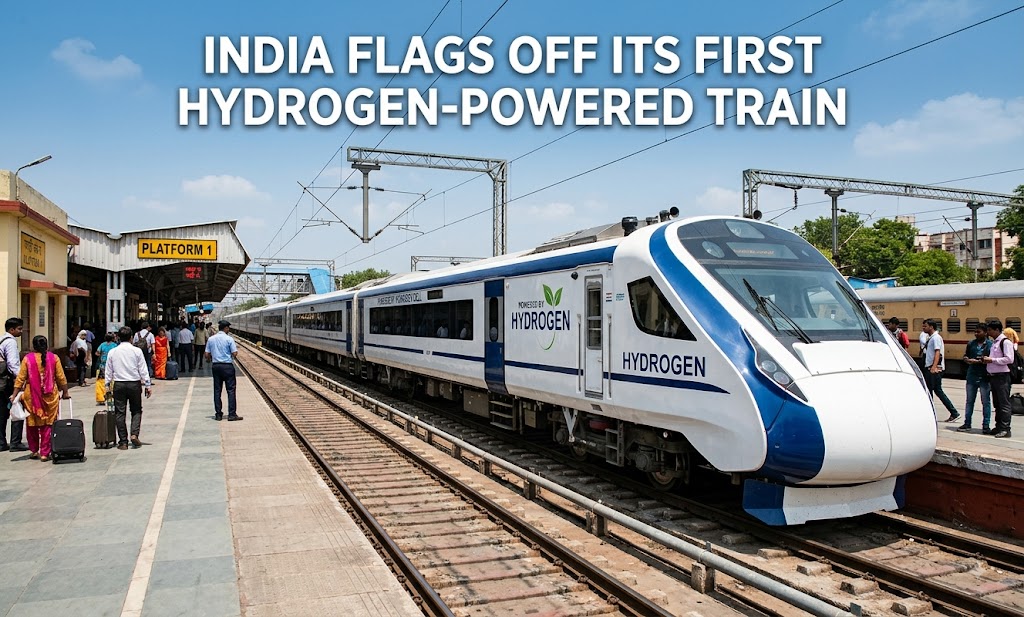
Prime Minister Narendra Modi unveiled India’s first-ever hydrogen-powered train, which has been launched on the Jind-Sonipat route in Haryana. With this, India has entered into an exclusive club of countries with hydrogen trains.
The Launch Event
PM Modi unveiled the train at Jind, where the Chief Minister of Haryana, Nayab Singh Saini, and Railway Minister Ashwini Vaishnaw were also present. In addition, the Prime Minister also laid the foundation stone and dedicated many projects worth Rs 14,700 crore to be taken up in the state by Indian Railways, including the national highways.
The Prime Minister In His Speech Noted The Opening Of The Delhi-Amritsar-Katra Motorway, A 4-Lane Fully Access-Controlled Highway Network Worth Rs 9,680 Crore That Would Reduce The Distance Between Delhi And Jammu By 6 Hours.
The other projects dedicated by the Prime Minister include the Ambala-Kala Amb highway, the Jind-Gohana Greenfield highway, an elevated line to be constructed in Kurukshetra and the foundation laying of a Sikh museum in the same city.
Speaking on the occasion, the Prime Minister said that the development of this hydrogen train is indeed a historic milestone because Indian Railways have come a long way over the last decade, and the launch of this train has made Jind famous in railway history. Railway Minister Vaishnaw also expressed happiness that the day has come when India can develop its own indigenous hydrogen trains.
How The Train Works?
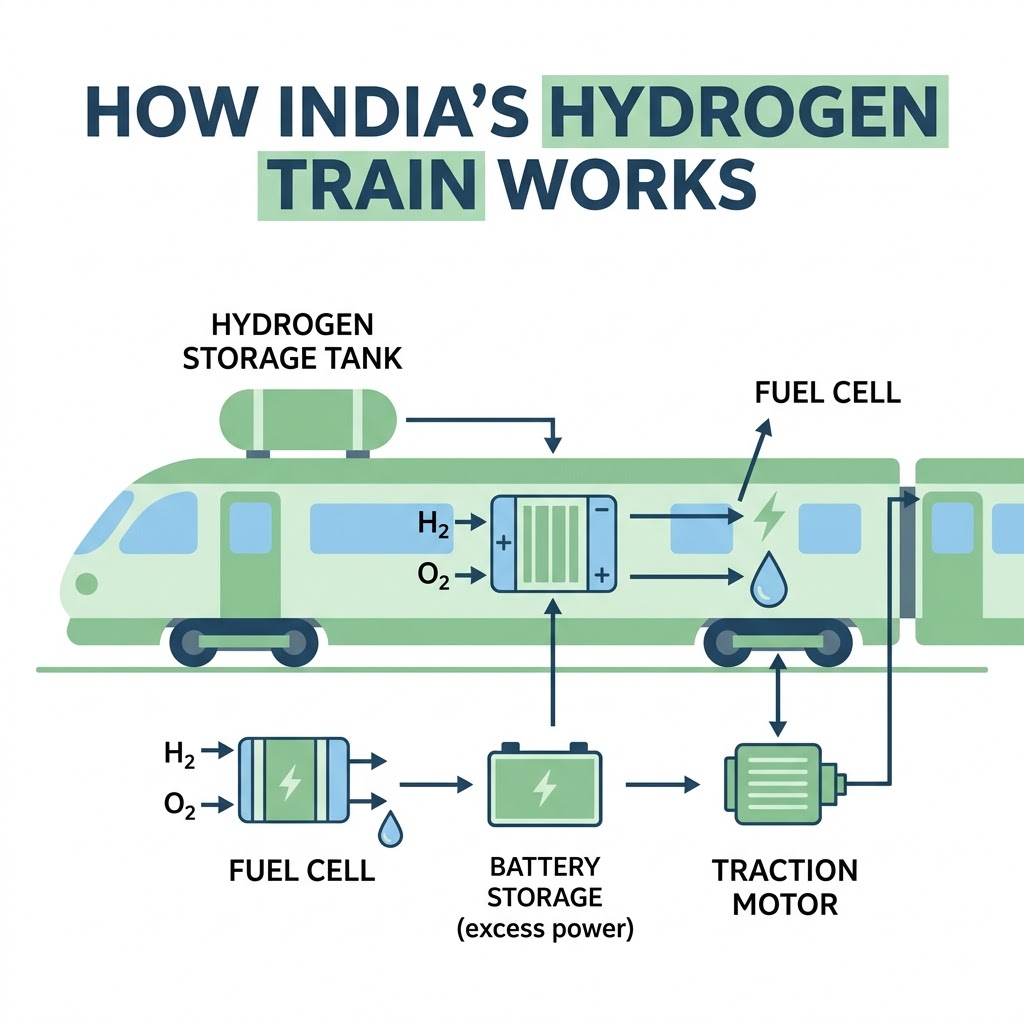
The hydrogen-powered train works on fuel cells, unlike diesel or electric traction used in electric trains. The Hydrogen Is Converted To Electricity In The Train And Stored In Batteries. The electricity, along with the required ancillary equipment in the train, is supplied to the traction motors mounted on the train axles. The by-products of this cell are heat and water, unlike pollutants emitted by the diesel locomotives used in non-electrified tracks across the country.
The train was manufactured by the Integral Coach Factory in Chennai and has two hydrogen-powered cars at its either end and eight coaches in between. It Is A Non-Air-Conditioned Rake Which Resembles A Regular Short-Haul Passenger Service Train And Has A Maximum Speed Of About 110 Kmph. The capacity of the train is said to be in thousands, as it can carry hundreds of passengers per coach. Reportedly, It Is The Most Powerful Hydrogen Train In The World, With An Engine Power Of About 1,200 Horsepower, Compared To The 500-800 Horsepower Of Hydrogen Trains In The Rest Of The World.
The Fuel Supply And Infrastructure
Northern Railways Has In The Meantime Also Set Up A Hydrogen Plant At Jind For The Supply Of Hydrogen Gas For The Trains. The plant has a capacity of storing 3,000 kg of hydrogen gas through electrolysis and has a dedicated 11 kV power supply for its smooth operation. The arrangement of the power supply to the plant has been made by the State Grid Corporation to meet the requirements for the final commissioning of the train and its future commercial operations.
Indian Railways Officials Have Also Noted That The Train Is Only A Technology Demonstrator And As Such Would Undergo Further Tests So That Indian Railways And ICF Could Be Able To Understand The Requirements For The Future Introduction Of Similar Services. The Officials Also Stressed That The Cost-Benefit Analysis Of The Train Should Not Be Overlooked, As It Would Provide India With Its Own Indigenous Technology.
A Part Of India’s Broader Green Mission
The development of the hydrogen trains is part of India’s broader mission to achieve net zero carbon emissions by 2030, and the Ministry of Railways has approved a budget estimate of Rs 2800 crore for the development of 35 Hydrogen Fuel Cell Trains As Part Of The Mission. The Jind-Sonipat Service Is The First Hydrogen Train To Enter Commercial Service In India.
India Has Joined The Exclusive Club Of Countries Using Hydrogen Trains, Which Also Includes Germany, China, Britain And Now India. Since they are still in their infancy, only a few countries have managed to operate them at commercial levels, and the development of trains in India is expected to position the country among the leaders in hydrogen train technology worldwide.
Conclusion
The Road Ahead
While the train will undergo several safety and commercial viability tests in the near future, the coach trials at ICF have been successfully completed. If the trials are completed successfully, Indian Railways officials have expressed hope that similar services would be started on other short-run routes in the country, for those routes not electrified and hence currently dependent on diesel locomotives.
For Now, The Inhabitants Of Jind And Sonipat Will Be Able To Take Advantage Of A Quieter And Cleaner Rail Service Than Has Been Available Until Now. For Indian Railways, this milestone marks the beginning of a long journey towards net-zero emissions by 2030, and a statement by the authorities showcases their commitment to making India one of the foremost nations in hydrogen train technology around the globe.