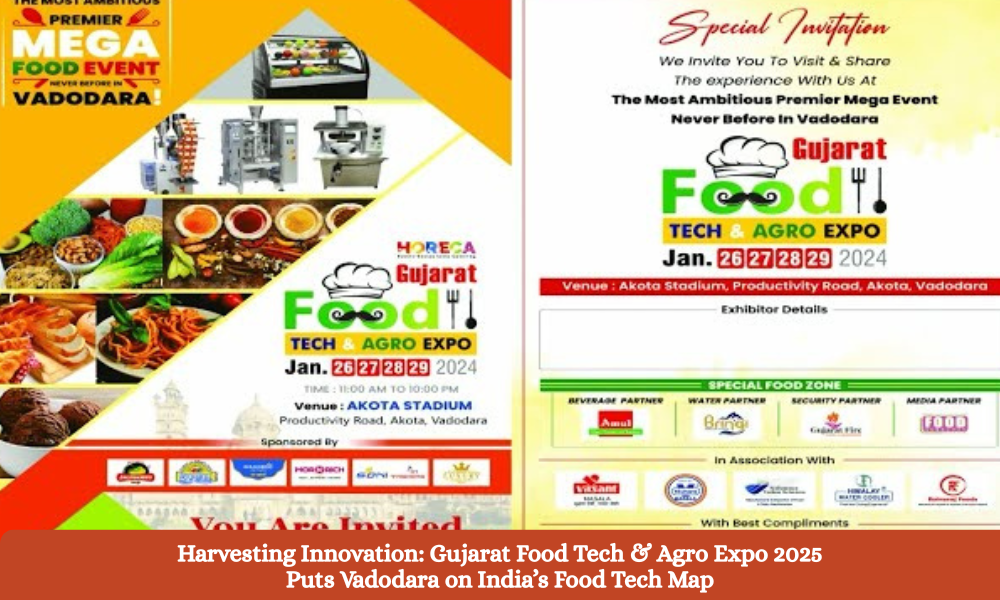
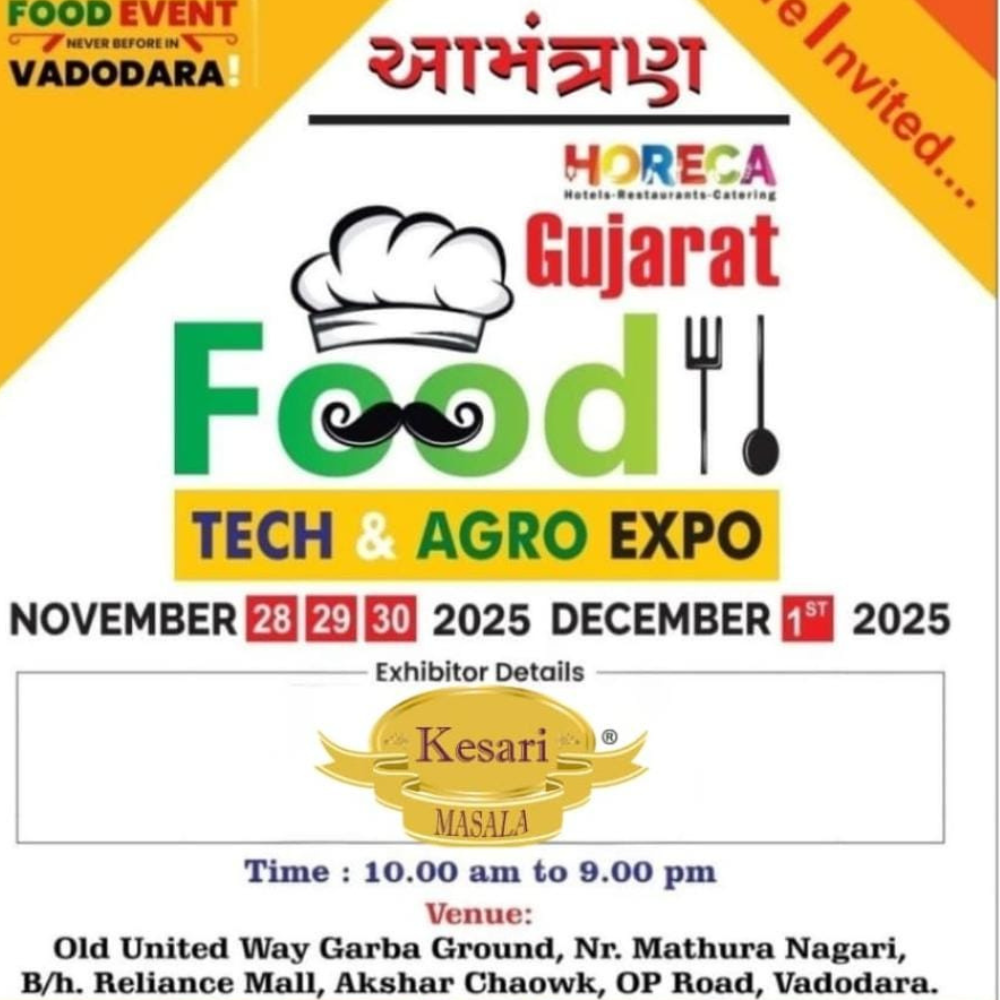
Harvesting Innovation: Gujarat Food Tech & Agro Expo 2025 Places Vadodara on India’s Food Technology Map
Vadodara, a city long known for its cultural richness and industrial backbone, witnessed a new kind of celebration in 2025—one rooted not in music or monuments, but in soil, science, and sustainability. The Gujarat Food Tech & Agro Expo 2025 emerged as a landmark event, transforming Vadodara into a national meeting point for farmers, food processors, innovators, startups, policymakers, and global buyers. More than just an exhibition, the expo became a living story of how India’s food ecosystem is evolving from traditional practices to technology-driven, future-ready solutions.
From the moment visitors stepped into the expo grounds, it was clear that this was not an ordinary trade fair. The air carried the aroma of fresh produce, processed foods, and innovation. Massive pavilions showcased everything from smart farming tools and food processing machinery to organic products, packaging solutions, cold chain technologies, and export-ready food brands. The expo reflected one powerful idea: the future of food is being shaped right now, and Gujarat is at its forefront.
Gujarat’s Strategic Role in India’s Food Tech Growth
Gujarat has always been a strong agricultural and industrial state, but the Food Tech & Agro Expo 2025 highlighted how the state is positioning itself as a bridge between farms and global markets. With robust infrastructure, ports, food parks, and a supportive policy ecosystem, Gujarat offers fertile ground for innovation in agri-business and food processing.
Vadodara, in particular, stood out as a strategic host city. Centrally located and well-connected, the city attracted participants from across India and overseas. Farmers from rural Gujarat shared space with food-tech startups, multinational machinery manufacturers, and export consultants. This blend of grassroots and global perspectives made the expo deeply inclusive and impactful.
From Traditional Farming to Smart Agriculture
One of the most inspiring sections of the expo focused on modern agricultural technologies. Smart irrigation systems, AI-powered crop monitoring tools, drone-based spraying solutions, and precision farming equipment demonstrated how technology can reduce costs, improve yields, and conserve resources. For many farmers visiting the expo, these innovations were not abstract concepts but practical tools they could adopt in the coming seasons.
Workshops and live demonstrations helped bridge the knowledge gap. Experts explained how data-driven farming could protect crops from climate uncertainty, pests, and market volatility. The message was clear: the farmer of the future will be as comfortable with data as with soil.
The Rise of Food Processing and Value Addition
If agriculture was the foundation of the expo, food processing was its strongest pillar. Gujarat Food Tech & Agro Expo 2025 placed special emphasis on value addition, showing how raw agricultural produce can be transformed into high-value products for domestic and international markets.
Advanced food processing machinery, automated packaging lines, quality testing equipment, and cold storage solutions attracted strong interest from entrepreneurs and MSMEs. From dairy processing and grain milling to ready-to-eat foods, snacks, beverages, and frozen products, the expo showcased how food processing can significantly boost farmer income and employment.
For startups and small manufacturers, the expo became a learning ground. They discovered how compliance with food safety standards, better packaging, and branding could unlock new markets. Many exhibitors reported on-the-spot inquiries and business leads, reinforcing the expo’s role as a catalyst for real economic growth.
A Platform for Startups and Innovation
One of the most vibrant aspects of the Gujarat Food Tech & Agro Expo 2025 was its startup ecosystem. Young entrepreneurs presented ideas that blended sustainability, technology, and nutrition. From plant-based foods and millet-based products to eco-friendly packaging and digital supply chain platforms, innovation was everywhere.
Startup-focused sessions allowed founders to pitch ideas, connect with investors, and receive mentorship from industry veterans. These interactions underscored a critical shift in India’s food sector: innovation is no longer limited to big corporations; it is being driven by agile startups with local insight and global ambition.
Sustainability and the Future of Food
Sustainability was not treated as a buzzword at the expo—it was a central theme. Exhibitors highlighted water-efficient farming methods, renewable energy solutions for food units, waste reduction technologies, and circular economy models. Organic farming, natural foods, and clean-label products received significant attention from consumers and buyers alike.
Discussions around climate change, food security, and nutrition reminded visitors that the future of food is not just about profit, but about responsibility. The expo made a strong case that technology and tradition must work together to build a resilient food system for future generations.
Knowledge Exchange and Policy Dialogue
Beyond exhibitions, the expo hosted seminars, panel discussions, and expert talks that added depth to the experience. Policymakers, agricultural scientists, food technologists, and industry leaders discussed topics such as export opportunities, government schemes, FPO development, and global food trends.
These sessions helped align ground-level innovation with national goals like doubling farmer income, boosting food exports, and strengthening India’s position in global food supply chains. For many attendees, this knowledge exchange was as valuable as the business opportunities.
Vadodara’s Moment on the National Stage
As the expo progressed, it became evident that Vadodara was not just hosting an event—it was making a statement. The city demonstrated its capability to support large-scale, knowledge-driven expos that matter to India’s economic future. Hotels, transport services, local businesses, and educational institutions all benefited from the influx of visitors and ideas.
By the closing day, Gujarat Food Tech & Agro Expo 2025 had done more than showcase products. It had connected people, sparked collaborations, and inspired confidence. Farmers returned home with new ideas, entrepreneurs with new contacts, and policymakers with renewed clarity.
Conclusion
The Gujarat Food Tech & Agro Expo 2025 will be remembered as a turning point—an event where innovation met tradition, and local ambition met global opportunity. By placing Vadodara firmly on India’s food tech map, the expo reinforced Gujarat’s leadership in agriculture, food processing, and sustainable development.
As India looks toward a future shaped by technology, nutrition, and sustainability, events like this serve as reminders that progress begins at the grassroots. The seeds sown at this expo—ideas, partnerships, and innovations—are likely to grow into solutions that feed not just India, but the world.