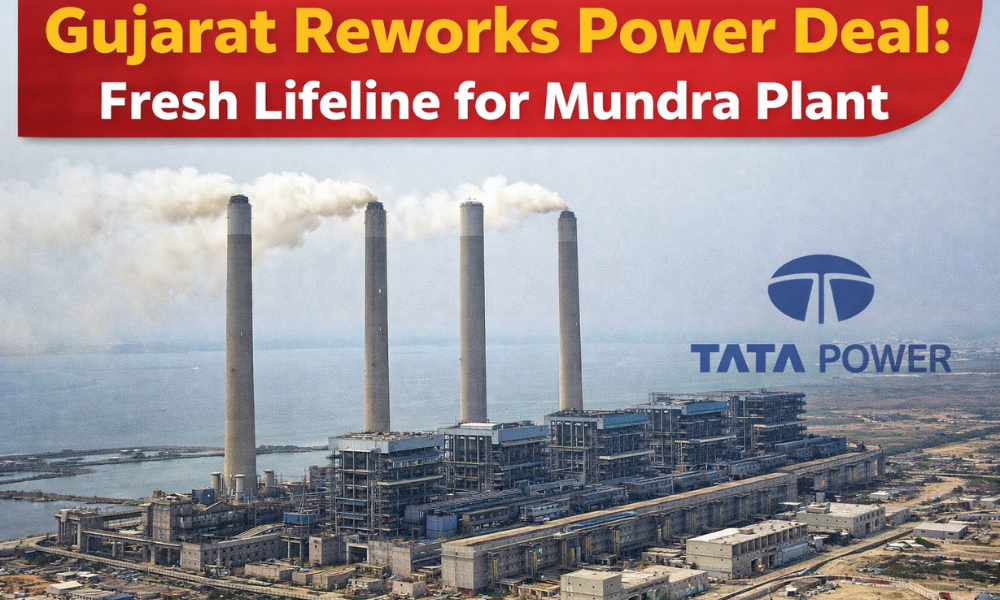
Gujarat Reworks Power Deal: Fresh Lifeline for Mundra Plant
Gujarat has taken a significant step toward strengthening its energy infrastructure by revising its power supply agreement with Tata Power. This updated pact is expected to provide a much-needed boost to the operations of the Mundra Power Plant, one of India’s largest thermal power plants.
The move comes as part of the state’s broader strategy to ensure uninterrupted electricity supply while addressing the financial and operational challenges faced by large-scale power projects. With rising energy demand and evolving market conditions, this revised agreement marks a crucial development in Gujarat’s power sector.
Why the Revised Power Deal Matters
The Mundra Power Plant has been a key contributor to Gujarat’s energy supply for years. However, fluctuating fuel costs, especially imported coal prices, have posed challenges for sustainable operations. The revised agreement aims to address these issues by restructuring tariff terms and ensuring financial viability for power producers.
By approving this new deal, the Gujarat government has demonstrated its commitment to maintaining a stable power supply while supporting private sector participation in energy generation.
Key Highlights of the New Agreement
The revised power supply pact includes several important features:
- Adjusted Tariff Structure: The agreement allows for a more flexible pricing mechanism, helping offset rising fuel costs.
- Long-Term Supply Assurance: It ensures continuous electricity supply to the state’s grid.
- Operational Stability: The deal provides financial relief to the plant, enabling smoother operations.
- Public-Private Collaboration: Strengthens the partnership between the government and Tata Power.
These changes are expected to benefit both the power producer and consumers by maintaining a balance between cost and reliability.
Impact on Gujarat’s Energy Sector
Gujarat is one of India’s most industrialized states, with a high demand for electricity across sectors such as manufacturing, agriculture, and residential consumption. The revised deal will play a vital role in meeting this demand.
- Reliable Power Supply
The agreement ensures that electricity shortages are minimized, supporting uninterrupted industrial operations and daily life.
- Economic Growth
A stable power supply is essential for economic development. By securing energy availability, Gujarat continues to attract investments and boost industrial growth.
- Energy Security
The move strengthens the state’s energy security by ensuring that a major power plant remains fully operational.
Challenges Faced by Mundra Power Plant
The Mundra Power Plant has faced several challenges over the years, including:
- Rising international coal prices
- Currency fluctuations impacting import costs
- Regulatory constraints on tariff adjustments
These issues had affected the plant’s profitability and operational efficiency. The revised agreement is designed to address these concerns and provide a sustainable solution.

Role of Tata Power
Tata Power, one of India’s leading energy companies, has been instrumental in developing and operating the Mundra plant. The company has consistently worked toward improving efficiency and adopting advanced technologies in power generation.
With the new agreement in place, Tata Power is expected to further enhance the plant’s performance and contribute to Gujarat’s growing energy needs.
Environmental Considerations
While thermal power remains a crucial energy source, environmental concerns continue to be a topic of discussion. The revised deal also emphasizes the importance of:
- Efficient fuel usage
- Reduced emissions through advanced technology
- Compliance with environmental regulations
Gujarat is also investing in renewable energy sources such as solar and wind to create a balanced energy mix.
Future Outlook
The revised power supply pact is a forward-looking step that aligns with Gujarat’s long-term energy goals. As the state continues to grow, the demand for reliable electricity will only increase.
This agreement sets a precedent for how governments and private companies can collaborate to overcome challenges and ensure sustainable development.
Conclusion
The approval of the revised power deal between Gujarat and Tata Power marks a turning point for the Mundra Power Plant. By addressing financial and operational challenges, the agreement provides a fresh lifeline to one of the country’s most important energy assets.
As Gujarat moves toward a more secure and efficient energy future, this decision highlights the importance of strategic planning and collaboration in the power sector. With a stable supply of electricity, the state is well-positioned to support economic growth, industrial expansion, and improved quality of life for its citizens.