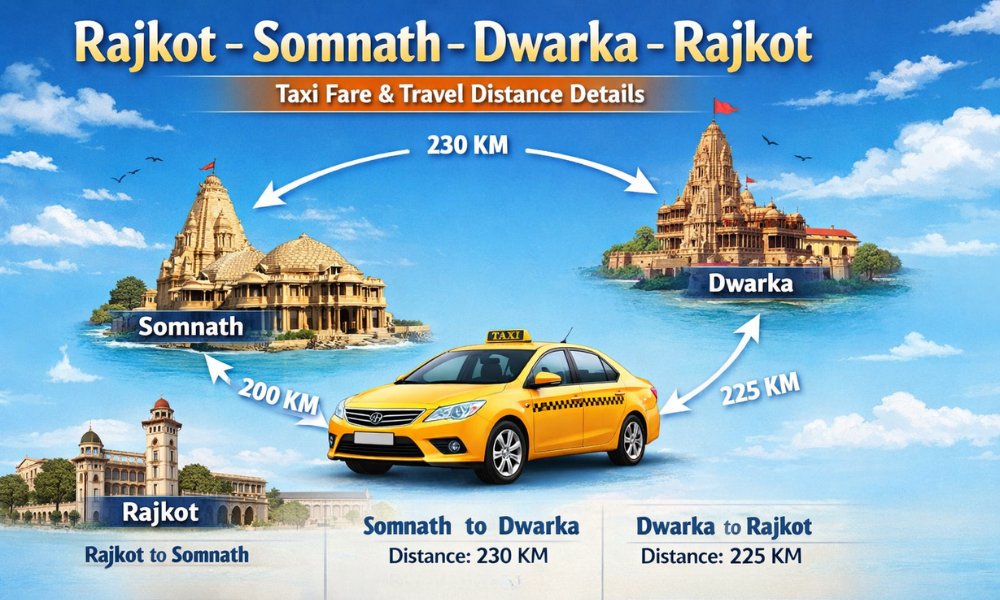
From Kutch to the World of Science: A Young Girl Scientist’s Discovery of 14 New Seaweed Species in Gujarat
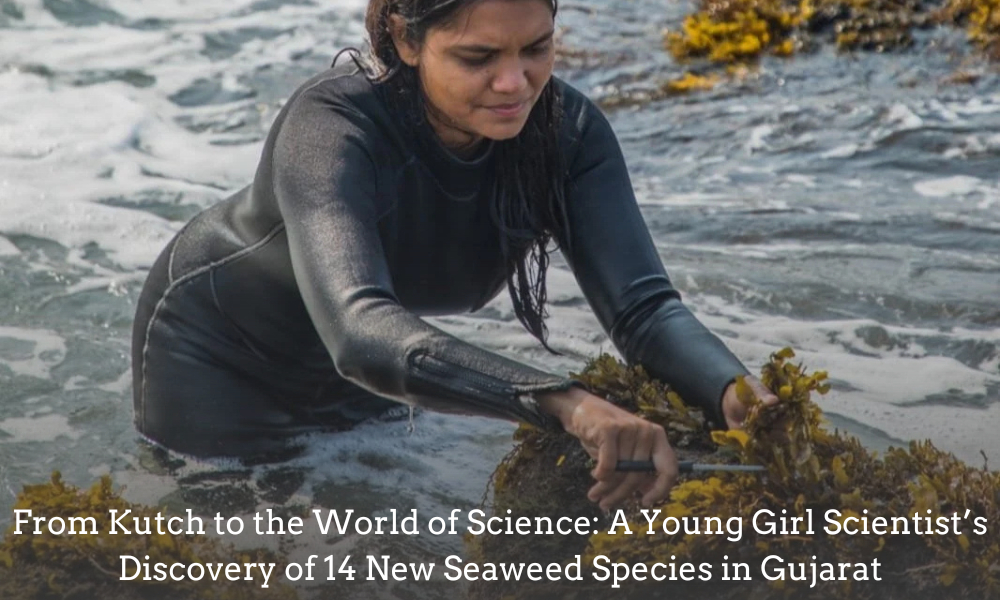
Scientific discoveries often emerge from years of patience, curiosity, and deep connection with nature. One such inspiring story comes from the coastal region of Kutch, Gujarat, where a woman scientist has carved her name into the field of marine biology through dedicated research on seaweed. Hailing from a small village in Kutch, Dr. Dimpal Raval (as reported in the Gujarati media) has achieved a remarkable milestone by discovering 14 new species of seaweed along the Gujarat coastline. Her achievement not only adds to global scientific knowledge but also highlights the growing role of Indian women in advanced scientific research.
Gujarat has one of the longest coastlines in India, stretching over 1,600 kilometers, and is known for its rich marine biodiversity. Despite this, many areas of its coastal ecosystem have remained underexplored. Dr. Raval’s research focuses on marine algae, commonly known as seaweed, a resource that plays a crucial role in environmental balance, coastal ecology, and sustainable livelihoods. Through years of fieldwork and laboratory analysis, she has brought global attention to Gujarat’s hidden marine wealth.
Dr. Raval’s journey into science began in a rural setting, far from advanced laboratories and research institutions. Growing up in Kutch, she developed a close relationship with nature, especially the coastal environment. What initially appeared to be simple sea plants scattered along the shore gradually became the subject of her scientific curiosity. This early exposure laid the foundation for a research career that would later gain national and international recognition.
Her academic path led her to specialize in marine biology and phycology, the study of algae. Seaweed, though often overlooked, is a highly valuable natural resource. It is used in pharmaceuticals, food industries, cosmetics, agriculture, and even biofuel production. Recognizing its potential, Dr. Raval dedicated her research to identifying, classifying, and conserving different seaweed species found along the Gujarat coast.
Between 2021 and 2025, Dr. Raval conducted extensive field surveys along the shores of Kutch, Saurashtra, and other coastal regions of Gujarat. These surveys involved collecting samples during different seasons, studying tidal patterns, and analyzing ecological conditions. Her efforts led to the identification of 14 previously undocumented seaweed species, marking a significant contribution to marine science in India.
Out of these discoveries, 10 new species were identified from Gujarat alone, placing the state firmly on the global marine research map. These findings were not limited to surface-level observations; they involved detailed microscopic analysis, taxonomic classification, and comparison with global marine databases. Such rigorous research ensures that the discoveries meet international scientific standards.
What makes this achievement even more remarkable is that Dr. Raval is among the few women scientists in India actively working in this specialized field. Marine research often demands physically challenging fieldwork, long hours in remote coastal areas, and persistent data collection. Despite these challenges, she continued her work with determination, setting an inspiring example for young women aspiring to enter scientific research.
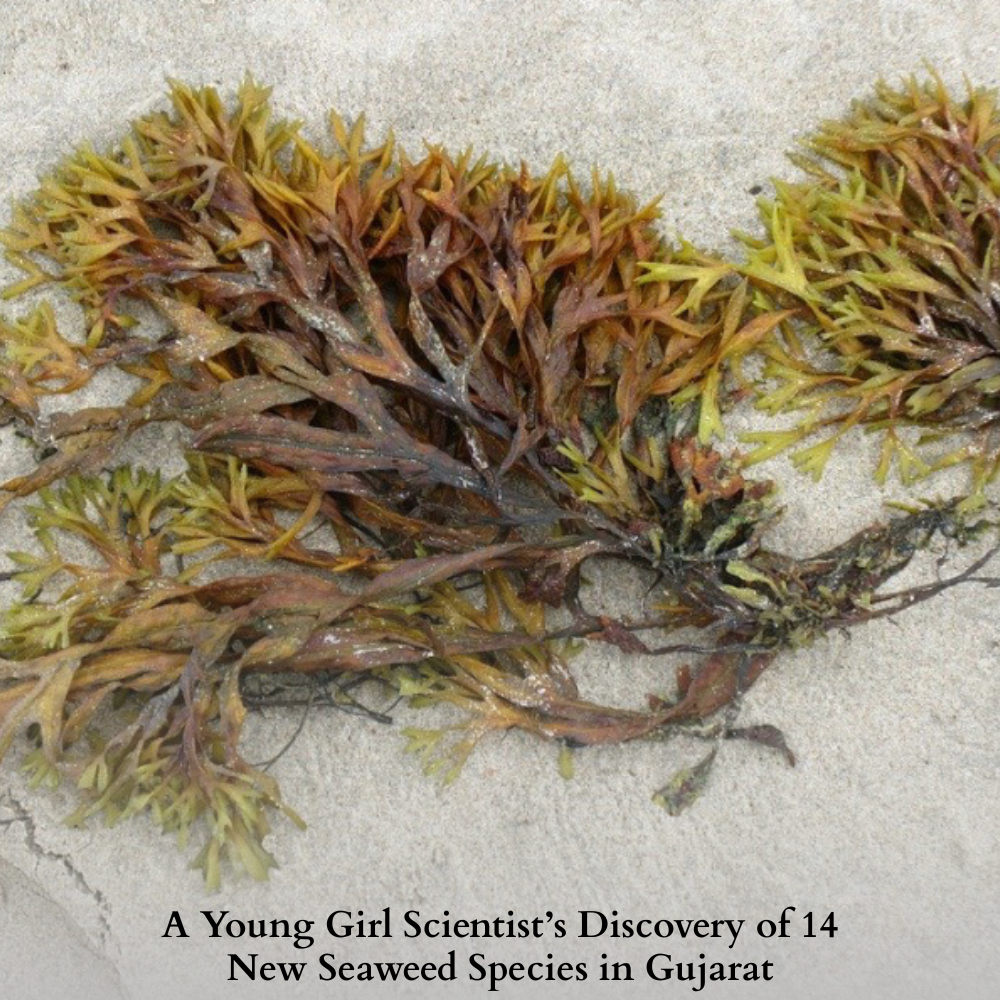
Her discoveries have also led to the naming of new seaweed species, some of which are inspired by Indian identity and regional heritage. These names symbolize not just scientific classification but also cultural pride. By linking science with local identity, Dr. Raval has ensured that Gujarat’s contribution to marine biodiversity is recognized worldwide.
Beyond academic significance, this research holds immense practical value. Seaweed plays a vital role in carbon absorption, coastal protection, and marine food chains. It helps reduce the impact of climate change by absorbing carbon dioxide and providing oxygen. Additionally, seaweed farming is emerging as a sustainable livelihood option for coastal communities. Dr. Raval’s work opens new possibilities for the development of eco-friendly industries in Gujarat, especially in rural and coastal regions.
Environmental experts believe that such discoveries can help policymakers design better marine conservation strategies. Understanding the diversity and distribution of seaweed species allows scientists and governments to protect fragile ecosystems from pollution, overfishing, and climate-related threats. Dr. Raval’s research provides valuable data that can support sustainable coastal development in Gujarat.
Her success also highlights the importance of supporting scientific research at regional universities and institutions. Often, groundbreaking research emerges not from large metropolitan centers but from dedicated individuals working closely with local ecosystems. Dr. Raval’s work proves that world-class science can emerge from rural India when talent is combined with opportunity and perseverance.
Equally important is the message her journey sends to young students, especially girls from small towns and villages. Her story challenges the belief that advanced scientific careers are limited to urban backgrounds. With passion, education, and consistent effort, it is possible to overcome social and geographical barriers. Dr. Raval stands as a role model for the next generation of Indian scientists.
Conclusion
In conclusion, the discovery of 14 new seaweed species by a woman scientist from Kutch is more than a scientific achievement—it is a story of determination, curiosity, and national pride. It showcases Gujarat’s rich marine biodiversity and emphasizes the critical role of women in science. As India moves toward sustainable development and environmental responsibility, such research becomes increasingly valuable. Dr. Raval’s work not only enriches global scientific knowledge but also strengthens India’s position in marine research, proving that even the quiet shores of Kutch can give rise to discoveries that resonate across the world.