




Discom Restructuring: Agricultural Power Is at the Forefront of Privatization Dispute
India’s power distribution companies, or discoms, are once again in the headlines. Years of rising debt, chronically poor collections from industrial and commercial users, and political hesitation in changing tariffs have led some states to push for restructuring and privatization of the electricity distribution sector. Restructuring has been linked to the controversial issue of agricultural power subsidies which has so far offset the efforts of state governments to turn around the power sector finances.
State Electricity Boards: Overdue Liabilities
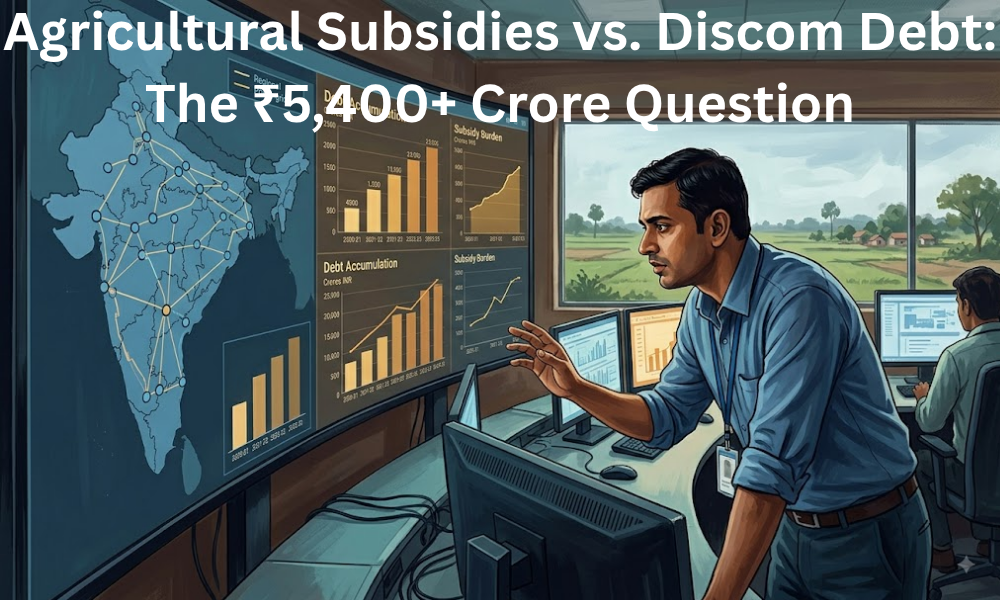
State-owned discoms have mounting liabilities worth several lakh crore. The situation resembles the one that prevailed before the Union government initiated the Ujwal Discom Assurance Yojana (UDAY) scheme in 2015. Under UDAY, the state governments took over a sizeable share of the discom liabilities in return for commitments to reduce losses and rationalize tariffs. However, a decade later, it appears that many states have failed to meet the targets.
Rating agencies have pointed out that most states are now in precarious fiscal positions to continue to prop up the discoms. Tariff hikes have been far and few in most states even as the average cost of supply continued to outstrip the average revenue realized. It is these deficits that get transferred to the state exchequer as subsidies.
Agricultural Subsidies: Structural Challenge
Agricultural consumers typically pay less than the cost of supply while domestic consumers pay a fraction of what commercial and industrial units pay. In effect, there is a heavy cross-subsidy in the Indian electricity pricing regime. In several states, the amount of subsidy provided to farmers in terms of concessional power tariffs runs into thousands of crores of rupees per annum.
The problem is not only about the amount of subsidy, however. Reduction in agricultural subsidies is a politically fraught issue as farmers are dependent on cheap power. In addition, most state governments have not been able to reimburse the amount due to the discoms, leading to poor cash flows that impact the capital intensity of the discoms and lead to mounting liabilities. Some states have proposed creating a separate entity for farmers to deal with distribution issues. Critics have accused the state government of wanting to create a separate entity in order to offload the loss-making discom onto private players while retaining the profit-making commercial discom.
Privatization of Distribution Utilities: The Debate
Given the fiscal challenges of supporting the loss-making discoms, the Union government has been encouraging states to pursue structural reforms. States with the largest liabilities have been informed that future support to the discoms would only be available if they sold a majority stake to private players, or divested a minority stake for managerial reform, or listed the discoms on the stock exchange with a credit rating on par with listed firms. Uttar Pradesh is set to privatize two of its largest distribution companies that serve a large part of the state in terms of both revenue and districts. Other states such as Delhi, Odisha, Dadra and Nagar Haveli, and Daman and Diu have also partly privatized their distribution utilities. Experience so far shows that private distribution companies have registered much lower AT&C losses and lower debt levels compared to state-owned firms. In cities such as Mumbai and Kolkata, private participation has helped reduce the amount of unpaid electricity bills compared to state-owned counterparts. Nevertheless, privatization has also faced hurdles in some states with private players accused of being uninterested in serving rural areas. The Supreme Court ruling that allowed privatisation of the discoms in Chandigarh has emboldened other states to pursue privatization of distribution, despite legal challenges.
Rationalizing Fiscal Transactions with Discoms
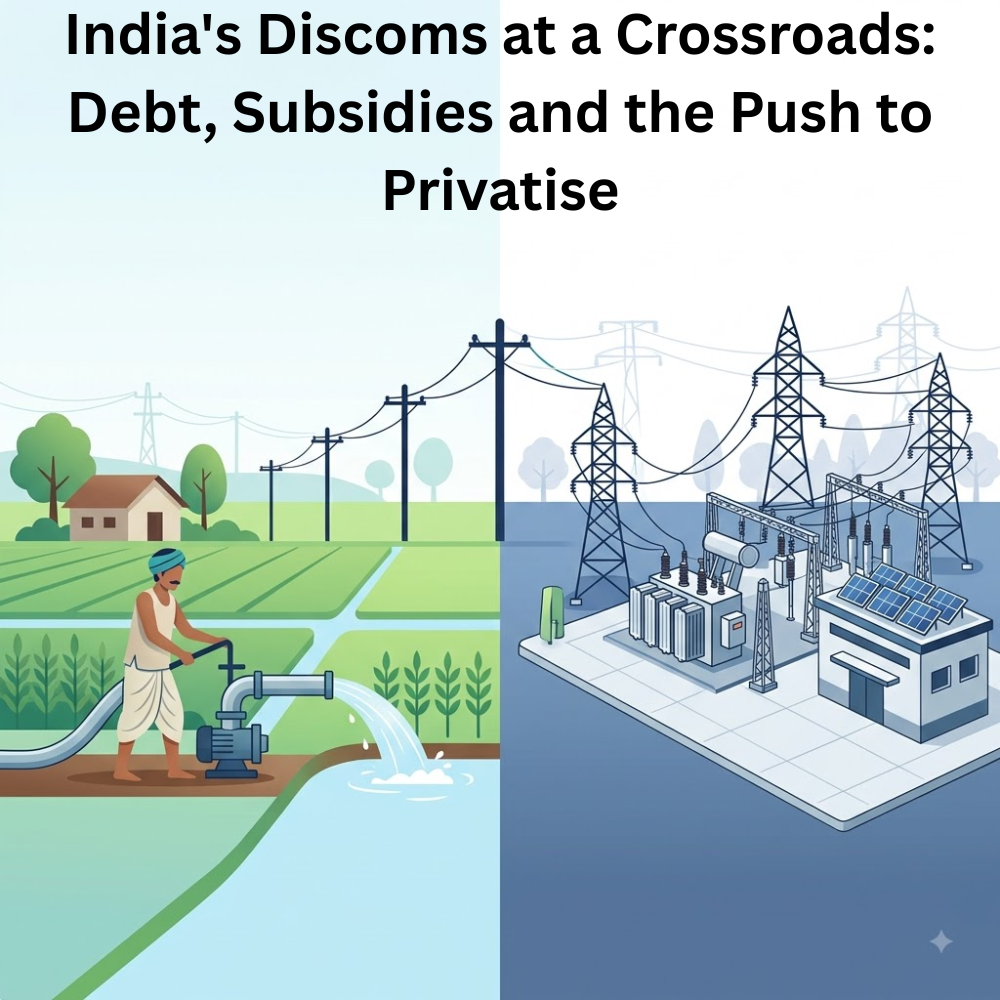
While most states are focusing on reforming tariffs, the fiscal commission is suggesting other measures that could help in addressing the discom losses. The latest proposal suggests the creation of a special purpose vehicle to which the working capital loans and other obligations that do not have a corresponding asset can get transferred. Such an initiative would help ease the finances of the discoms and improve the prospects of privatization.
Late payment surcharge rules have already helped reduce the average number of days taken by the discoms to pay generation and transmission companies.
Conclusion
The controversy around the discom losses involves issues of state finances, commercial and industrial tariffs, farm loans, and private participation in the electricity sector. Agricultural power subsidies seem to have become a political liability as any move to remove these subsidies has caused tremendous hardship to farmers. For some time, the UDAY scheme has helped the state-owned discoms, but in the long run, it has not resolved the perennial deficit issues. The latest fiscal proposals suggest that a combination of tariff and fiscal reforms would be required to address the discom losses. The restructuring process and privatization of the distribution utilities will determine the fate of electricity consumers in both urban and rural areas. It will be for the state governments to determine if privatization of the discoms will help in improving service delivery and ensuring that the subsidy burdens are reduced.