Death of a Powerful Leader Ajit Pawar in a Plane Crash and Its Impact on Maharashtra Politics
Maharashtra politics has long been shaped by strong personalities, shifting alliances, and intense power struggles. Among the most influential and controversial figures to emerge from this landscape is Ajit Pawar. Known for his administrative acumen, political aggression, and decisive style of leadership, Ajit Pawar has played a central role in some of the most turbulent phases of Maharashtra’s modern political history.
From coalition crises and dramatic government formations to internal party rebellions, his political journey reflects both the volatility and adaptability of Indian state politics.
Early Political Rise and Background
Ajit Pawar entered politics carrying a powerful legacy. As a member of the Pawar family, which has deeply influenced Maharashtra’s cooperative movement and state politics, he rose steadily through the ranks of the Nationalist Congress Party (NCP). Unlike many leaders who rely solely on charisma, Ajit Pawar built a reputation as a hands-on administrator, particularly during his tenure handling finance and irrigation portfolios.
His early years were marked by sharp political instincts and a strong grip over regional leadership, especially in Western Maharashtra. Supporters viewed him as a decisive leader capable of delivering results, while critics often accused him of being authoritarian in style.
The Irrigation Controversy and Political Setbacks
One of the most challenging phases of Ajit Pawar’s career emerged during allegations related to irrigation projects in Maharashtra. The controversy became a major political flashpoint, with opposition parties targeting him over alleged irregularities and mismanagement.
Though Ajit Pawar denied wrongdoing and was never convicted, the episode damaged his public image and temporarily forced him to resign from ministerial positions. This phase highlighted how governance decisions in Maharashtra often become deeply politicized, especially when large-scale infrastructure and public funds are involved.
Despite setbacks, Pawar managed to retain his influence within the party and among key voter bases, demonstrating his political resilience.
Coalition Politics and Power Dynamics
Maharashtra has been a laboratory of coalition politics, and Ajit Pawar has been at the center of many dramatic developments. The 2019 Maharashtra Assembly election aftermath marked one of the most turbulent moments in the state’s political history.
In a surprise early-morning move, Ajit Pawar briefly aligned with the Bharatiya Janata Party (BJP) to form a government, taking oath as Deputy Chief Minister. The move stunned political observers, triggered constitutional debates, and led to intense political drama. However, the alliance collapsed within days, and Pawar returned to the NCP fold.
This episode reinforced his image as a bold, unpredictable strategist—admired by some for decisiveness and criticized by others for political opportunism.
Role in the Maha Vikas Aghadi Government
Following the collapse of the brief BJP-NCP arrangement, Ajit Pawar became Deputy Chief Minister in the Maha Vikas Aghadi (MVA) government, an alliance comprising the Shiv Sena (Uddhav Thackeray faction), NCP, and Congress.
During this period, Pawar played a crucial role in governance, especially in managing finances during the COVID-19 pandemic. His handling of economic challenges earned praise even from political rivals, as Maharashtra faced unprecedented health and fiscal crises.
At the same time, internal tensions within the coalition and ideological differences kept the political environment unstable. Ajit Pawar emerged as a key negotiator, balancing coalition pressures while maintaining his authority within the NCP.

What Happened During the Ajit Pawar Plane Crash? Full Details and Analysis
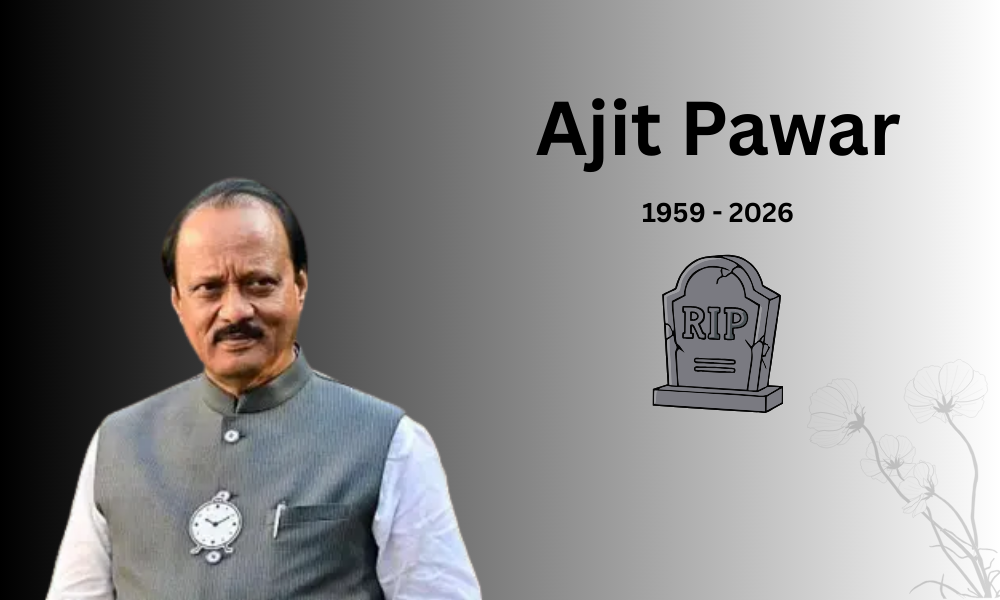
Ajit Pawar, Deputy Chief Minister of Maharashtra, died in a plane crash on 28 January 2026.
The aircraft was a Learjet 45 (air charter flight) carrying Pawar from Mumbai to Baramati for local election campaigning.
It crashed during an approach to Baramati Airport and caught fire, with no survivors.
The plane crashed near the runway early Wednesday morning and exploded, making rescue impossible.
The most dramatic phase of Ajit Pawar’s career came after the 2019 Maharashtra Assembly elections. In a surprising early-morning development, he briefly aligned with the Bharatiya Janata Party (BJP) to form a government, taking oath as Deputy Chief Minister. The move stunned political observers and led to a brief but intense political crisis before collapsing within days. This episode reinforced his image as a bold and unpredictable strategist.
Later, as Deputy Chief Minister in the Maha Vikas Aghadi (MVA) government, Pawar played a key role in managing the state’s finances, especially during the COVID-19 pandemic. His administrative handling during this challenging period earned acknowledgment across party lines, even as coalition tensions continued to test the government’s stability.
Another major turning point arrived with the split within the NCP, when Ajit Pawar led a faction that joined the BJP-led government in Maharashtra. This development reshaped political equations in the state and triggered debates on loyalty, ideology, and the future of coalition politics.
Conclusion
Overall, Ajit Pawar’s political journey reflects the turbulence of Maharashtra politics itself—defined by shifting alliances, power struggles, and constant reinvention. Whether viewed as a pragmatic leader or a controversial strategist, his impact on the state’s political narrative remains significant and ongoing.