
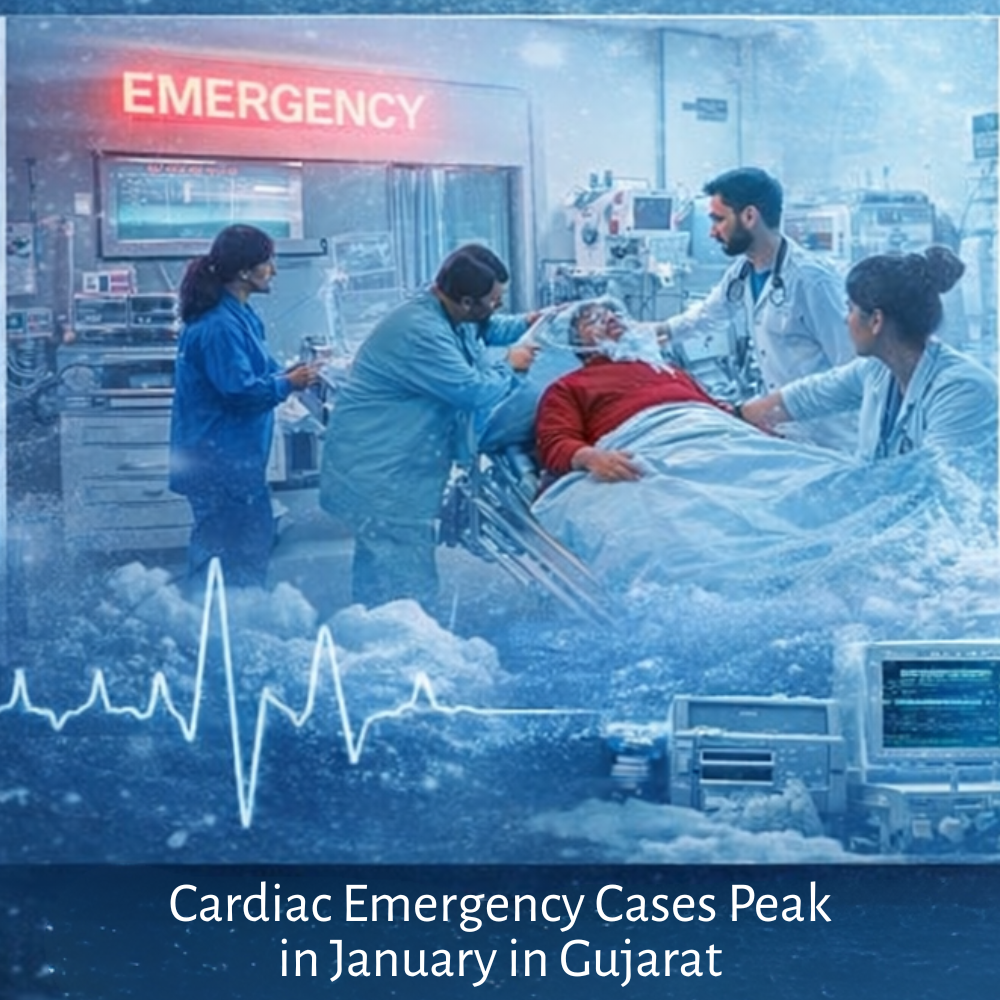
Cardiac Emergency Cases Peak in January in Gujarat; Cold Weather Linked to Rise in Heart-Related Issues
As winter tightened its grip on Gujarat in January, medical professionals and health authorities across the state sounded the alarm cardiac emergency cases surged to levels significantly higher than in other months, prompting increased concern over how cold weather affects heart health.
According to the Emergency Management & Research Institute’s 108 ambulance service data, January consistently records one of the highest numbers of heart-related emergency calls every year. In recent years, this seasonal surge has become more pronounced, indicating not just a temporary weather effect but an urgent public health challenge.

January: A High-Risk Month for Heart Emergencies
January’s cold temperatures create a perfect storm of physiological and lifestyle conditions that put added stress on the cardiovascular system. Data from EMRI 108 shows that in January 2024, Gujarat recorded significantly more heart emergency cases than the same month in previous years.
In practical terms, this means that for every hour of the day in January, multiple individuals in the state are reported to be experiencing chest pain, shortness of breath, or other urgent cardiac symptoms requiring immediate medical attention. These calls often lead to hospital admissions, angioplasty procedures, or in severe cases life-threatening outcomes.
Health experts attribute this pattern not only to underlying chronic heart conditions but also to the direct impact of colder temperatures on the body’s cardiovascular functioning.
Cold Weather and the Heart: A Physiological Link
Cold weather affects the heart in several key ways. When exposed to low temperatures, the body naturally tries to preserve heat by narrowing blood vessels a process called vasoconstriction. This narrowing increase blood pressure because the heart must work harder to pump blood through tighter channels. Higher blood pressure, especially in individuals with pre-existing cardiac problems, raises the risk of heart attack and other emergencies.
Medical research consistently backs this connection. For example, studies have shown that cold exposure increases the risk of myocardial infarction (heart attacks) days after the cold stress, as blood becomes more viscous and prone to clotting a risk factor for blocked arteries.
Moreover, winter conditions often coincide with reduced physical activity. Short daylight hours and frigid mornings discourage people from exercising outdoors, contributing to weight gain, reduced circulation, and poorer overall cardiovascular health. Such lifestyle shifts combined with heavier, richer foods often eaten in winter further amplify heart risk.
Why January, Specifically?
January sits at the peak of winter in Gujarat. The lowest nighttime and early morning temperatures often occur in this month, creating prolonged cold exposure relative to other months. This sustained cold exposure amplifies vasoconstriction and increases cardiac workload over time.
Additionally, respiratory infections such as flu are more common during colder months. These infections can trigger systemic inflammation that destabilizes arterial plaque, making heart attacks more likely.
Another contributing factor is behavior many people delay seeking care during cold spells, thinking symptoms are related to non-serious issues or waiting for improved weather. Such delays can cause worsening cardiac conditions before they reach a medical facility.
State Health Data and Rising Trends
Longitudinal data from Gujarat indicates a growing trend of heart-related emergencies independent of seasons, but winter months consistently show notable spikes.
From January through March 2025, the state logged over 23,700 heart-related emergency calls, averaging more than 267 cases per day indicating persistent cardiovascular stress among the population.
Comparing year-on-year data also suggests that heart emergencies in January are not isolated but part of a broader rise in cardiovascular events throughout the year, with winter acting as an exacerbating seasonal factor.
This rise isn’t just limited to older adults. A significant percentage of cardiac emergencies involve younger individuals those in their 30s and even 20s highlighting widespread risk factors such as diabetes, hypertension, poor diet, smoking, and increasingly sedentary lifestyles.
At-Risk Groups: Who Is Most Vulnerable?
While anyone can experience a cardiac emergency, certain groups are at substantially higher risk in cold conditions:
- Elderly individuals, whose cardiovascular systems are already weakened.
- People with pre-existing conditions (e.g., hypertension, high cholesterol, diabetes).
- Those with sedentary lifestyles or obesity.
- Individuals with smoking or alcohol habits, which further harm heart and vascular health.
For these groups, the combination of cold-induced vasoconstriction, increased blood pressure, and thicker blood can significantly heighten the risk of acute cardiac events.
Warning Signs and Immediate Actions
Recognizing symptoms early can make the difference between a life saved and a tragedy. Common warning signs of cardiac emergencies include:
- Persistent chest pain or pressure
- Shortness of breath or abrupt breathing difficulty
- Pain radiating to the arms, neck, jaw, or back
- Lightheadedness or sudden dizziness
- Cold sweats or sudden fatigue
If these symptoms appear, especially during cold weather, immediate medical attention is critical. Calling emergency services (such as 108) without delay increases the chances of timely intervention and reduces long-term damage. Early recognition and rapid response can be life-saving.
Prevention and Preparedness
Preventing cold-linked cardiac emergencies requires both personal vigilance and public health action:
- Stay Warm and Active Indoors
Dress in warm, layered clothing when going outside, especially during early morning and nighttime. Indoors, maintain comfortable temperatures to reduce cardiovascular stress.
- Monitor Health Regularly
Regular check-ups for blood pressure, cholesterol, and diabetes help identify risk patterns early. Those with known heart conditions should follow their treatment plans strictly, including medication adherence.
- Maintain Physical Activity
While outdoor exercise may be challenging in winter, indoor activities such as walking on a treadmill, yoga, or light exercises help maintain cardiovascular fitness.
- Diet and Lifestyle
Avoid heavy, fatty foods and excessive alcohol intake that can elevate blood pressure and cholesterol. Eat balanced meals rich in fruits, vegetables, and heart-healthy nutrients.
- Public Awareness Campaigns
Health authorities and hospitals in Gujarat should intensify winter awareness campaigns that educate people about cold-related cardiac risk much like campaigns for respiratory illnesses. Simple preventive tips disseminated through media and community health initiatives can reduce emergency cases.
Conclusion
January’s peak in cardiac emergencies in Gujarat is a clear reminder that heart health doesn’t rest with the coming of winter. It demands awareness, preparedness, and proactive healthcare measures from individuals and the state alike.
The link between cold weather and heart events is not merely coincidental — it’s grounded in clear physiological responses and behavioral patterns. As temperatures dip, blood pressure rises, vascular stress increases, and heart emergencies become more frequent. But with proper preventive action, education, and prompt medical response, many of these winter-associated cardiac events can be mitigated.
As Gujarat continues to monitor and respond to rising cardiovascular issues, the focus must shift from reactive treatments to preventive strategies, ensuring that the cold winds of January do not become the unbearable burden on the heart.