Can Connected Cars Make India’s Roads Safer?
India’s streets are among the busiest—and tragically, among the most dangerous—in the world. Each day, millions of vehicles explore swarmed thruways, city boulevards, town streets, and convergences. Whereas foundation has moved forward over the a long time, street mischances proceed to claim thousands of lives every year. Presently, a unused technology-driven activity may offer assistance alter that reality: associated vehicle communication, frequently alluded to as Vehicle-to-Everything (V2X) technology.
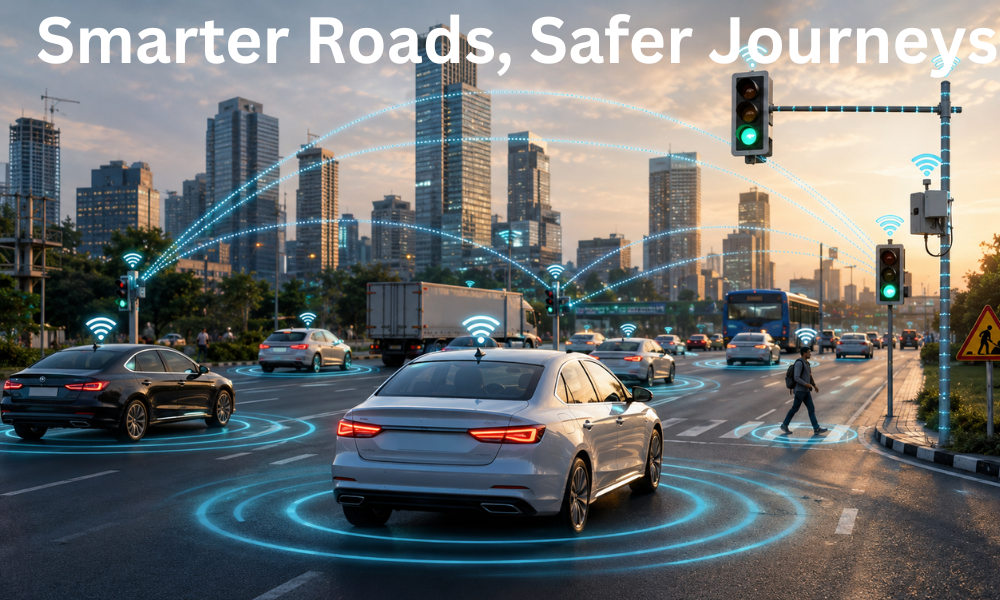
The Indian government has as of late taken an critical step by opening particular radio range groups for vehicle communication frameworks. This move is anticipated to quicken the appropriation of innovations that permit vehicles to communicate with one another and with encompassing foundation in genuine time. Supporters accept it might ended up a effective instrument in diminishing mishaps and making streets safer.
Understanding the Street Security Challenge
Road security remains one of India’s greatest transportation concerns. Concurring to official figures, the nation recorded about 488,000 street mischances and over 177,000 fatalities in 2024. Behind these measurements are endless families influenced by preventable tragedies. Human blunder proceeds to be the driving cause of mishaps, whether due to diverted driving, speeding, destitute judgment, or postponed response times.
Traditional security measures such as situate belts, airbags, anti-lock braking frameworks, and way better street plan have certainly made a difference. Be that as it may, specialists contend that avoiding mishaps some time recently they happen requires vehicles to gotten to be more intelligent and more mindful of their surroundings.
This is where associated vehicle innovation enters the picture.
What Is V2X Technology?
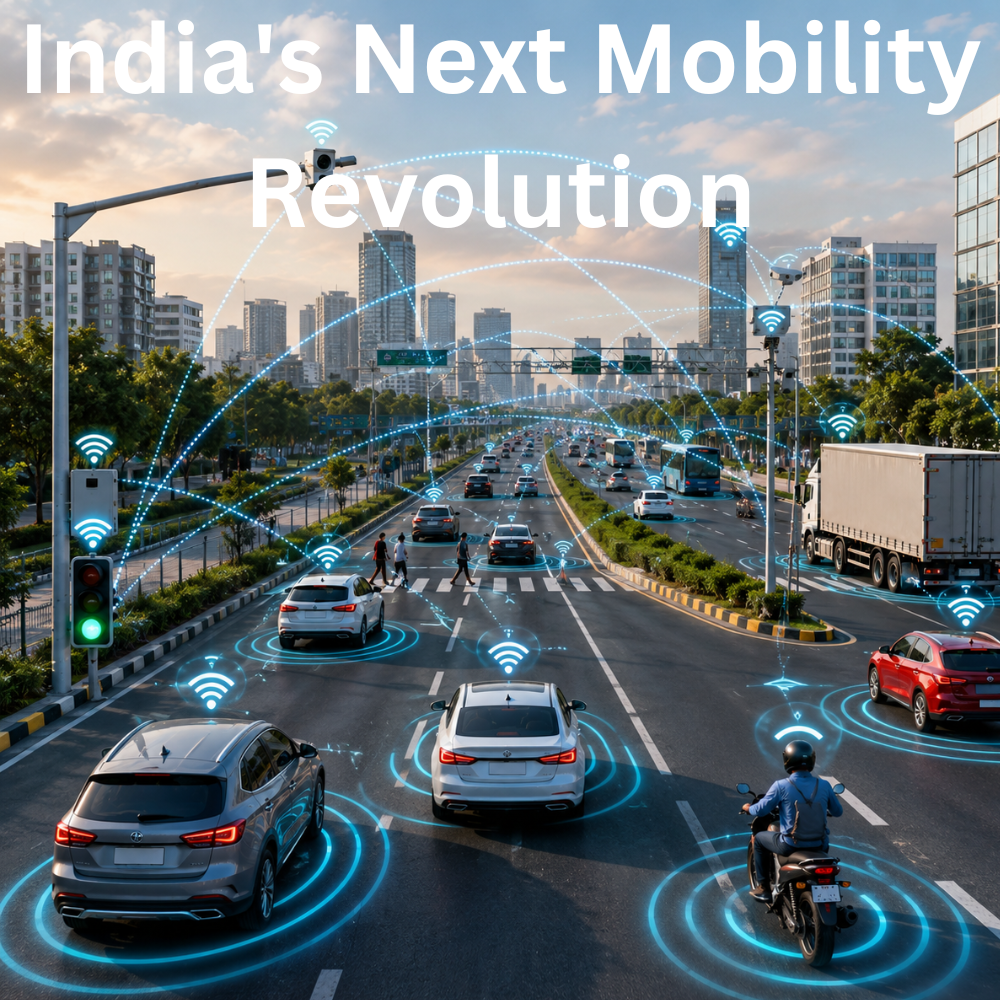
Vehicle-to-Everything, or V2X, alludes to a communication framework that permits vehicles to trade data with different components around them. These intelligent can take a few forms:
* Vehicle-to-Vehicle (V2V): Cars communicate straightforwardly with other vehicles.
* Vehicle-to-Infrastructure (V2I): Vehicles associated with activity signals, street signs, and other infrastructure.
* Vehicle-to-Pedestrian (V2P): Alarms can be shared with people on foot and cyclists.
* Vehicle-to-Network (V2N): Vehicles communicate through portable systems and cloud services.
In down to earth terms, a associated car may get a caution that another vehicle ahead has all of a sudden braked, indeed if it is covered up behind a truck or around a dazzle bend. Additionally, drivers may be cautioned around street development, mischances, slowed down vehicles, or unsafe climate conditions some time recently they ended up visible.
Unlike cameras and radar frameworks that depend on line-of-sight perceivability, V2X communication permits vehicles to “see” past deterrents through information sharing. This capability seem essentially progress response times and decrease collision risks.
Why Range Get to Matters
For V2X innovation to work viably, vehicles require committed radio frequencies to trade data rapidly and dependably. Recognizing this necessity, the government has de-licensed certain range groups utilized for car radar and vehicle communication frameworks. This implies companies can convey the innovation without going through long permitting procedures.
The choice adjusts India with universal hones taken after in locales such as the Joined together States and Europe. It moreover permits automakers and innovation suppliers to utilize universally accessible equipment or maybe than making specialized forms exclusively for the Indian showcase. As a result, costs seem diminish and appropriation seem gotten to be faster.
For buyers, this may in the long run decipher into more secure vehicles getting to be more affordable.
More Than Fair Self-Driving Cars
When individuals listen approximately vehicle communication innovation, they regularly relate it with self-driving cars. Whereas V2X can certainly back independent driving in the future, its quick esteem lies in progressing street security for ordinary drivers.
Features empowered by associated communication include:
* Collision warnings
* Blind-spot alerts
* Crisis vehicle notifications
* Lane-change assistance
* Crossing point security alerts
* Wrong-way driving warnings
* Risk location past visual range
Many of these applications do not require completely independent vehicles. Instep, they act as an extra layer of insights that makes a difference drivers make more secure decisions.
In a nation where activity conditions are frequently eccentric, such help may demonstrate especially valuable.
Financial Benefits Past Safety
Reducing mischances is not as it were a open security objective but too an financial need. Street mishaps force gigantic monetary costs through restorative costs, property harm, misplaced efficiency, activity disturbances, and protections claims.
Industry bunches assess that street mishaps taken a toll India more than 3% of its net household item. Any innovation that makes a difference diminish mishaps might hence create critical financial benefits nearby sparing lives.
Improved activity stream is another potential advantage. Associated vehicles can share data around clog, flag timings, and street conditions, making a difference make more productive transportation networks.
For coordinations companies, smoother transportation might cruel lower working costs and speedier deliveries.
Challenges on the Street Ahead
Despite its guarantee, far reaching appropriation of V2X innovation will not happen overnight.
One major challenge is biological system advancement. The innovation gets to be more successful as more vehicles and foundation take an interest in the organize. If as it were a little rate of vehicles are associated, the benefits stay limited.
There are too questions almost guidelines, interoperability, cybersecurity, and speculation prerequisites. Vehicles from diverse producers must be able to communicate consistently. At the same time, communication frameworks must be ensured against hacking and pernicious interference.
Industry partners have moreover wrangled about how the associated vehicle environment ought to be overseen, driving to contradictions between telecom administrators, car companies, and innovation suppliers. Such debate may moderate usage if not settled efficiently.
Another challenge is framework availability. Vehicle-to-Infrastructure communication requires savvy activity signals, associated roadside units, and advanced activity administration frameworks. Building this foundation over a endless nation like India will require considerable venture and coordination.
Conclusion
Even with these challenges, the later range changes flag that India is genuine around embracing next-generation street security innovations. The move lays the foundation for pilot ventures, industry collaboration, and future large-scale deployment.
As associated portability innovations develop, they seem complement existing security frameworks and offer assistance address one of the country’s most tireless open security issues. Whereas no innovation can totally dispose of mischances, more astute vehicles that communicate with their environment offer a down to earth way to diminish dangers and make strides mindfulness on the road.
For India, where street security remains a squeezing concern, associated vehicle innovation speaks to more than fair an car advancement. It is an opportunity to spare lives, diminish financial misfortunes, and construct a transportation framework that is more secure, more intelligent, and way better arranged for the future. If executed viably, the cars of tomorrow may not as it were drive individuals from one put to another—they may moreover offer assistance anticipate tragedies some time recently they happen.