





How a Textile Mill Owner Bought 2 Wind Turbines and Built India’s Biggest Wind Energy Company
In the mid 90s, a small-time Gujarat businessman was losing sleep over something most would not even think twice about-electricity. Tulsi Tanti, a local textiles mill owner, was facing a dilemma common to many manufacturers in India, where erratic power supplies made it difficult to keep businesses running. After all, the second largest source of expenditure for any textile mill, after raw materials, was electricity. Voltage fluctuations, frequent load shedding, and erratic tariffs made it extremely hard to maintain a steady flow of production.
For most businessmen, this would have been simply an annoyance they’d have adjusted to. Tanti did something else entirely. He decided to stop depending on the grid altogether.
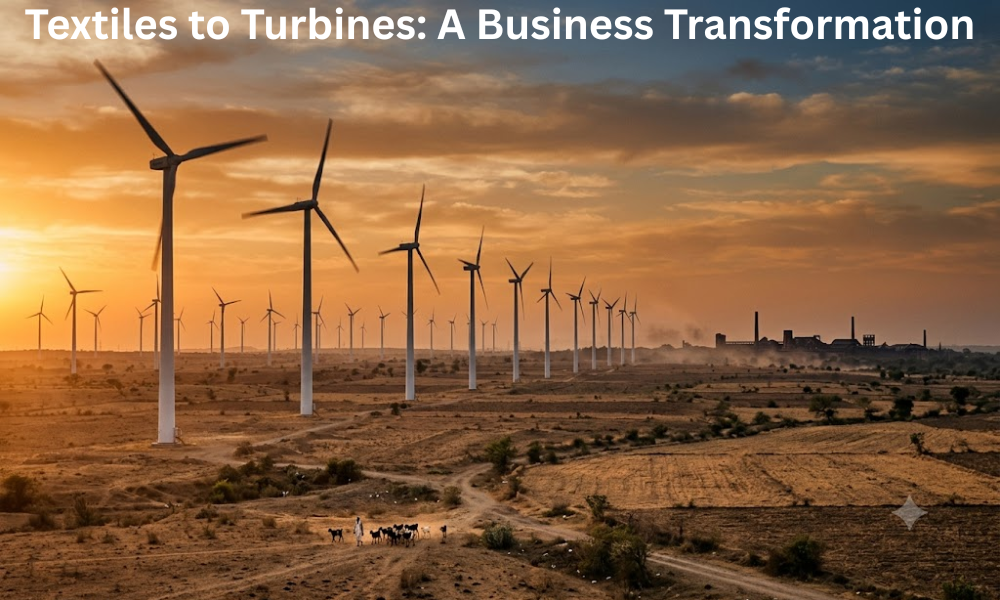
A Problem-Solving Decision, Not a Business Plan
Tanti’s first step was not the kind of visionary thing you’ve read. It was rather simple. He built two wind turbines in order to supply electricity to his textile units. Why? Because he realized that relying on the national circuit could be risky and that Gujarat has plenty of wind.
But he did not realize that his backup plan would become a much more important part of his business than he ever thought. Having those two wind turbine generators made Tanti a pioneer in a field that until very recent years was almost nonexistant in India.
He saw the mechanics of wind power generation up close, understood its economics, and realised that if his own mill benefited this much from clean, self-generated electricity, countless other industries — including entire states — were sitting on the same untapped problem.
That realisation changed everything. Tanti didn’t just want to power his textile mill anymore. He wanted to build the infrastructure that could power India differently.
Betting Big on Wind
In 1995, Tanti founded Suzlon Energy. It was a leap few people around him fully understood at the time. India’s renewable energy sector was practically non-existent in any organised, industrial sense. Wind power was seen as a niche, experimental technology — not something you built a company, let alone an empire, around. Financing was hard to come by, since banks were unfamiliar with the model and hesitant to underwrite a business built on turbines and open fields rather than factories and machinery they understood.
Tanti pressed ahead anyway. One of the more telling early moves came when he secured rights from a German turbine manufacturer to sell its machines in India, only for that company to go bankrupt before he could complete his first order. Rather than treat this as a setback, Tanti turned it into an opportunity — he acquired the rights to the German company’s technology, brought its engineers on board, and took over its research facility. It was an unusually bold move for a first-generation entrepreneur from the textile world, and it gave Suzlon something most Indian companies in the sector didn’t have: real, in-house engineering capability from day one.
By 2001, wind energy had clearly outgrown its status as a side project. Tanti sold off his textile business entirely and turned his full attention to Suzlon. It was a telling decision — the business that started as a solution to a textile problem had now become the primary business itself.
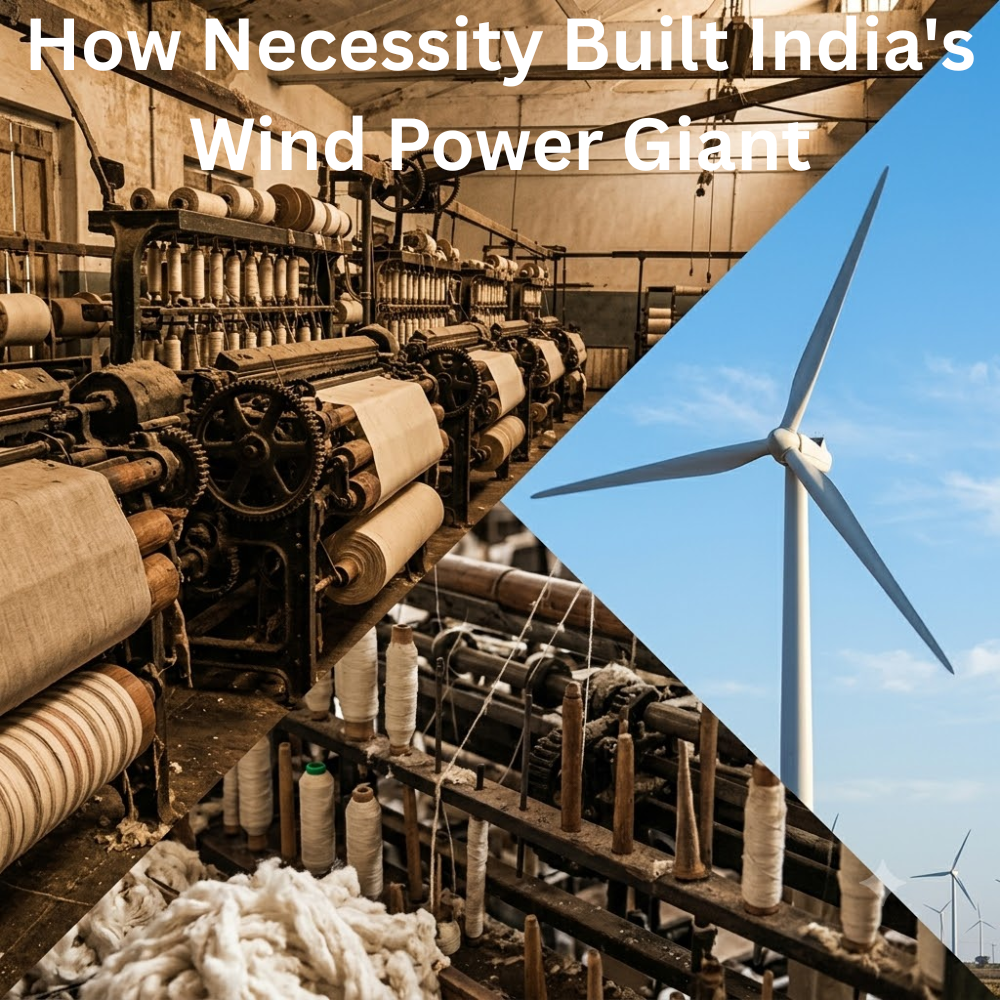
From Local Fix to Global Player
Suzlon’s growth over the following decade was rapid by any standard. The company expanded beyond manufacturing turbines to offering complete wind energy solutions — site assessment, installation, and long-term maintenance — which made it easier for Indian companies with no prior experience in renewable energy to adopt wind power without building expertise from scratch.
International expansion followed soon after. Within a few years of restructuring the company, Suzlon had obtained orders from foreign companies, including a major order from the United States to provide turbines for a wind farm, and established its presence in China. By the end of the decade, Suzlon had transformed from a relatively unknown player among India’s banking sector to a multinational corporation with wind turbines at its production sites worldwide.
The initial public offering in 2005 was higher than expected, indicating that investors had recognized the value of investing in India’s renewable energy sector, as Suzlon had successfully demonstrated its potential to be a profitable enterprise.
Why the Story Still Matters
What makes Tanti’s journey worth revisiting today isn’t just the scale Suzlon eventually reached — it’s the sequence of decisions behind it. He didn’t set out to build India’s biggest wind energy company. He set out to solve a very specific, very unglamorous problem: keeping his textile machines running despite an unreliable power supply. The wind energy business grew out of paying close attention to what that solution revealed, rather than sticking rigidly to a five-year plan drawn up in advance.
The case study of Suzlon Group is a great demonstration of resilience, determination, and the ability to learn valuable lessons from failures. Firstly, when Tanti’s main turbine supplier went bankrupt, he did not moan about the circumstances and wait for the wind to change. He took the failure onboard, made changes, and built the future of the company on it.
Conclusion
When Tanti died in 2022, Suzlon had become one of India’s leading clean energy companies with gigawatts of electricity generation capacity. He had earned the honor of the “Wind Man of India,” while staying humble and believing that he had “in no way exaggerated” the challenges and seemingly ridiculous start to his career as a wind farm owner. All he wanted was to stop paying for electricity that was not reliable in its provision, so he bought the first two turbines for his textile mill.
Sometimes, the biggest companies aren’t born out of grand visions. They’re born out of someone refusing to accept a bad situation as permanent.