
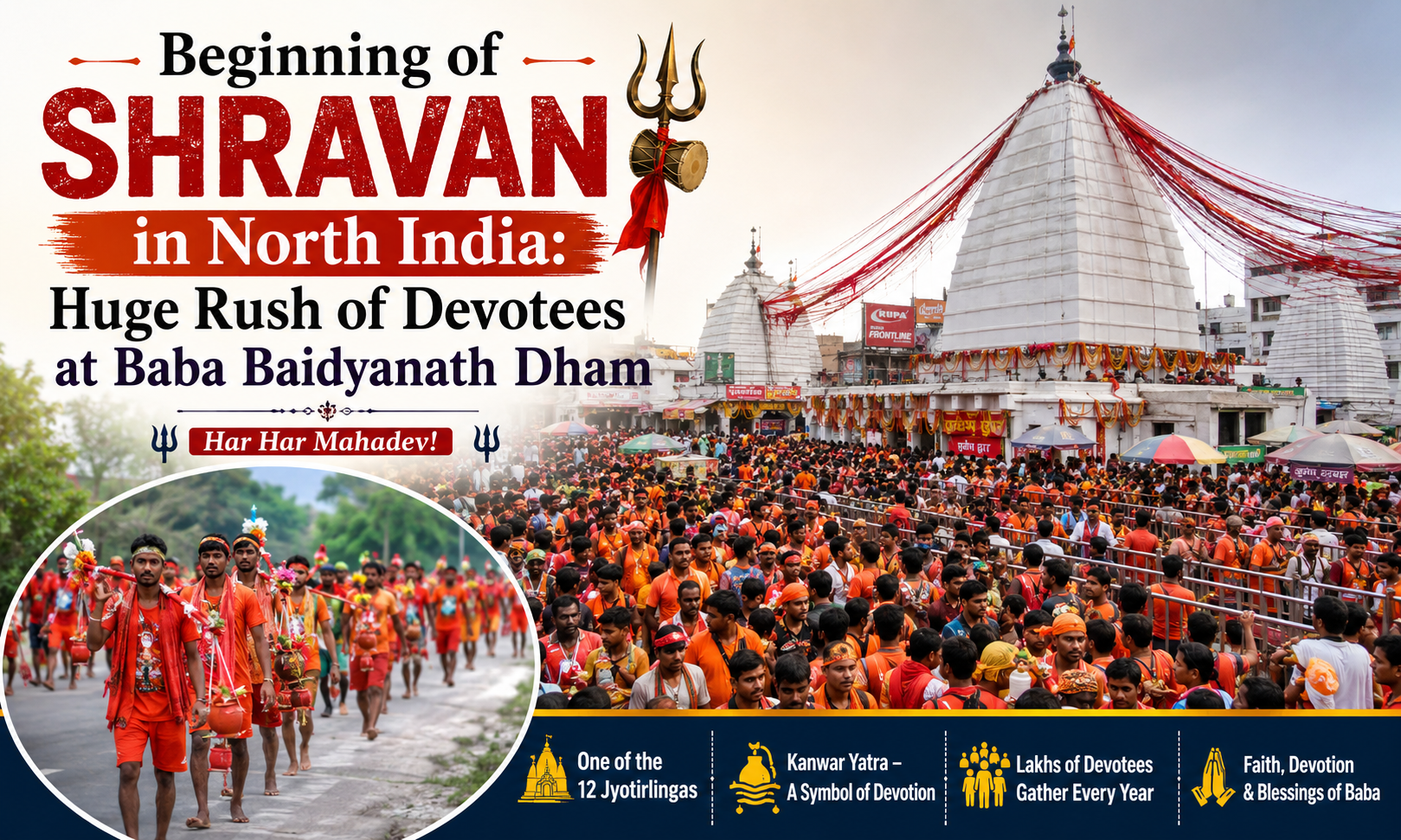
Beginning of Shravan in North India: Huge Rush of Devotees at Baba Baidyanath Dham
The arrival of the holy month of Shravan brings an atmosphere of devotion, spirituality, and celebration across North India. Dedicated to Lord Shiva, this sacred month is considered one of the most auspicious periods in the Hindu calendar. As Shravan begins, temples devoted to Lord Shiva witness an extraordinary influx of devotees eager to offer prayers and seek divine blessings. Among the most revered pilgrimage destinations, Baba Baidyanath Dham in Deoghar, Jharkhand, stands out as a spiritual center attracting lakhs of worshippers from across the country.
The Importance of Shravan Month
Shravan is regarded as the holiest month for the worship of Lord Shiva. According to Hindu beliefs, prayers, fasting, and rituals performed during this period bring prosperity, peace, and spiritual growth. Every Monday, known as Shravan Somwar, holds special significance, and devotees observe fasts while visiting Shiva temples in large numbers.
The beginning of Shravan marks the start of a month-long celebration where temples remain filled with chants of “Har Har Mahadev” and “Bol Bam.” The spiritual energy during this period creates a unique atmosphere that unites devotees through faith and devotion.
Baba Baidyanath Dham – One of the Twelve Jyotirlingas
Baba Baidyanath Dham is one of the twelve sacred Jyotirlingas of Lord Shiva. Located in Deoghar, it is among the most important pilgrimage sites in India. The temple holds immense religious significance because devotees believe that prayers offered here are fulfilled by Lord Shiva.
The temple complex attracts pilgrims throughout the year, but the number increases dramatically during Shravan. Devotees travel from different states carrying holy water to perform Jalabhishek on the sacred Shivling.
Beginning of Shravan Brings Massive Devotee Rush
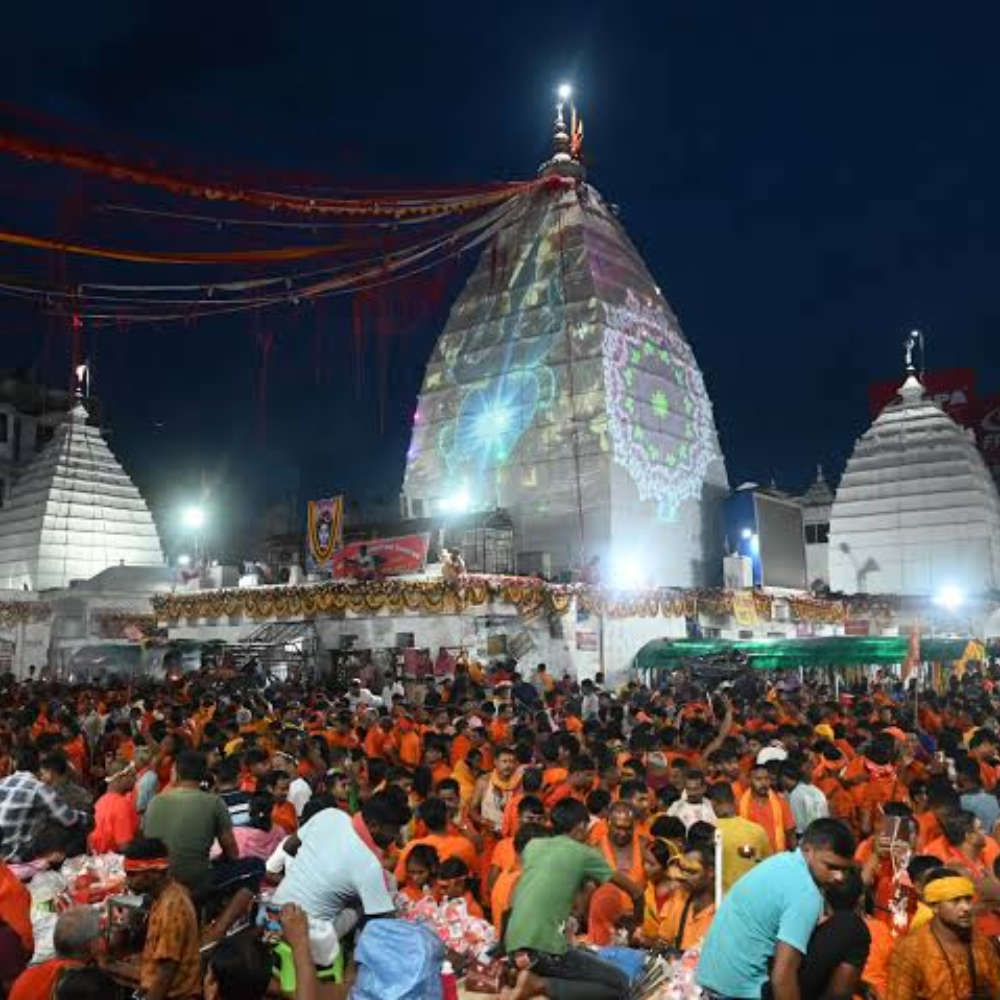
As Shravan begins in North India, thousands of devotees gather at Baba Baidyanath Dham from the early hours of the morning. Long queues extend for several kilometers as pilgrims patiently wait for their turn to offer prayers.
The temple premises become vibrant with devotional songs, chants, and religious ceremonies. Families, elderly devotees, and young pilgrims participate together, reflecting the deep cultural and spiritual importance of the festival.
Kanwar Yatra Adds to the Spiritual Journey
One of the most remarkable traditions associated with Shravan is the Kanwar Yatra. Devotees, known as Kanwariyas, collect holy water from the Ganga River at Sultanganj and walk approximately 105 kilometers to Baba Baidyanath Dham.
Carrying decorated bamboo structures called Kanwars, these pilgrims complete the journey barefoot while continuously chanting the name of Lord Shiva. Their dedication and discipline symbolize unwavering faith and devotion.
Religious Beliefs Associated with Baidyanath Dham
According to Hindu mythology, Baba Baidyanath Dham is closely associated with the story of Ravana. It is believed that Ravana performed severe penance to please Lord Shiva and received the sacred Jyotirlinga.
During his journey, Lord Ganesha cleverly ensured that the Jyotirlinga remained at Deoghar, making it one of the holiest Shiva temples in the country. Since then, millions of devotees have visited the temple believing it to be a place where sincere prayers are answered.
Extensive Arrangements for Pilgrims
With lakhs of devotees expected during Shravan, authorities make comprehensive arrangements to ensure smooth temple management. Security personnel, medical teams, volunteers, and sanitation workers remain deployed throughout the festival.
Barricades help manage long queues, while drinking water stations, resting areas, emergency medical services, and information centers are established for pilgrims. Technology and surveillance systems also assist in crowd management and public safety.
Spiritual Atmosphere Around the Temple
During Shravan, the entire city of Deoghar transforms into a center of devotion. Streets surrounding the temple are decorated with religious banners, flowers, and lighting. Local markets become lively with shops selling flowers, Bilva leaves, Rudraksha beads, incense sticks, and offerings required for worship.
The continuous chanting of Shiva mantras, temple bells, and devotional music creates an unforgettable spiritual experience for visitors.
Economic Benefits for the Local Community
The annual pilgrimage also contributes significantly to the local economy. Hotels, guest houses, restaurants, transport operators, flower vendors, and small businesses experience increased demand during the Shravan season.
Local artisans selling religious souvenirs and handicrafts also benefit from the arrival of thousands of pilgrims. The festival creates seasonal employment opportunities while supporting tourism-related businesses across Deoghar.
Safety and Crowd Management
Managing such a large gathering requires careful planning. Authorities establish multiple security checkpoints and deploy police personnel throughout the temple premises. Medical camps remain operational around the clock to provide immediate healthcare assistance whenever required.
Traffic diversions, dedicated parking facilities, and separate entry and exit routes help maintain smooth movement for devotees. Volunteers guide pilgrims and assist elderly visitors throughout their journey.
Devotional Practices During Shravan
Many devotees observe strict religious practices throughout the month. These include fasting on Mondays, visiting Shiva temples daily, chanting the Maha Mrityunjaya Mantra, offering milk, water, honey, Bilva leaves, and flowers to the Shivling, and participating in evening aarti ceremonies.
These rituals are believed to bring peace, remove obstacles, and invite blessings from Lord Shiva.
Cultural Significance
Shravan is not only a religious observance but also a celebration of India’s rich spiritual heritage. The month strengthens family traditions, community participation, and cultural values as people come together for prayers, charitable activities, and devotional gatherings.
Festivals like Shravan preserve ancient customs while encouraging younger generations to remain connected with India’s religious traditions.
A Journey of Faith and Devotion
For many pilgrims, visiting Baba Baidyanath Dham is more than a religious trip—it is a deeply personal spiritual journey. Walking long distances, enduring physical challenges, and offering prayers with complete faith symbolize dedication and surrender to Lord Shiva.
The experience leaves devotees with a sense of peace, gratitude, and spiritual fulfillment that remains with them long after the pilgrimage ends.
Conclusion
The Beginning of Shravan in North India: Huge Rush of Devotees at Baba Baidyanath Dham reflects the enduring faith and devotion of millions of worshippers. As one of the most sacred Jyotirlingas, Baba Baidyanath Dham becomes the focal point of spiritual celebrations during this holy month. The remarkable devotion of Kanwariyas, the vibrant religious atmosphere, and the extensive arrangements made for pilgrims together create one of India’s most significant annual spiritual events. Shravan continues to inspire unity, devotion, and hope, making the pilgrimage to Baba Baidyanath Dham a cherished experience for countless devotees every year.