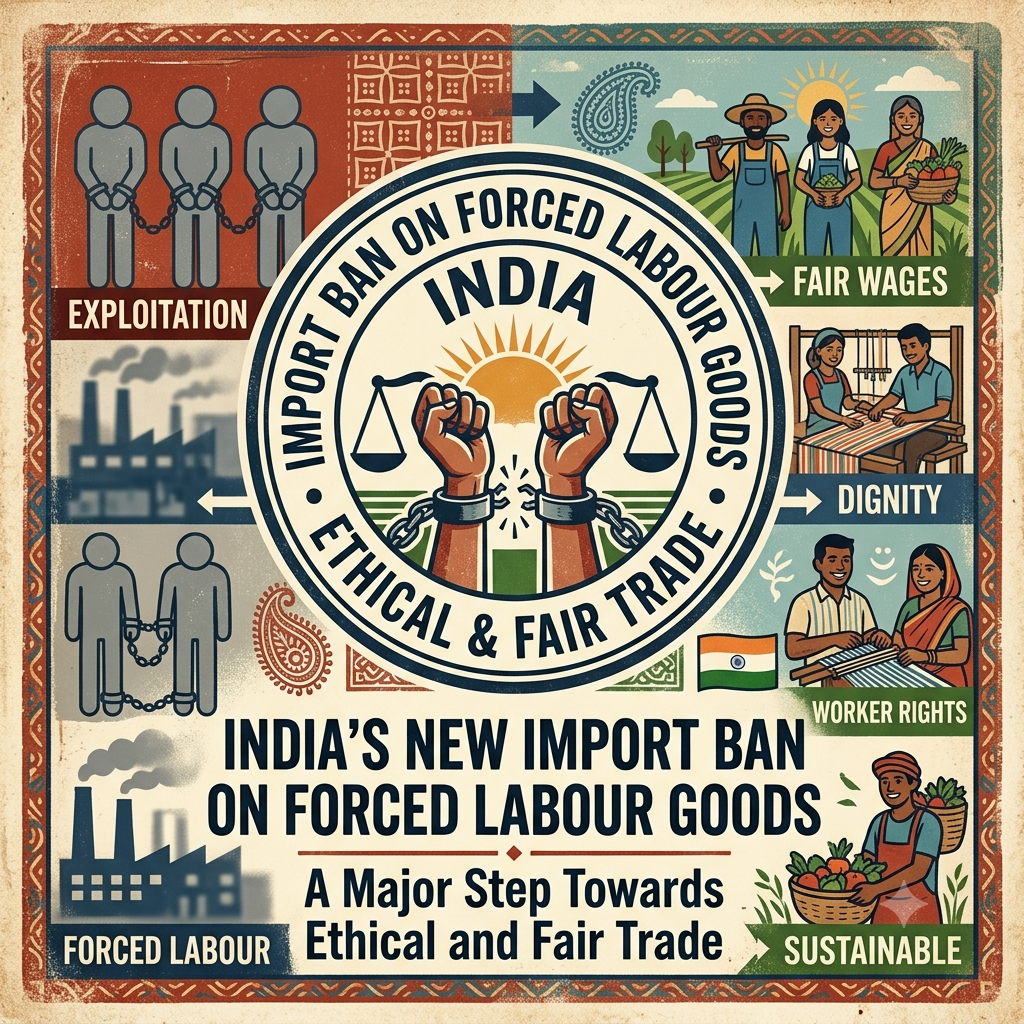
India’s New Import Ban on Forced Labour Goods: A Major Step Towards Ethical and Fair Trade
India has implemented a radical change in terms of ethical trading through the introduction of the ban on the importation of any product manufactured under forced labour. This new policy will give the government the authority to prevent goods associated with forced labour from coming into India, thereby making India stand up for ethical trading. With the world becoming more connected, businesses will now be forced to import products that are ethically sourced. This is not the first time that India has followed other countries in terms of implementing such a policy since several nations have already implemented such policies regarding ethical trading. This blog post will analyse the implications of the new rule.
India’s Policy On Prohibition of Importation of Goods Made Using Forced Labour Explained
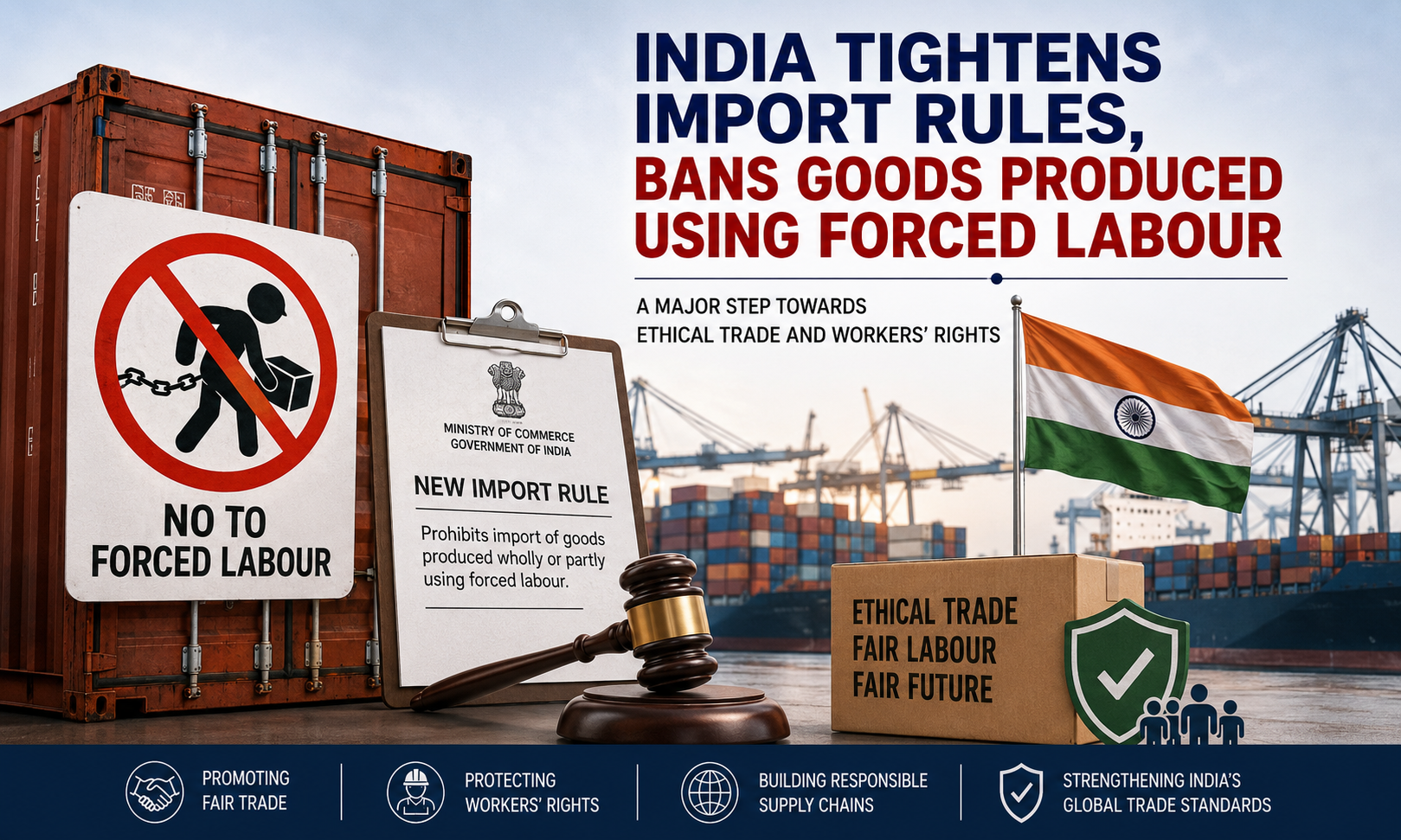
In an attempt to enforce new rules about ethical manufacturing of goods, India has made a decision to ban the import of goods that use forced labor at any stage of the manufacturing process. Under a recent notice issued by the Ministry of Commerce, the Central Government has the right to prevent such products from entering the country when credible information about the use of forced labor has been found. Even though the notice does not list any product, industry, or country involved in this issue, it provides a strong legal basis for future enforcement. In other words, the rule illustrates India’s concern about ethical trade and proper sourcing of products that conform to labor laws. For companies, it means that apart from selecting the cheapest provider of the product, they should also ensure that the supplier meets all labor conditions. Thus, the introduction of this policy is a move towards minimizing the flow of products made through exploitation.
The Reasons for India’s Position against Forced Labor
It is evident that today, there are still cases of forced labor in various spheres of the world economy, such as manufacturing, agriculture, mining, textile, and so forth. There are many organizations all over the globe that pay attention to this problem and highlight the importance of additional measures to prevent forced-labor goods from entering the global market. India’s recent decision can be viewed as another example of this global trend to pay attention to human rights issues, including protection of employees’ rights and promotion of ethical conduct among companies. At the same time, this ban shows that India stands together with those major economies which introduced the prohibition of imports associated with forced labor. The new regulation can be considered as an attempt to protect not only human rights but also to ensure transparency and accountability of supply chain management practices used by businesses. It means that the companies importing products will have to cooperate with their foreign partners and investigate labor conditions in order to avoid any problems related to violation of human rights.
Implications for Importers, Businesses and Global Supply Chains
The introduction of the new regulation in relation to imports into India means a major shift for those businesses who use international sources of supply. In particular, importers will have to demonstrate due diligence in the sense that they have to be sure that goods they procure have not been produced using any form of forced labor. While such a requirement will certainly mean an additional cost for certain businesses in terms of increased compliance, they are still going to benefit from it in the sense that there will be no risks of lawsuits against them. It appears that it will be much easier for those businesses who already apply ethical business practices in the sphere of procurement to comply with the new requirements; however, other businesses might find it difficult to adjust to the new environment. It appears that those manufacturers in foreign countries who want to remain active in India have an incentive to ensure that working conditions are good enough.
Implications of Such Measures for India’s Economy and Its Image in International Trade
India’s choice of banning the imports that have been produced using forced labor is not only aimed at tightening its import regulation but also positively impacts the image of the country in the sphere of international trade. In the modern world, where the issue of ethical and sustainable sources has become increasingly important for international markets, the adoption of such policy will make India one of the responsible actors in global trade relations. As a result, this can increase the level of confidence in the country from the side of foreign investors, trading partners and multinationals which look for markets where the business is done in an appropriate manner. In addition to this, the adoption of the new measures can make the Indian manufacturers follow higher labor standards in order to compete with the imports. Overall, the implementation of such measures can make the country develop a more resilient chain of supply, attract better investments and establish stronger trade relations with other countries that support the idea of responsible sources of goods.
Conclusion
The Indian government’s move to restrict the importation of items manufactured under conditions of forced labor is a significant move in advancing ethical trade and safeguarding the rights of workers. Though the businesses will have to work hard in terms of checking and ensuring compliance of the supply chain, the gains that come with this policy include transparency, responsible procurement, and improved reputation. With sustainability gaining importance in international trade, India is well positioned as a country of responsible trading.