



From Trash to Treasure: 5 Companies Turning Waste Into Billion-Dollar Opportunities
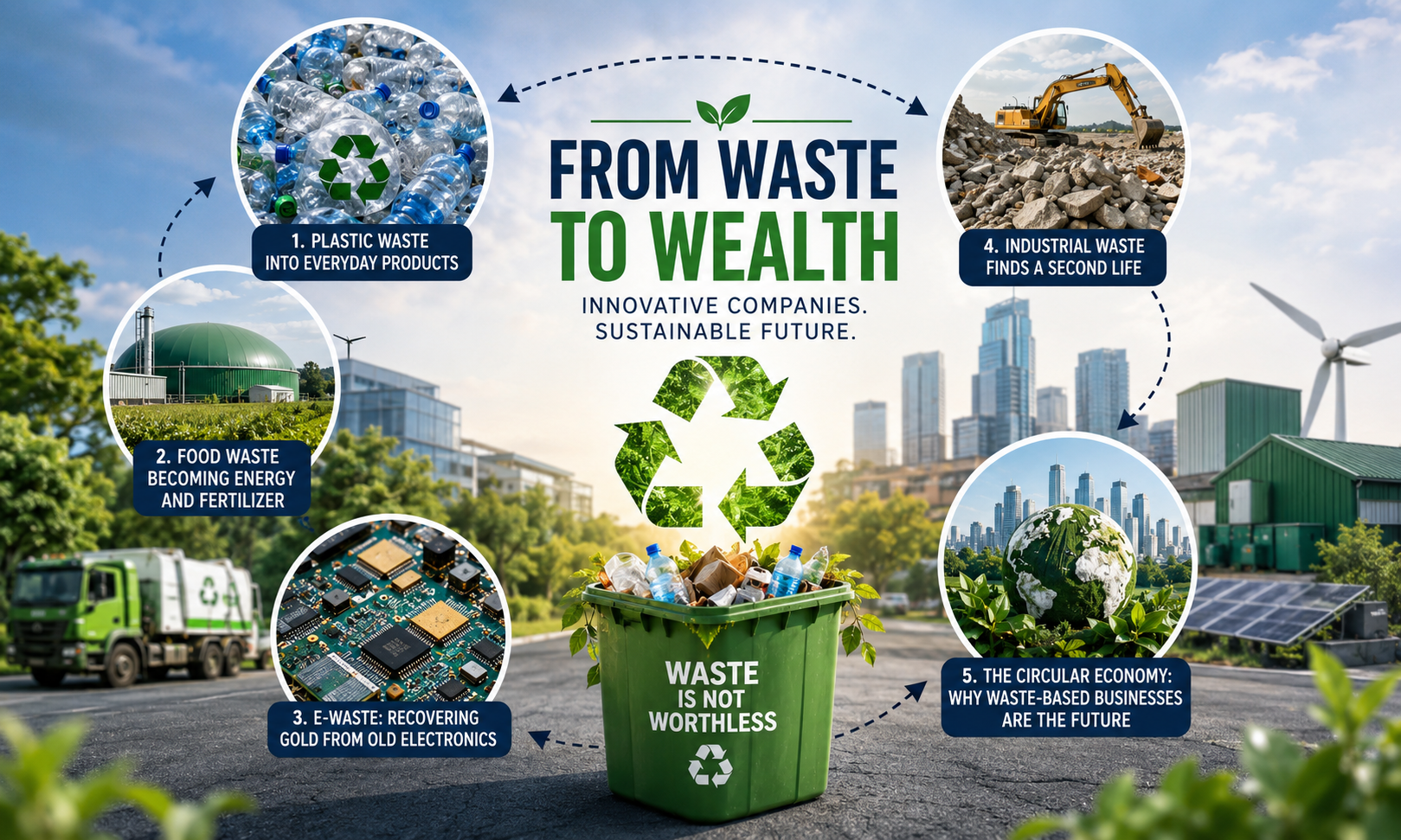
What if the things we throw away every day could become the foundation of the next billion-dollar business? Around the world, innovative companies are proving that waste isn’t just an environmental problem—it’s a valuable resource. From discarded plastic bottles and food scraps to electronic waste and industrial byproducts, these businesses are transforming garbage into profitable products while helping build a more sustainable future. Their success shows that the circular economy is not just good for the planet—it’s also a smart business strategy.
From Plastic Wastes to Everyday Goods
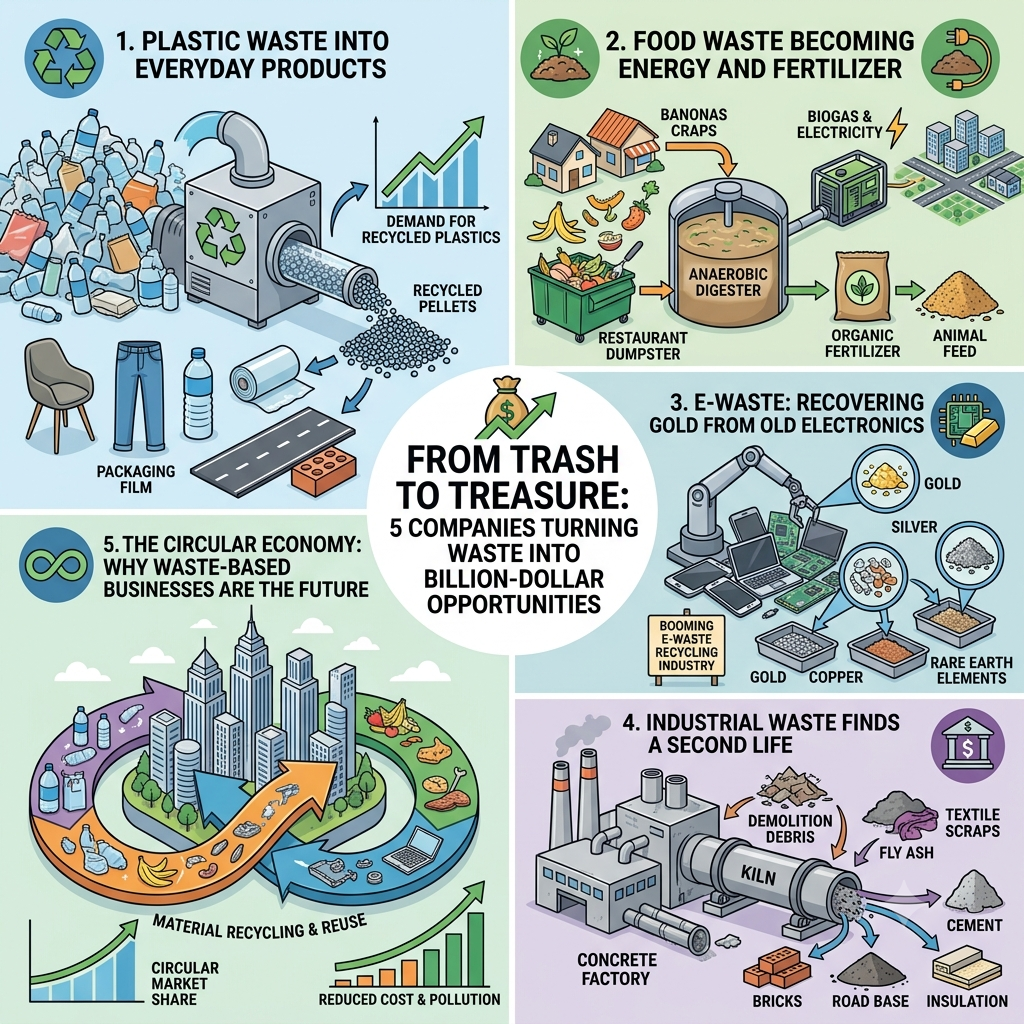
For many years now, plastic waste has remained one of the greatest challenges to the environment around the world. However, with the introduction of modern innovation in companies, plastic waste is proving to be not just a challenge but also an important source of valuable raw materials. Millions of tons of plastic bottles, bags, and other packaging are picked up every year and are processed to turn them into raw material. The advancement of recycling technology in the industry allows companies to recycle plastic to make furniture, clothing, packaging material, construction material, and even roads. Some of the fashion companies have started using plastic waste to make shoes and jackets from their plastic bottles. Some companies are also building roads using plastic wastes. Such innovations conserve raw materials by reducing the production of plastic, save carbon emission, and create employment through recycling process. The increasing number of consumers who seek sustainability encourages such practices in the companies.
Food Waste to Energy and Fertilizer
One out of three parts of all the food prepared in the world is being wasted, causing environmental and financial problems. Rather than letting this waste decompose in landfills and emit harmful methane gas, companies are making sure they turn this waste into some useful products. By means of anaerobic digestion technology, all the organic waste from people’s houses, restaurants, hotels, and supermarkets is turned into biogas used for generating electricity, cooking, or running industries. The remaining organic matter is turned into fertilizer that enriches the soil and helps to practice environmentally friendly farming methods. Some companies have developed technologies for turning extra food into animal feed or extracting components that could be used in other manufacturing companies. All these measures not only prevent landfills from growing but also enable countries to deal with the problem of waste management. Farmers receive cheap organic fertilizers, and companies reduce expenses on waste disposal and earn additional money. Incentives for companies developing such technologies are offered by governments in all countries nowadays.
E-Waste: Extracting Gold from Obsolete Electronics
Though outdated cell phones, computers, TVs, and other electronic products are nothing but junk to the majority of people, they hold precious elements worth recycling. With the help of sophisticated mechanical and chemical procedures, e-waste recyclers recover precious elements such as gold, silver, copper, palladium, rare earth metals from electronic waste. The extracted elements are then provided to producers for reuse. Due to rapid technological adoption, electronic waste has become one of the fastest growing waste streams in the world. There are great opportunities for specialized recycling companies in processing such a vast amount of electronic waste. Apart from extracting precious metals from electronic waste, companies also take care of hazardous waste disposal including such dangerous elements as lead, mercury, and cadmium. Governments in many countries encourage people to recycle electronic waste by introducing appropriate regulations. Also, consumers are increasingly becoming aware of their responsibility towards waste disposal. Through processing of obsolete electronic products, such recycling companies provide sustainable production, protection from pollution, saving of natural resources, and turning electronic junk into valuable economic material.
Industrial Waste Gains New Purpose
Industries produce massive amounts of waste every year, but companies are coming up with ways to give new purpose to this material. Various by-products like fly ash produced by power plants, blast furnace slag from iron and steel industries, construction wastes, fabric wastes, and industrial plastic can now be recycled rather than going to landfills. Fly ash and slag are commonly used in producing cement and concrete, helping to make these substances stronger as well as reducing the amount of CO2 produced during the process of conventional cement production. The crushed construction waste is used for producing road base material, paving blocks, and bricks, whereas fabric waste is reused in making insulations, carpets, and recycled fabric. Industries save on waste disposal costs, conserve natural resources, and meet stricter environmental laws. Companies implementing industrial recycling become more environmentally friendly, gaining an advantage over other businesses and becoming more attractive to investors and consumers.
The Circular Economy: The Business of the Future Based on Waste
Businesses’ views on the manufacturing process are getting influenced by the concept of the circular economy. In such an economy, instead of making things, using them, and throwing them away, products and materials are recycled, fixed, repaired, and reused to keep circulating in the system. Such a practice results in reduced amounts of waste produced while creating brand new business ventures at the same time. Investors pay increasing attention to companies specializing in waste management and sustainable packaging, recycled materials, and resource recovery since these areas are experiencing growth. Besides, there are policies implemented by governments aiming to support recycling, reduce landfill usage, and environmentally responsible manufacturing. Finally, consumers, especially young people, choose companies making serious efforts in sustainability and thus increasing their demand. Rising prices for raw materials and growing environmental issues make businesses based on the concept of the circular economy gain an obvious advantage over others.
Conclusion
The concept of waste to wealth is not simply an environmental one anymore; it is becoming a profitable venture in its own right. In this day and age, where technological progress and environmental issues are at the forefront of our concerns, companies that can generate something useful from waste are showing us how we can have our cake and eat it too.