




Google’s Mega Data Center in Andhra Pradesh: What It Means for India’s Digital Future
If you’ve been taking after tech news recently, you might have come across an enormous development—Google is arranging to contribute billions of dollars to an enormous information center in Andhra Pradesh. Concurring to reports, this might be one of the biggest information center speculations not fair in India, but globally.
To begin with, “data center” might sound like a boring, specialized thing. But in reality, this venture has the potential to affect ordinary life—from speedier web to superior computerized administrations and indeed work opportunities.
Let’s break it down in a basic, commonsense way.
What Precisely Is This Project?
The news highlights that Google is arranging an information center venture of around $15 billion (generally ₹1.2 lakh crore). That’s a gigantic number—and it appears how genuine worldwide tech companies are around India.
What is an information center?
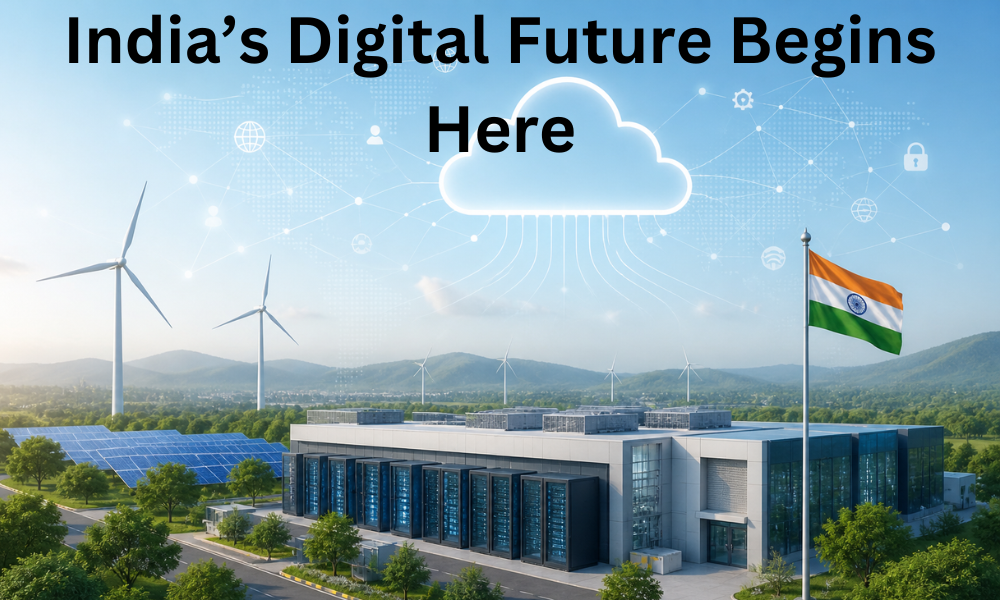
In straightforward terms, an information center is like the spine of the web. It stores and processes:
Your Google searches
YouTube videos
Emails and cloud data
Apps and websites
Every time you open an app or stream a video, an information center is working behind the scenes.
Why Andhra Pradesh?
You might wonder—why Andhra Pradesh and not cities like Mumbai or Bengaluru?
There are a few commonsense reasons:
- Accessibility of Land
Data centers require enormous space. Andhra Pradesh offers huge, reasonable arrival packages compared to metro cities.
- Control Supply
These centers expend gigantic sums of power. The state has been making strides in its control framework, which is an enormous plus.
- Government Support
The Andhra Pradesh government has been effectively advancing ventures in tech foundations, making it simpler for companies to set up operations.
- Coastal Advantage
Being closer to undersea web cables makes a difference in worldwide network speeds.
How This Impacts Ordinary Indians
This isn’t a fair “big company investment” story. It really influences you more than you might think.
Faster Web and Services
With information put away closer to clients in India:
Websites stack faster
Streaming gets to be smoother
Apps perform better
You may not take note of it immediately, but over time, the distinction is real.
Better Computerized Infrastructure
India is quickly going digital—UPI, online instruction, telemedicine, OTT platforms.
A solid information center arrange means:
More solid services
Less downtime
Better client experience
For illustration, amid crest IPL gushing or exam result days, a more grounded framework avoids crashes.
Boost to Nearby Economy
Large ventures like this make a swell effect.
Direct benefits:
Jobs in construction
Technical parts in operations
Security and upkeep jobs
Indirect benefits:
Growth of adjacent businesses
Increased request for housing
Better nearby infrastructure
Even little vendors—tea slows down, transport services—benefit.
Impact on Key Sectors
The article moreover notices how this information center seems to impact different businesses. Let’s see at a few:
Education
With way better cloud infrastructure:
Online classes ended up smoother
Digital learning stages improve
Rural get to to instruction increases
Imagine an understudy in a little town going to live classes without buffering issues.
Healthcare
Data centers support:
Telemedicine
Digital wellbeing records
AI-based diagnostics
Doctors can get quiet information rapidly, indeed from farther locations.
Logistics and E-commerce
Companies like conveyance administrations and stockrooms depend intensely on real-time data.
Stronger framework means:
Faster arrange processing
Better following systems
Efficient supply chains
That “Out for Delivery” message might really have ended up more reliable.
Agriculture
This might astonish you, but information centers moreover back agri-tech.
Farmers can advantage from:
Weather forecast tools
Market cost updates
Smart water system systems
All fueled by information and cloud computing.
India’s Developing Significance in Worldwide Tech
This venture is too much of a flag to the world.
India is no longer a fair market—it’s getting to be a tech hub.
Why worldwide companies are choosing India:
Massive web client base
Growing computerized economy
Skilled workforce
Government thrust for computerized infrastructure
Projects like this fortify India’s position globally.
What Almost Natural Concerns?
Let’s be real—projects of this scale do raise questions.
Data centers consume:
Huge electricity
Large sums of water (for cooling)
However, companies like Google have been contributing in:
Renewable energy
Energy-efficient cooling systems
Sustainable infrastructure
The challenge is to adjust development with sustainability.
Opportunities for Youthful Professionals
If you’re an understudy or early in your career, this is worth paying consideration to.
Skills that will be in demand:
Cloud computing
Data engineering
Cybersecurity
Network management
AI and machine learning
Even non-tech parts like operations, HR, and coordinations will develop around such projects.
What This Implies for the Future
This isn’t fair to one project—it’s a portion of a bigger shift.
India is moving towards:
Data-driven economy
Digital-first services
Global tech leadership
And a foundation like this is the foundation.
Conclusion
Final Thoughts
To begin with, a “data center investment” might sound remote and specialized. But when you see closely, it interfaces to ordinary life—how quick your apps run, how dependable your administrations are, and indeed the openings accessible around you.
The Google information center in Andhra Pradesh is more than fair a commerce move. It’s a sign that India’s computerized travel is accelerating—and the benefits will gradually reach each corner of the country.
It may not alter things overnight, but over the following few a long time, you’ll likely feel its impact—one quicker press at a time.