




NVIDIA Leading the AI Revolution: Building the Backbone of the Future
In 2026, the global technology landscape is undergoing a dramatic transformation—and at the center of it stands NVIDIA. Once known primarily for its graphics processing units (GPUs), NVIDIA has now evolved into a company that is shaping the very foundation of the artificial intelligence (AI) economy.
At its annual NVIDIA GTC 2026 conference, NVIDIA unveiled a series of groundbreaking innovations that signal a major shift—not just in its own strategy, but in how the world builds and uses AI. From advanced chips and AI factories to autonomous agents and trillion-dollar projections, NVIDIA is no longer just participating in the AI revolution—it is leading it.
From Chipmaker to AI Infrastructure Giant
For years, NVIDIA dominated the GPU market, powering gaming, design, and data centers. But in 2026, the company has clearly repositioned itself as a full-stack AI infrastructure provider.
At GTC 2026, NVIDIA introduced next-generation architectures, including its highly anticipated Vera Rubin platform, designed to handle increasingly complex AI workloads. These systems combine powerful GPUs, CPUs, networking, and software into unified AI computing platforms.
This shift is crucial. Instead of selling individual chips, NVIDIA is now offering complete AI ecosystems—essentially becoming the “factory builder” for companies that want to create and deploy AI at scale.
Why it matters:
Companies no longer want just hardware; they want end-to-end AI solutions. NVIDIA is positioning itself as the one-stop provider for this new demand.
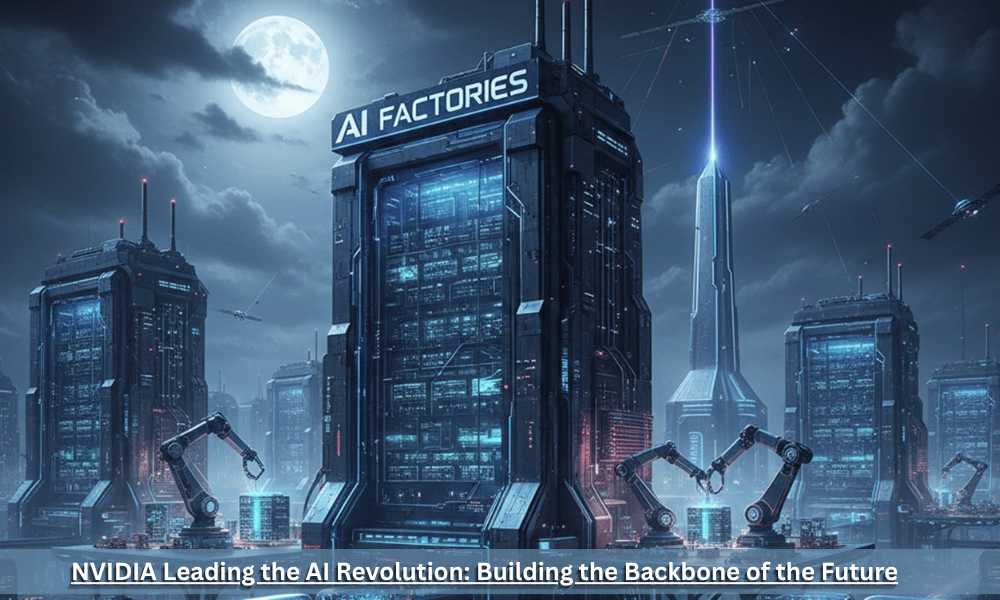
The Rise of “AI Factories”
One of the most talked-about concepts introduced by CEO Jensen Huang is the idea of AI factories.
These are massive data centers designed to produce intelligence in the same way traditional factories produce goods. Instead of manufacturing physical products, AI factories generate:
Machine learning models
Predictive insights
Automated decision-making systems
Huang described this as the largest infrastructure buildout in human history.
Why it matters:
AI is no longer just a tool—it’s becoming core infrastructure, like electricity or the internet. Companies that control AI infrastructure could dominate entire industries.
The Emergence of AI Agents
Another major highlight from GTC 2026 was NVIDIA’s push into agentic AI, particularly through systems like NemoClaw.
AI agents are autonomous systems capable of performing tasks without constant human input. These agents can:
Manage workflows
Interact with users
Make real-time decisions
Operate continuously
Unlike traditional software, AI agents are adaptive and self-improving.
Why it matters:
This marks a shift from static applications to intelligent, always-on digital workers. Businesses may soon rely on AI agents as much as human employees.
Breakthroughs in Speed and Efficiency
As AI models grow larger and more complex, one of the biggest challenges is performance. NVIDIA is addressing this through innovations like the BlueField-4 STX architecture, which significantly improves the following:
Data processing speeds
Energy efficiency
System scalability
Reports suggest up to 5× faster performance and 4× better efficiency, which could drastically reduce the cost of running large AI systems.
Why it matters:
AI adoption has been limited by cost and infrastructure constraints. Faster, more efficient systems make AI accessible to more businesses and industries.
A Trillion-Dollar Opportunity
NVIDIA is not just building technology—it’s betting on the future of the global economy.
The company has projected a $1 trillion revenue opportunity by 2027, driven by massive demand for AI infrastructure. Tech giants like Amazon, Microsoft, and Meta are already investing billions into AI systems powered by NVIDIA hardware.
This surge in spending reflects a broader trend: AI is becoming a central driver of economic growth.
Why it matters:
We are witnessing the early stages of a new industrial revolution, where AI is the key resource—and NVIDIA is supplying the tools to harness it.
Challenges and Investor Concerns
Despite its dominance, NVIDIA is not without challenges.
Some investors remain cautious due to:
Heavy reliance on large tech companies
Concerns about overinvestment in AI
Fear of a potential tech bubble
While demand for AI is booming, the long-term profitability of these investments is still uncertain.
Why it matters:
The success of NVIDIA—and the broader AI industry—depends on whether companies can turn AI innovation into sustainable business value.
Global Impact of NVIDIA’s Strategy
NVIDIA’s influence extends far beyond Silicon Valley. Its technologies are shaping industries worldwide, including:
Healthcare (AI-driven diagnostics)
Finance (algorithmic trading and risk analysis)
Manufacturing (automation and robotics)
Transportation (autonomous vehicles)
Countries are also racing to build their own AI capabilities, often relying on NVIDIA’s infrastructure.
Why it matters:
This is not just a company story—it’s a global transformation. Nations and industries that adopt AI fastest will gain a competitive edge.
The Future: AI as Essential Infrastructure
Looking ahead, NVIDIA’s vision is clear: AI will become as fundamental as electricity or cloud computing.
We are moving toward a world where:
Every company is an AI company
Every industry uses intelligent systems
AI infrastructure becomes a basic necessity
NVIDIA is positioning itself at the center of this future by building the platforms that power it.
Conclusion
NVIDIA’s journey from a GPU manufacturer to an AI infrastructure giant reflects the broader evolution of technology itself. At GTC 2026, the company demonstrated that it is not just keeping up with the AI revolution—it is actively shaping it.
Through innovations like AI factories, autonomous agents, and high-performance computing systems, NVIDIA is redefining how intelligence is created and deployed. Its ambitious trillion-dollar vision underscores the scale of the opportunity—and the stakes involved.
However, with great opportunity comes uncertainty. Questions about sustainability, profitability, and market stability remain. The coming years will determine whether the AI boom delivers on its promise or faces the challenges of overhype.