





India’s Coastal Powerhouses: How Ports Are Driving the Nation’s Economic Rise
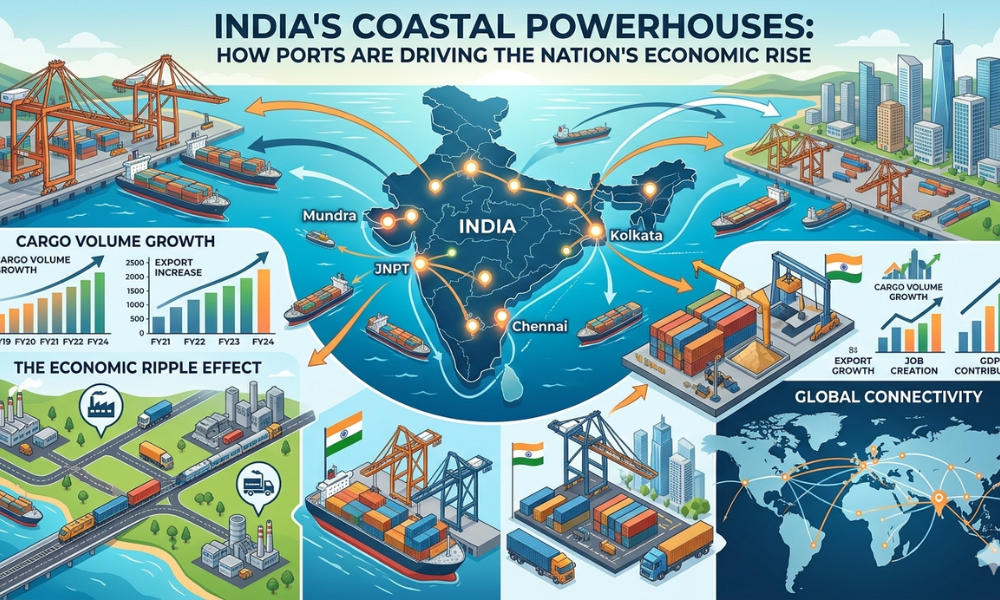
The economic growth of India is closely linked to its extensive coastline and active sea trade. As almost 95% of India’s trade by volume is carried out through sea routes, ports have become more than just trade corridors; they have become engines for growth. Cities that have well-developed port connectivity tend to become centers for growth and development. As global trade is expanding and trade corridors are getting more complex, the importance of ports for India’s growth is rising.
Why Ports Are the Backbone of India’s Trade Economy
Ports are the focal point of India’s economy. They are the main entry points for international trade. In India, nearly 95% of the country’s international trade by volume and 70% by value is done through waterways. Therefore, the ports are the key to the smooth flow of international trade into the country. In today’s globalized economy, the delivery of goods needs to be fast. The ports are the mainstay of the economy. They are the backbone of India’s economy. The ports are the key to the smooth flow of international trade into the country. India is looking to become the next global manufacturing hub. Therefore, the ports are going to be the key to the smooth flow of international trade into the country. The ports are the key to the smooth flow of international trade into the country. Therefore, the ports are the mainstay of the economy. They are the backbone of India’s economy.
The Effects of Port Development on Industrial Development
Port development forges a strong links between port growth and the development of the surrounding industrial ecosystem which encourages and consequently makes cities become economic engine hubs. The location of an industry helps decrease transportation costs, logistics and offer access to global markets, when they are located close to port facilities. Mumbai, Chennai, and Mundra have all prospered from port activity which encouraged rapid growth in several industrial sectors (automobiles, petrochemicals, textiles, etc.). Additionally, port-led development also results in a ripple effect, as they stimulate the development of ancillary industries (small businesses, service sectors, etc.). As a result, infrastructure improvements (highways, rail networks, special economic zones) in these regions will create further investor attractiveness. As a result over time these types of developments will lead to job creation, urban growth, and additional economic activity. The synergies found between ports and industries will strengthen regional economies and be crucial to increasing national growth, through increased exports and competitiveness in the global marketplace.
Thoothukudi Case Study: Growth, Setback, and Untapped Potential
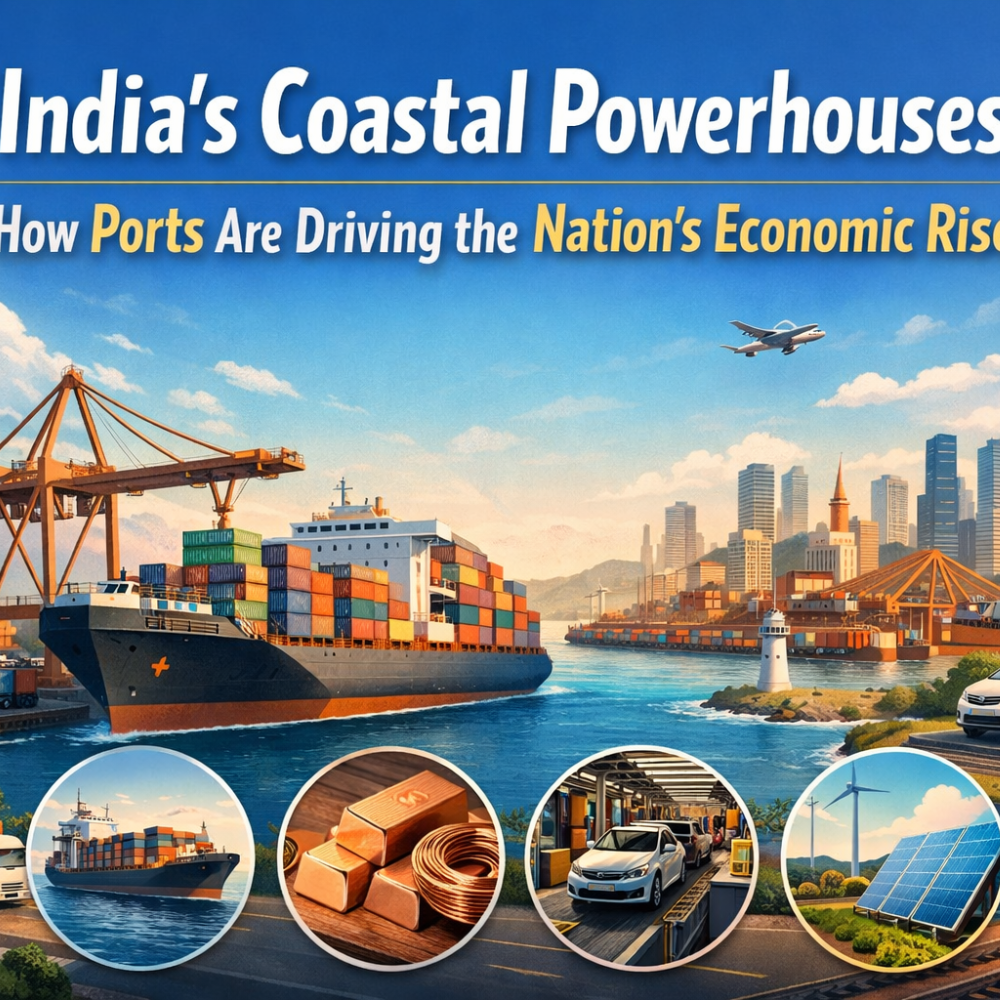
The Thoothukudi case illustrates how port-related industrial activities can influence and shape the development of a region. Historically, it has been an important maritime centre due to its location on major trade routes and proximity to the V.O. Chidambaranar Port facilitated trade especially for bulk importers and exporters. The Sterlite Copper plant played a significant role in the city’s growth, as they created additional cargo through the increase in exports and increased jobs for people who live in Thoothukudi.
When the Sterlite plant was operating at full capacity, it was one of the largest suppliers of copper in India and contributed to many of the economic activities that took place within Thoothukudi. After closing in 2018, many port related activities and industrial momentum ceased. However, Thoothukudi still has the potential for industrial development based on the existing infrastructure and geographical advantages. If industrial activity can be revived in Thoothukudi, the city can once again become a thriving maritime and industrial centre.
The Future of Port-Led Development in India
As India strives to achieve its goal of being a $5 trillion economy, it will rely on port-led development to be the main driver. Emerging industries, such as electric vehicles; renewable energy; and electronics, will create high demand for logistics and global optimization. Since ports are essential to supply these industries with raw materials and finished products, they will play a critical role in economic growth and success. Additionally, increased demand for resources such as copper will require enhanced capacity of domestic refineries as well as proper strategic planning between industries. Governments will also emphasize sustainable and environmentally sound industrial practices to establish a balance between continued growth and reducing adverse effects on the environment. Continued investment in modernizing ports, creating multimodal transportation, and developing digital technologies will lead to further efficiencies. By creating a synergy between port infrastructure and industrial development, India can strengthen its supply chain, become a greater exporter, and create abundant, resilient economic ecosystems.
Conclusion
However, it is important to understand that ports are not just gateways for trade; they are significant contributors to economic transformation. As the country continues to grow and expand its global presence, the connection between industrial development and ports is essential for continued progress. The development of areas such as Thoothukudi is a testament to the potential and challenges associated with such development. By investing in infrastructure and revitalizing key industries, while adopting sustainable practices, the country can truly achieve the potential of its ports.