
The World’s First Website Still Exists: A Look Back at the Birth of the Internet
The internet has become an essential part of our daily lives, connecting people, businesses, and information across the globe. From social media platforms to online shopping and digital communication, everything we do today is influenced by the web. But have you ever wondered where it all began? Interestingly, the world’s first website, created decades ago, still exists and continues to be accessible even today.
This remarkable piece of history takes us back to the early days of the internet, when the concept of the World Wide Web was just beginning to take shape.
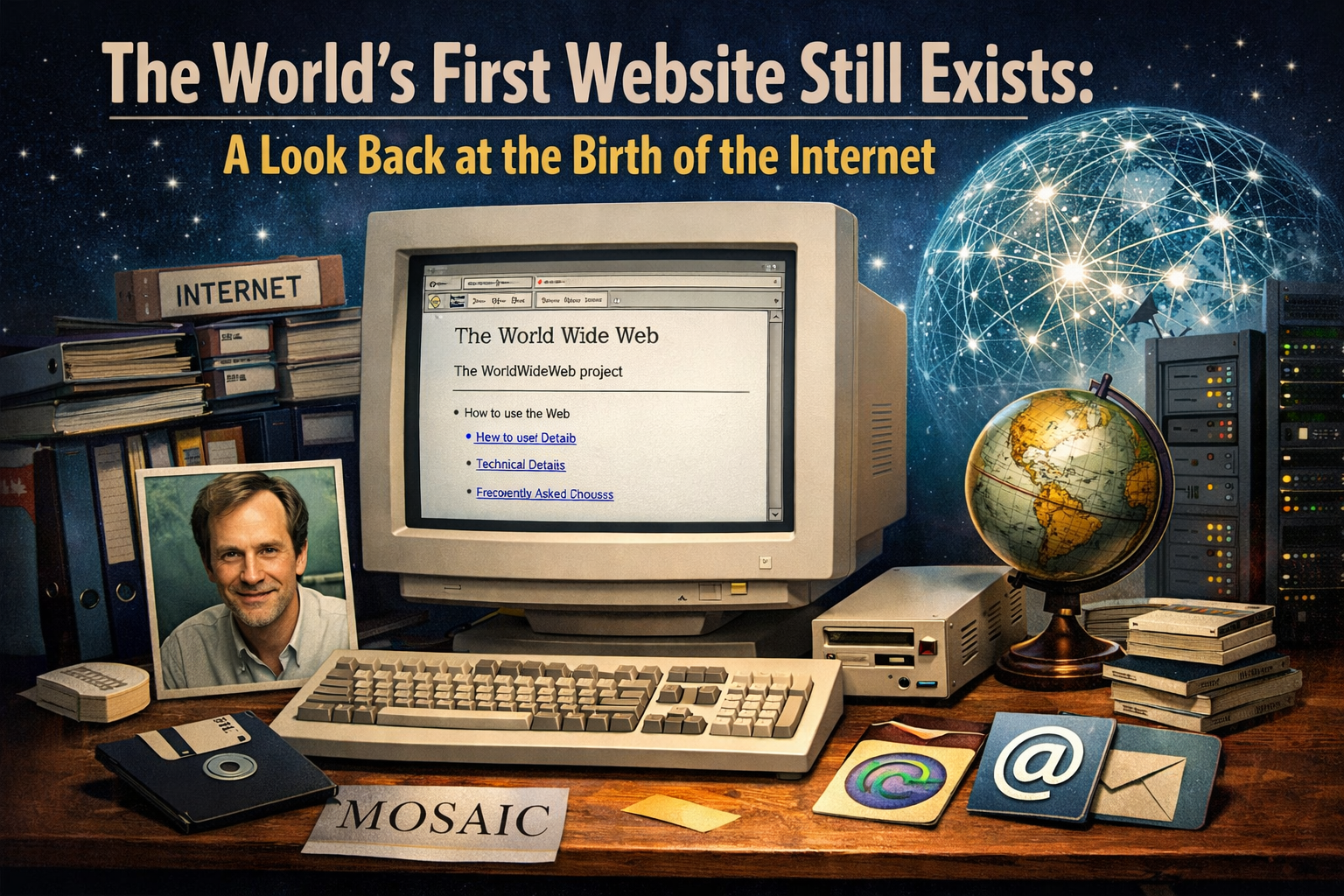
The Creation of the First Website
The first website in the world was created by British computer scientist Tim Berners-Lee in 1991. While working at CERN, he developed a system that allowed researchers to share information easily across different computers.
The website was hosted at info.cern.ch, and it served as a simple page explaining what the World Wide Web was and how people could use it. Unlike today’s modern websites filled with graphics, videos, and interactive features, the first website was very basic. It mainly contained text and links, which were revolutionary at the time.
The Idea Behind the World Wide Web
Before the invention of the web, sharing information between computers was a complicated process. Researchers had to rely on different systems that were not always compatible with each other. Tim Berners-Lee proposed a solution in 1989 while working at CERN.
He introduced the idea of using hypertext to link documents across the internet. This concept allowed users to click on links and navigate between different pages, making information access much easier and faster. This innovation laid the foundation for what we now call the World Wide Web.
Launch of the First Website
On August 6, 1991, the first website officially went live, marking a historic moment in the digital world. The website was designed to provide information about the project itself. It explained how to set up a web server, how to create web pages, and how to access them.
Even though it may seem simple today, this website was a groundbreaking achievement. It opened the door for the development of millions of websites that would follow in the coming years.
The Website Still Exists Today
One of the most fascinating facts about the first website is that it is still accessible today. Anyone can visit the original page and see how the web started. This serves as a reminder of how far technology has come over the years.
The preserved version of the website allows people to experience the simplicity of early web design. It also highlights the incredible progress made in web development, from basic text pages to highly interactive and visually appealing websites.
Growth of the Internet and Websites
Since the launch of the first website, the internet has grown at an astonishing rate. Today, there are over 1.3 billion websites on the World Wide Web. Every day, thousands of new websites are created, covering a wide range of topics such as education, entertainment, business, and communication.
Modern websites use advanced technologies, including multimedia elements, artificial intelligence, and responsive design. These features make online experiences more engaging and user-friendly compared to the early days of the web.

Impact on Society
The invention of the first website has had a profound impact on society. It has transformed the way people communicate, learn, and do business. The internet has made information easily accessible, breaking down geographical barriers and connecting people worldwide.
Education has become more accessible through online courses and digital resources. Businesses have expanded globally through e-commerce platforms. Social interactions have also evolved, with people connecting through various online platforms.
Evolution of Web Technology
From its humble beginnings, web technology has evolved significantly. Early websites were static and text-based, but today’s websites are dynamic and interactive. Developers now use advanced programming languages and frameworks to create sophisticated web applications.
The introduction of mobile technology has further revolutionized the web. Websites are now designed to be mobile-friendly, allowing users to access information on smartphones and tablets with ease.
Why the First Website Matters
The first website is not just a piece of digital history; it represents the beginning of a new era. It symbolizes innovation, creativity, and the power of technology to transform the world.
Understanding the origins of the web helps us appreciate the advancements we enjoy today. It also inspires future innovations that will continue to shape the digital landscape.
The Future of the Web
As technology continues to evolve, the future of the web looks even more exciting. Emerging technologies such as artificial intelligence, virtual reality, and blockchain are expected to play a significant role in shaping the next generation of websites.
The web will continue to grow and adapt, offering new opportunities for communication, learning, and business. However, the foundation laid by the first website will always remain an important part of its history.
Conclusion
The story of the world’s first website is a fascinating journey into the origins of the internet. Created by Tim Berners-Lee at CERN, this simple page marked the beginning of a global revolution in communication and information sharing.
Even today, the original website stands as a symbol of innovation and progress. From a single page of text to billions of websites worldwide, the growth of the web has been truly remarkable.