Urban Heat Island Effect Weakens Winter Chill in Gujarat: Cold Days Missing Even in Late December
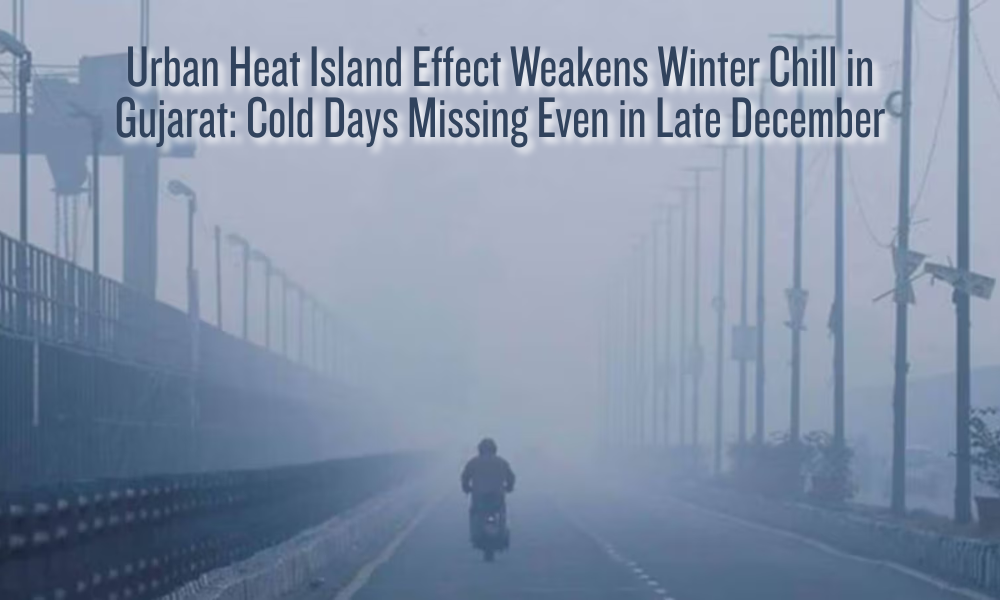
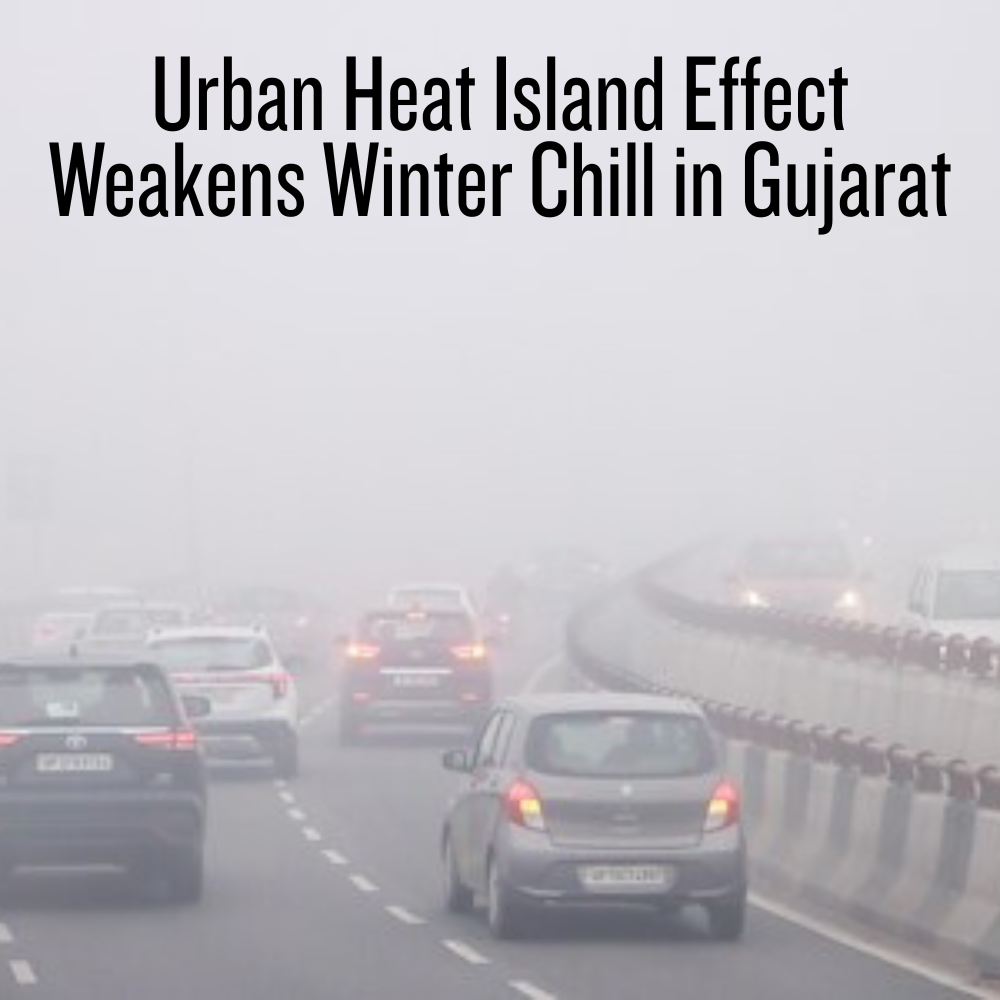
Gujarat is witnessing an unusual winter pattern this year, with cold conditions failing to intensify even by late December. Despite December 22 passing, the state has not experienced the kind of biting cold that is normally expected during this period. Weather experts attribute this change largely to the Urban Heat Island Effect, along with slow wind speeds, western disturbances, and changing climatic patterns. As a result, many cities across Gujarat are recording higher-than-normal minimum temperatures, reducing the overall intensity of winter.
Winter Without a Strong Chill
Traditionally, December marks the peak of winter in Gujarat, especially in urban centers like Ahmedabad, Rajkot, Vadodara, and Surat. However, this year, the winter chill has been noticeably weak. According to meteorological data, minimum temperatures in major cities have remained well above the seasonal average. In Ahmedabad, for instance, December’s lowest temperatures over the past several years have dipped close to 6–8 degrees Celsius. This year, however, temperatures have hovered closer to 10–12 degrees Celsius, signaling a warmer winter.
Meteorologists point out that the absence of strong northern winds and delayed impact of western disturbances have played a role. Normally, cold winds from the Himalayas move southward during December, bringing a sharp drop in temperatures across northern and western India. This year, those winds have been either weak or inconsistent, limiting their cooling effect on Gujarat.
Understanding the Urban Heat Island Effect
One of the primary reasons cited for the reduced cold is the Urban Heat Island Effect (UHIE). This phenomenon occurs when urban areas experience significantly higher temperatures than surrounding rural regions. Cities are filled with concrete buildings, asphalt roads, vehicles, and industrial activity, all of which absorb and retain heat during the day and slowly release it at night. As a result, nighttime temperatures do not fall as sharply as they should during winter.
In cities like Ahmedabad, Surat, and Rajkot, rapid urbanization has intensified this effect. The reduction of green spaces, increased construction, and growing population density have collectively contributed to warmer local climates. Even during winter nights, the stored heat prevents temperatures from dropping to traditionally low levels.
Comparative Temperature Trends
Historical weather data highlights this shift clearly. Over the past decade, December’s minimum temperatures in Gujarat have shown a gradual upward trend. Years ago, cities like Rajkot and Ahmedabad frequently recorded minimum temperatures below 8 degrees Celsius. In contrast, recent years have seen fewer such cold nights.
For example, Ahmedabad recorded some of its coldest December temperatures around 6–7 degrees Celsius in earlier years. This year, minimum temperatures have stayed closer to 10 degrees Celsius. Similar trends have been observed in other cities, including Vadodara, Bhavnagar, and Jamnagar. Coastal cities like Surat, which already experience milder winters due to humidity, are seeing even less winter chill.
Role of Wind Speed and Weather Systems
Apart from urbanization, slow wind speeds are also contributing to warmer nights. Winds play a crucial role in dispersing heat. When wind movement is weak, heat remains trapped near the surface, especially in urban environments. This leads to warmer nights and reduced cold intensity.
Additionally, the impact of western disturbances—weather systems that bring cold air and sometimes rain to northern and western India—has been limited so far this season. Without strong western disturbances, the inflow of cold air into Gujarat remains weak, further reducing winter severity.
Climate Change and Long-Term Patterns
While short-term weather factors explain immediate conditions, experts also point to climate change as a long-term influence. Rising global temperatures are affecting seasonal patterns worldwide, and Gujarat is no exception. Winters are becoming shorter and less intense, while summers are extending and becoming hotter.
Climate scientists warn that such changes could have significant implications for agriculture, water resources, and public health. Crops that rely on cooler winter temperatures may be affected, and pests that usually decline during cold months may survive longer, impacting farming productivity.
Impact on Daily Life and Health
For many residents, a milder winter may seem comfortable, but it also has hidden consequences. Reduced cold can affect traditional winter crops such as wheat and cumin, which require specific temperature ranges for optimal growth. Farmers are being advised to monitor weather updates closely and adjust farming practices accordingly.
From a health perspective, warmer winters can influence the spread of certain diseases. Cold weather usually helps reduce the spread of insects and some pathogens. With milder temperatures, there is a possibility of extended mosquito activity and other seasonal health concerns.
Will Colder Days Arrive Ahead?
According to weather experts, there is still a possibility of colder days in late December or early January if northern winds strengthen or if an active western disturbance passes through the region. Forecasts suggest that minimum temperatures could drop slightly in the coming weeks, especially during late night and early morning hours. However, expectations of a severe cold wave remain low.
Meteorologists emphasize that even if temperatures dip briefly, the overall winter is likely to remain milder compared to past decades. The influence of urban heat and changing climate patterns is expected to continue shaping Gujarat’s winters in the years ahead.
Need for Sustainable Urban Planning
The current winter trends highlight the urgent need for sustainable urban planning. Increasing green cover, promoting urban forests, using heat-reflective construction materials, and improving city ventilation through better planning can help reduce the Urban Heat Island Effect. Cities that invest in environmentally friendly infrastructure are more likely to maintain balanced local climates, even amid global warming.
Public awareness is equally important. Simple measures like planting trees, reducing unnecessary concrete surfaces, and conserving energy can collectively make a difference. Addressing urban heat is not just about comfort but about long-term environmental resilience.
Conclusion
The absence of strong winter cold in Gujarat, even after December 22, is a clear indicator of changing weather patterns. The Urban Heat Island Effect, slow wind movement, weak western disturbances, and broader climate change are all contributing to warmer winters across the state. While slight temperature drops may still occur, the days of prolonged, intense winter cold appear to be gradually fading.
As Gujarat continues to urbanize and grow, balancing development with environmental sustainability will be crucial. Understanding and addressing the causes behind warmer winters today can help ensure a healthier and more climate-resilient future for the state.